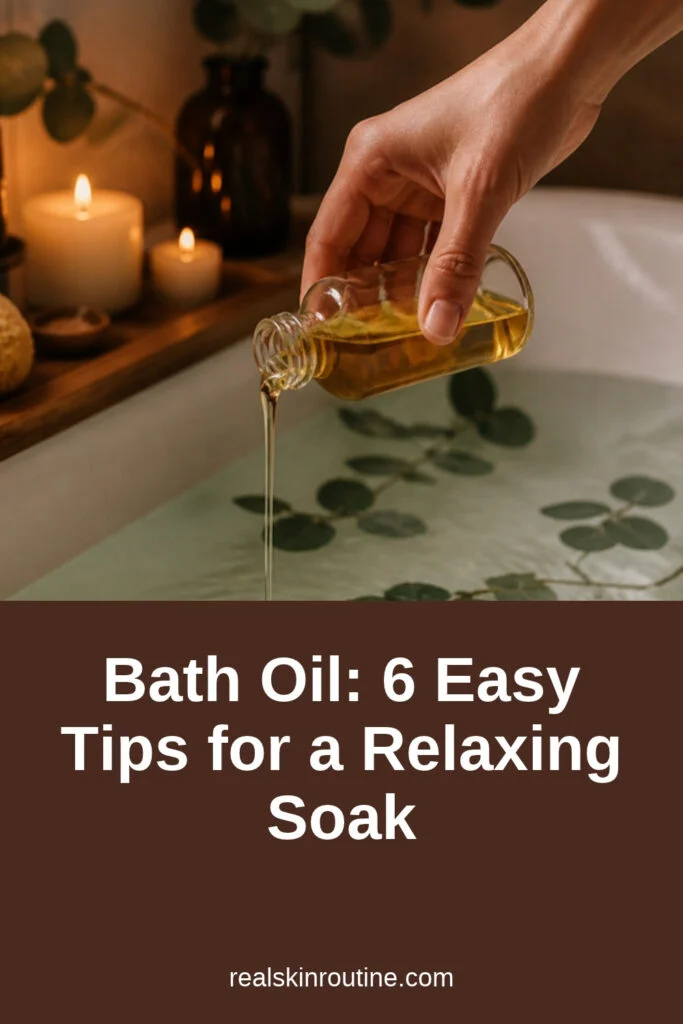
Quick answer: Bath oil is an oil you add to bath water to leave skin feeling soft. Add a capful to warm, not hot, water, soak for a short time, step out carefully because the tub gets slippery, and pat skin dry before applying moisturizer.
Table of Contents

Bath oil vs body oil
| Bath oil | Body oil | |
|---|---|---|
| How to use | Added to bath water | Applied to skin |
| Feel | Light film after soaking | Richer layer |
| Best for | Relaxing soaks | Dry spots after shower |
For after-shower use, see our body oil for dry skin guide.
Who bath oil suits
It is a good choice if you love baths but find that your skin feels tight or dry afterward. It suits people who want a relaxing evening routine and a soft feel without applying a heavy cream all over. If you prefer showers, a body oil or lotion applied right after is usually easier. If you share a tub with others, rinse it well after use so no one slips. People with very sensitive skin may want an unscented version, and anyone with a skin condition should check with a doctor before changing their bath routine. Keep a towel and robe within reach.
6 tips for using bath oil
- Keep water warm. Not hot.
- Add a capful. More is not better.
- Keep it short. A short soak is gentler on skin.
- Watch your step. Oil makes the tub slippery.
- Pat dry. Do not rub skin hard.
- Moisturize after. Lock in softness right away.
Love baths? See our bubble bath tips too.
How to pick a bath oil
- Unscented: a good choice if fragrance bothers your skin.
- Light oils: feel less greasy when you step out.
- Richer oils: may suit very dry skin in winter.
- Dispersing formulas: mix into water instead of floating on top.
- Bottle type: a pump or easy-pour cap makes measuring simple.
Read the label so you know whether it is meant for the bath or for applying straight to the skin.
Common mistakes to avoid
- Using very hot water. Hot water can leave skin feeling dry.
- Pouring in too much. It makes the tub extra slippery and leaves a heavy film.
- Soaking for a long time. Shorter baths are gentler on skin.
- Standing up quickly. Hold the edge of the tub as you get out.
- Leaving oil in the tub. Rinse and wipe the tub after your bath.
A bath mat with grip inside or beside the tub adds peace of mind.
What the AAD says about bathing
For dry skin, the AAD suggests keeping baths and showers short, using warm instead of hot water and moisturizing right after bathing (AAD). Fragrance can bother some skin, as the FDA notes (FDA). The AAD suggests testing a new product on a small area of skin twice a day for several days and stopping if a reaction appears (AAD).
For a full routine, see our body care routine and shower routine. A little bath oil can make bath time feel like a spa.
FAQ
How much should I add?
About a capful.
Is it good for dry skin?
Many people with dry skin like how it feels.
Will it make my tub slippery?
Yes. Step out carefully and rinse the tub after.
Can I mix it with bubble bath?
Yes, but use small amounts of each.
Do I still need lotion?
Moisturizing right after is still a good idea.
Can I use body oil in the tub?
Some work; oils made for the bath are designed to spread in water.
Related guide: Konjac Sponge: How to Use It for Gentle Cleansing.
Written by Mahmoud Abdelmaksoud.