Quick answer: A body serum is a light, fast-absorbing liquid or gel for the body, used after cleansing and before lotion. Apply it to damp skin straight after the shower, smooth it in, then seal it with a moisturizer. It is a simple way to add a lightweight step to your body care.
Table of Contents
Body serum vs lotion vs oil
| Product | Texture | Role |
|---|---|---|
| Body serum | Light, watery or gel | Targeted layer |
| Lotion | Creamy | Daily moisture |
| Body oil | Slippery | Seal and glow |
| Body butter | Thick | Very dry areas |
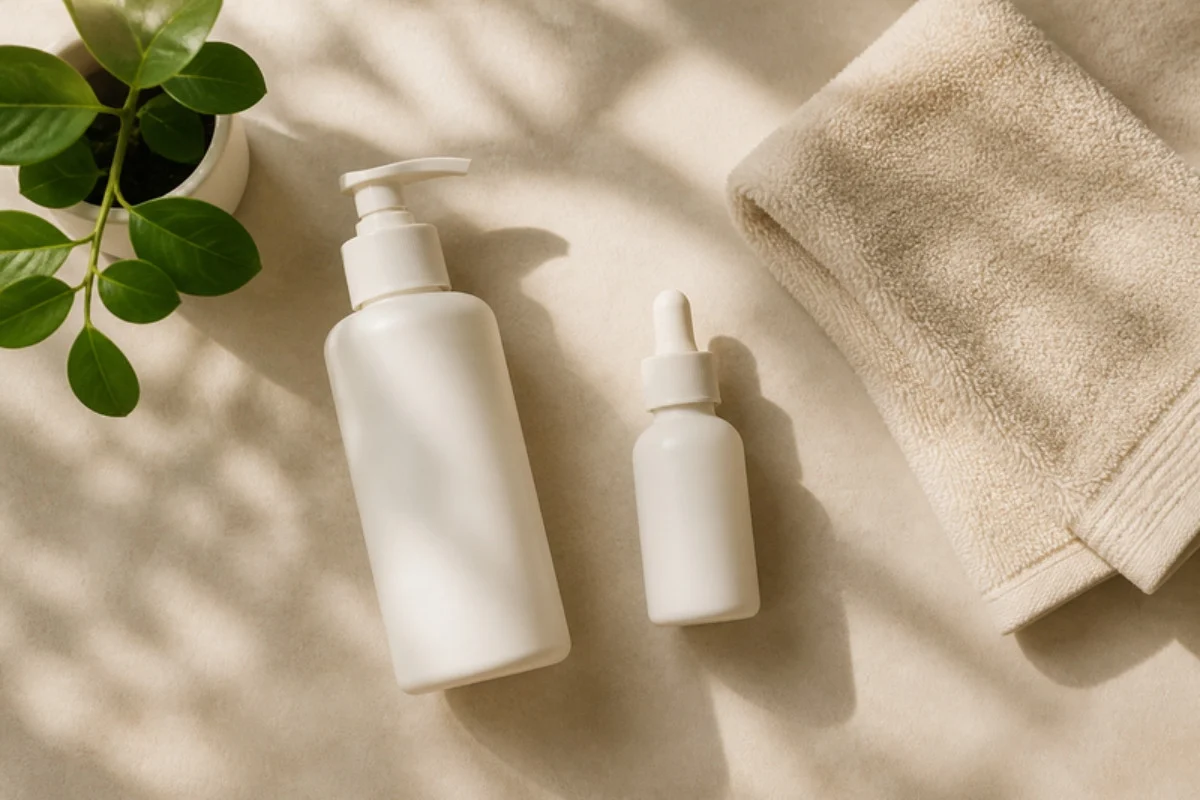
A body serum goes under your lotion or oil.
Who a body serum suits
A body serum suits people who like a light layer that soaks in fast, or who want to add a targeted step to their body routine. Pair it with a lotion for dry skin or a body oil if your skin is dry.
How to use a body serum in 6 steps
- Shower first. Use warm water.
- Pat dry. Leave skin a little damp.
- Apply the body serum. A pump or two per area.
- Smooth in. Use upward strokes.
- Wait a minute. Let it absorb.
- Moisturize. Seal with lotion or oil.
For dry skin, the AAD suggests keeping baths and showers short, using warm instead of hot water and moisturizing right after bathing (AAD).
Tips for choosing a body serum
- Read the label. Pick one for your goal.
- Try a small amount first. Test before full use.
- Choose fragrance-free if sensitive. It is gentler.
- Check the texture. Gel for oily skin, richer for dry.
- Follow the directions. Some are for night only.
The AAD suggests testing a new product on a small area of skin twice a day for several days and stopping if a reaction appears (AAD).
Building your routine
Use your body serum once a day, after the evening shower or bath. Pair it with a gentle shower gel and exfoliate once or twice a week with a sugar scrub. Keep the bottle closed and away from heat. Fragrance can bother some skin, as the FDA notes (FDA).
Choosing a formula
Read the front and back of the bottle to see what the product is for. Some aim to make skin feel smoother, others to give a glow or extra hydration. Gel textures feel lighter and suit warm weather and oily areas. Milky or creamy textures feel richer and suit dry areas such as the legs, elbows and knees. Choose a pump bottle if you like quick application after the shower. If your skin is sensitive, pick a short ingredient list and no added fragrance.
Where to apply
Focus on areas that feel dry or rough, such as the legs, arms, elbows and knees. Smooth a little over the chest and shoulders if you like a soft glow there. Wash your hands afterwards unless the label says the product is safe for the hands too. Let it sink in before you put on clothes.
Morning or night
Most people use this step in the evening, when there is more time to let it absorb before bed. You can use it in the morning too; just give it a minute to soak in before dressing, and wear sunscreen on exposed skin during the day.
Mistakes to avoid
- Applying to fully dry skin. It spreads less well.
- Skipping moisturizer. The serum works best sealed in.
- Using too much. It feels sticky.
- Mixing many actives. Keep the routine simple.
- Skipping the patch test. Test new products first.
It is a step, not a replacement for moisturizer.
For the full routine, see our body care routine. A body serum is an easy upgrade.
FAQ
Is a body serum the same as lotion?
No, it is lighter and goes underneath.
When do I apply it?
After the shower, on damp skin.
Do I still need lotion?
Yes, to seal it in.
Can I use face serum on my body?
Body serums come in larger sizes for that job.
How often?
Once a day.
Is it good for dry skin?
Pair it with a rich moisturizer.
Related guides: Solid Perfume: How to Apply It and Make It Last, Squalane Oil: How to Use It for Soft, Smooth Skin.
Written by Mahmoud Abdelmaksoud.