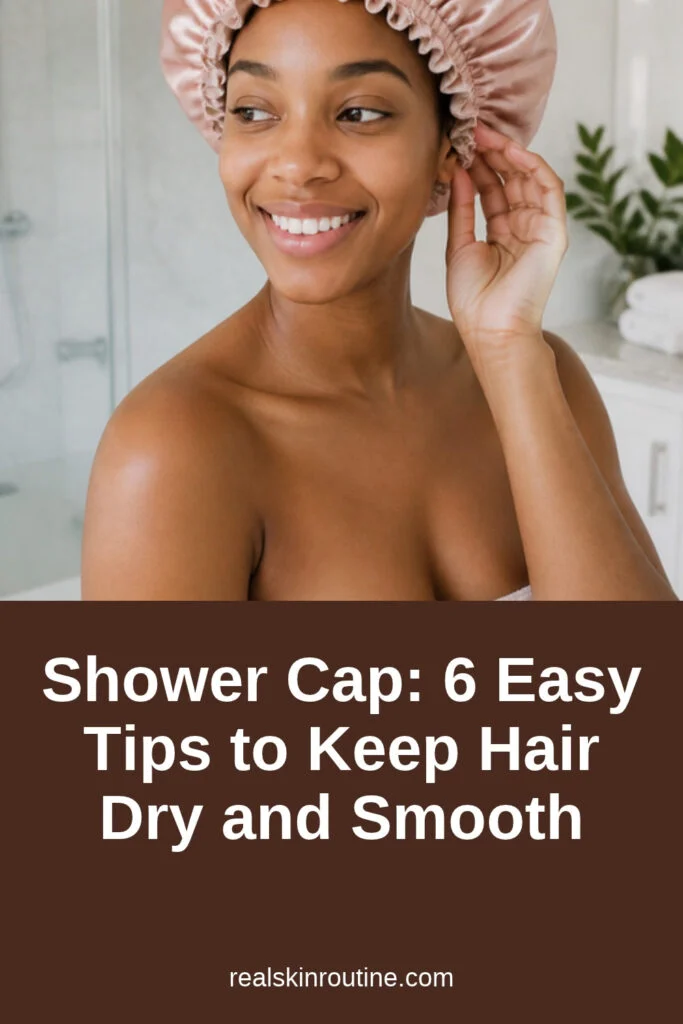
Quick answer: A shower cap is a waterproof cap that keeps your hair dry while you shower. Put it on with all your hair tucked inside and the elastic just past your hairline. Choose a lined cap to block steam, a size that fits your hair, and dry it after each use.
Table of Contents
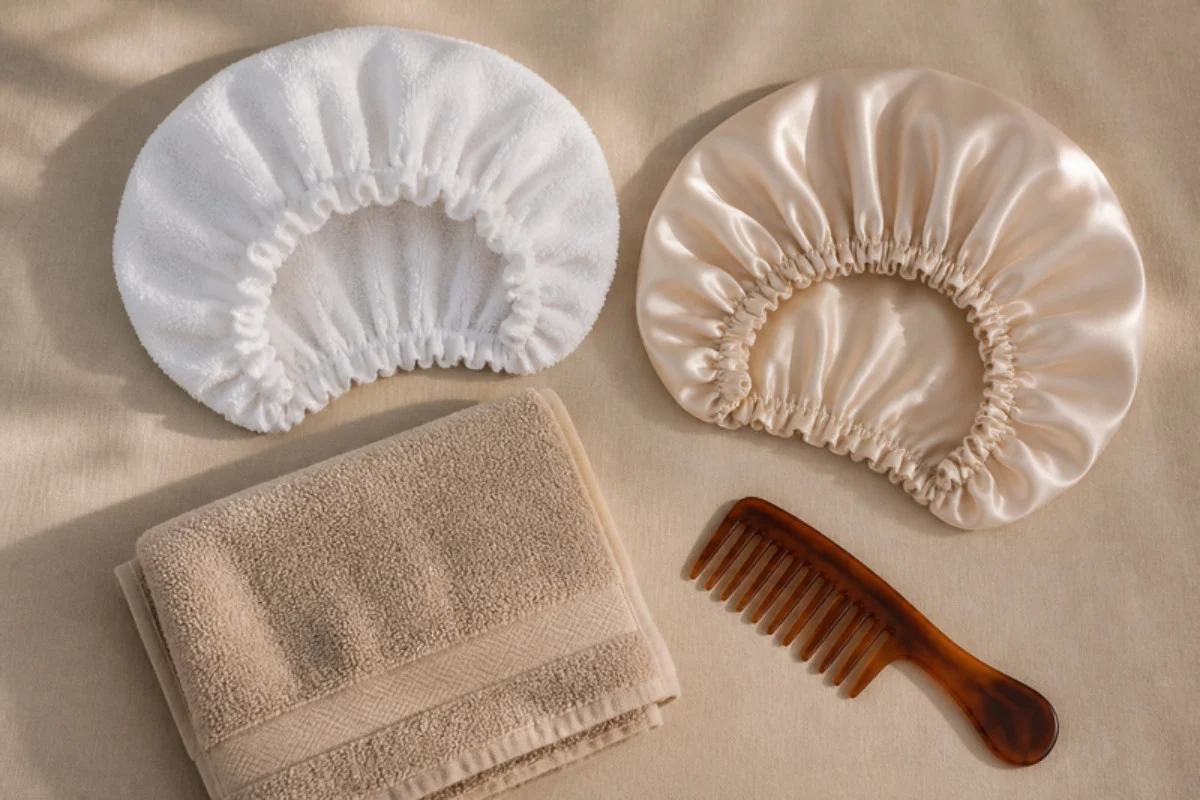
Types of shower cap
| Type | Lining | Best for |
|---|---|---|
| Plastic | None | Quick showers |
| Terry-lined | Absorbs steam | Blowouts |
| Satin-lined | Smooth | Curls and frizz-prone hair |
| Oversized | Any | Long hair and braids |
A lined shower cap helps keep steam away from your hair.
Who needs a shower cap
A shower cap helps anyone who washes hair less often than they shower. It protects a blowout, curls, braids and silk presses. It also keeps hair dry when you use a hair mask under the cap, or when you just want a quick shower.
How to wear a shower cap in 6 steps
- Gather your hair. Twist it into a loose bun.
- Open the cap. Stretch the elastic with both hands.
- Place it from the front. Start at the hairline.
- Pull it back. Cover the bun and the nape.
- Tuck in strays. Push loose strands inside.
- Check the fit. Snug, but not tight.
Keep the water at your shoulders, not on your head.
Tips for keeping hair dry
- Use a lined cap. It blocks steam.
- Keep showers short. Less steam, less frizz.
- Turn the shower head down. Aim it at your body.
- Choose the right size. Long hair needs more room.
- Sleep in a bonnet. Try a satin bonnet.
For dry skin, the AAD suggests keeping baths and showers short, using warm instead of hot water and moisturizing right after bathing (AAD).
Caring for your shower cap
Hang your shower cap to dry after each use so it does not stay damp. Wash a fabric-lined shower cap by hand every week or two in mild soap and let it air dry. Replace a shower cap when the elastic gets loose or the lining starts to wear out. The AAD also suggests being gentle with wet hair and using a wide-tooth comb to detangle (AAD).
Choosing the right size and fabric
Measure how much hair you have when it is gathered in a loose bun. Short and medium hair fits a standard size, while long, thick or braided hair needs an extra-large style with more room at the back. A wide, soft band is more comfortable than a thin elastic and is less likely to leave a mark on your forehead. Outer fabrics such as polyester or nylon dry quickly, and a lining adds comfort. If you share a bathroom, choose a pattern or color so everyone can tell theirs apart.
Using it for hair masks
A cap also helps when you leave a conditioning mask on your hair. Apply the mask, twist your hair up, cover it and then go about your routine for the time on the label. The cap keeps the product off your clothes and furniture. Rinse the mask out well afterwards.
Common mistakes
- Using a cap that is too small. Hair slips out.
- Leaving it damp. It can smell.
- Wearing the elastic tight. It can leave a mark.
- Taking hot, long showers. Steam still gets in.
- Forgetting the nape. The back gets wet.
A good fit is the key.
For your whole routine, see our shower routine guide. A shower cap is a small tool that saves styling time.
FAQ
Does a shower cap stop frizz?
A lined one helps by blocking steam.
Can I wear one with braids?
Yes, choose an oversized cap.
How often should I wash it?
Every week or two if it is lined.
Can I use it for a hair mask?
Yes, it keeps the mask in place.
Which lining is best for curls?
Satin.
When should I replace it?
When the elastic gets loose.
Related guide: Bath Pillow: How to Choose One for a Comfortable Soak.
Written by Mahmoud Abdelmaksoud.