


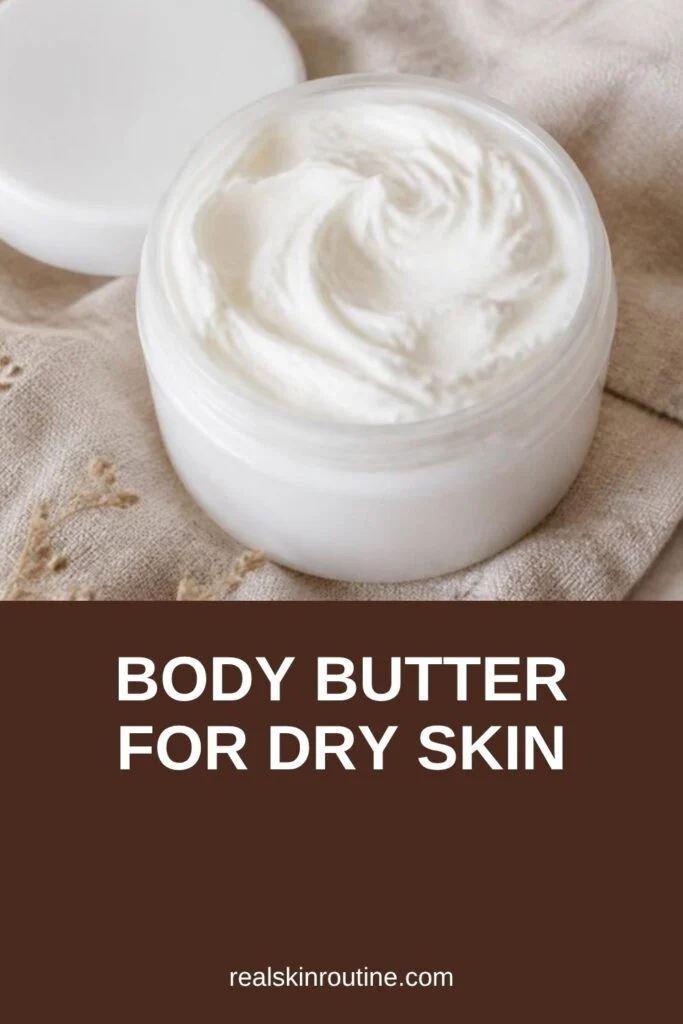
Quick answer: A body butter for dry skin is a thick, rich cream built on butters like shea or cocoa, and it works best on skin that is still slightly damp after a shower. The AAD says creams and ointments add more moisture than lotions, and it lists shea butter, glycerin, dimethicone and petrolatum among helpful ingredients (AAD).
Table of Contents

How to choose a body butter for dry skin
- Look for real butters near the top of the list. Shea butter, cocoa butter and mango butter give the rich feel.
- Check for humectants too. Glycerin or hyaluronic acid pull water into the top layer of skin.
- Go fragrance-free. The AAD suggests fragrance-free products over “unscented” ones for dry skin.
- Pick a texture you enjoy. Whipped butters feel lighter; dense butters feel more like a balm.
- Think about where you’ll use it. Elbows, knees, shins and heels usually need the most.
Body butter vs lotion vs body oil
| Product | Feel | Best for |
|---|---|---|
| Body lotion | Light and quick to sink in | Mildly dry skin, warm weather |
| Body butter | Thick, rich, cushiony | Very dry areas, cold months, night |
| Body oil | Silky, glowy | Layering under or over cream |
| Ointment | Heavy and protective | Rough heels and small, very dry patches |
We haven’t lab-tested these options. The table compares them by what the label says and how they’re usually made.
A body butter for dry skin sits between a cream and an ointment. It feels richer than lotion, so many people keep lotion for summer mornings and save body butter for evenings and winter.
When and how to apply body butter
Timing makes a big difference. The AAD recommends keeping showers short and warm rather than hot, patting skin dry, and applying moisturizer within minutes while skin is still damp (AAD).
- Shower for 5 to 10 minutes in warm water with a gentle cleanser.
- Pat, don’t rub, so a little water stays on your skin.
- Warm a small scoop of body butter between your palms until it softens.
- Smooth it on in long strokes, starting with the driest areas.
- Give it a few minutes before dressing so it doesn’t transfer to clothes.
Tips for getting the most from body butter for dry skin
- Use less than you think. A small amount spreads further once it melts.
- Layer it for extra softness. A few drops of body oil for dry skin under body butter feels lovely on shins.
- Exfoliate gently now and then. A mild sugar scrub once a week can help butter spread smoothly.
- Run a humidifier in winter. The AAD suggests it for dry indoor air.
- Store it somewhere cool. Butters soften in heat and can turn grainy after melting.
Patch test anything new. The AAD suggests applying a new product to a quarter-sized spot on the underside of your arm or the bend of your elbow twice a day for 7 to 10 days, and stopping if your skin reacts (AAD).
Where body butter fits in your routine
Body butter is the last step after cleansing and any exfoliation. Our body care routine shows the full order, and our shower routine covers water temperature and cleansers. If you prefer something lighter for daytime, see our guide to the best lotion for dry skin.
Many people use two products: a lotion in the morning and a body butter for dry skin at night, when a richer feel doesn’t matter. That split keeps skin comfortable without feeling heavy under clothes.
A body butter for dry skin also makes a lovely hand and foot cream at night. Rub a little into heels, pull on cotton socks, and wake up to softer feet. Keep a small jar by the bed so the habit sticks.
When you shop, compare the first five ingredients on each label. If water and a butter lead the list, the texture will be creamy; if oils and waxes lead, it will feel closer to a balm. Neither is better, so pick the feel you enjoy using every day.
If you only buy one rich product this winter, make it a body butter for dry skin in a size you’ll finish within a few months. Fresh product feels nicer, and a body butter for dry skin is easy to use up when you apply it after every shower.
Common body butter mistakes
- Applying it to fully dry skin. It spreads better and feels softer on damp skin.
- Choosing heavy fragrance. Scent can bother dry, sensitive skin.
- Using too much at once. You’ll feel sticky instead of soft.
- Skipping it after long, hot showers. That’s when skin feels driest.
- Expecting it to fix every rough patch. If skin cracks, bleeds or itches a lot, see a board-certified dermatologist.
Related guides: Perfume Layering: How to Combine Scents, Hand Moisturizer for Dry Hands: What to Look For, Back Scrubber for Shower: How to Pick and Use One, Urea Lotion: What It Is and How to Use It, Body Scrub for Men: How to Choose and Use One.
FAQ
Is body butter good for dry skin?
Yes, for most people. Body butter is a rich cream, and the AAD says creams add more moisture than lotions. Choose a fragrance-free formula.
Is body butter better than lotion?
It’s richer. Lotion suits mild dryness and warm weather; body butter suits very dry areas and cold months.
When should I apply body butter?
Right after a shower, while skin is still slightly damp. Night is a good time if you dislike a rich feel under clothes.
Can I use body butter on my face?
Most body butters are too heavy for the face. Use a facial moisturizer instead.
Why does my body butter feel greasy?
You may be using too much. Warm a small amount between your palms and spread it thinly over damp skin.
Written by Mahmoud Abdelmaksoud.



1 comment