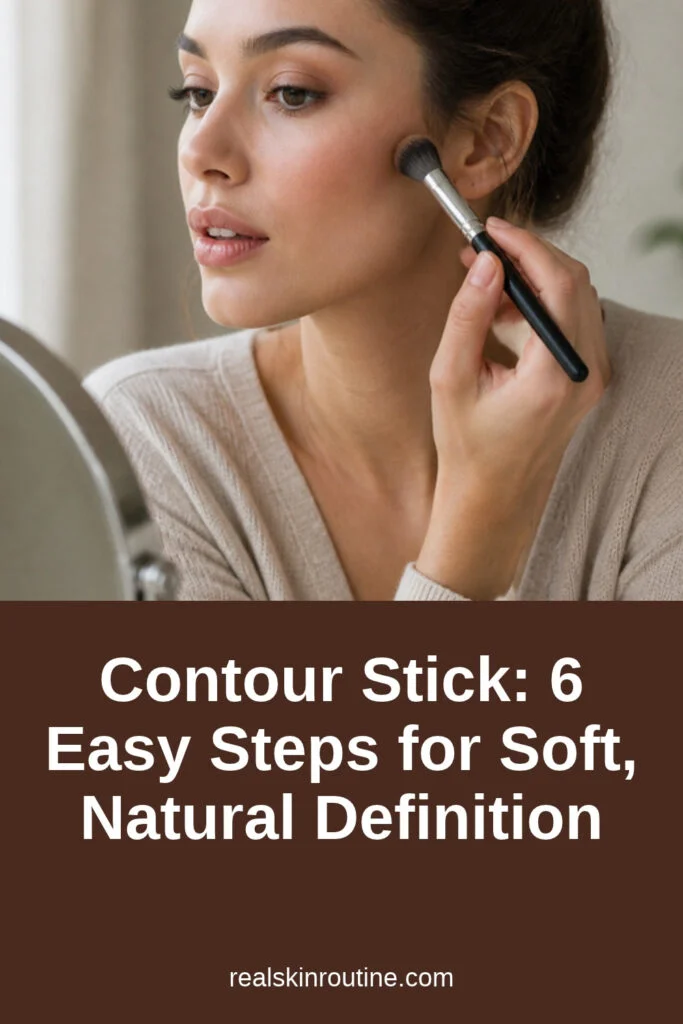
Quick answer: A contour stick is a cream product in a twist-up stick used to add soft shadow and shape. Swipe a light line under the cheekbones, along the jaw and at the temples, then blend upward with a brush or damp sponge until no lines show.
Table of Contents

Where to place a contour stick
| Area | Placement | Effect |
|---|---|---|
| Cheekbones | Just under the bone | Lifted cheeks |
| Jawline | Along the jaw edge | Defined jaw |
| Temples | Near the hairline | Balanced forehead |
| Nose | Thin lines on the sides | Slimmer look |
Start with the cheekbones if you are new to a contour stick.
Choosing a shade
Pick a shade two or so steps deeper than your skin with a cool or neutral tone, because real shadows are not orange. Bronzer is warmer and adds sun-kissed color, while contour adds shape. On deep skin, choose a rich espresso tone. Test on your jaw in daylight.
How to use a contour stick in 6 steps
- Apply base makeup. Foundation or tinted moisturizer first.
- Find your cheekbones. Feel for the bone.
- Swipe a thin line. Just under the cheekbone.
- Add jaw and temples. Light strokes only.
- Blend upward. Use a brush or damp sponge.
- Set lightly. A dusting of powder if you like.
Blend until you cannot see where the product starts.
Tips for natural contour
- Use less than you think. You can always add more.
- Blend toward the hairline. Not down toward the mouth.
- Check in daylight. Indoor light can fool you.
- Use a damp sponge. It melts cream into skin.
- Clean your tools. See how to clean makeup brushes.
The AAD recommends cleaning makeup brushes regularly, because product, oil and dirt build up in the bristles (AAD).
Stick vs powder contour
Cream sticks melt into the skin and look natural, and they suit normal and dry skin. Powder contour is easier to build on oily skin. You can also layer a little powder over cream for longer wear. For the full method, see how to contour.
Adjusting for your face shape
For a round face, place the shade a little higher and angle it toward the temples. For a long face, keep it closer to the ears and add a little at the hairline and under the chin. For a square face, soften the corners of the jaw. Small changes make a big difference.
Quick everyday routine
On busy mornings, do just the cheekbones. Swipe, blend with your fingers, and finish with a little blush on the apples of your cheeks. It takes under a minute and adds gentle shape without looking heavy. Save the full jaw and temple routine for evenings and photos.
Common mistakes
- Using a warm orange shade. It looks muddy.
- Placing it too low. It drags the face down.
- Not blending. Stripes show.
- Too much product. Start with a thin line.
- Applying over powder. Cream can go patchy.
Soft placement and blending give the most natural result.
For a full look, see how to do makeup. A contour stick is a quick way to add soft shape.
FAQ
Is a contour stick good for beginners?
Yes, it is easy to blend.
Contour or bronzer?
Contour adds shape; bronzer adds warmth.
What shade should I pick?
A cool or neutral tone a little deeper than your skin.
Brush or sponge?
Either; a damp sponge gives a soft finish.
Can I use it on oily skin?
Yes, set it with a little powder.
Where should I start?
Under the cheekbones.
Related guide: Eyeshadow Palette: How to Choose and Use One.
Written by Mahmoud Abdelmaksoud.