


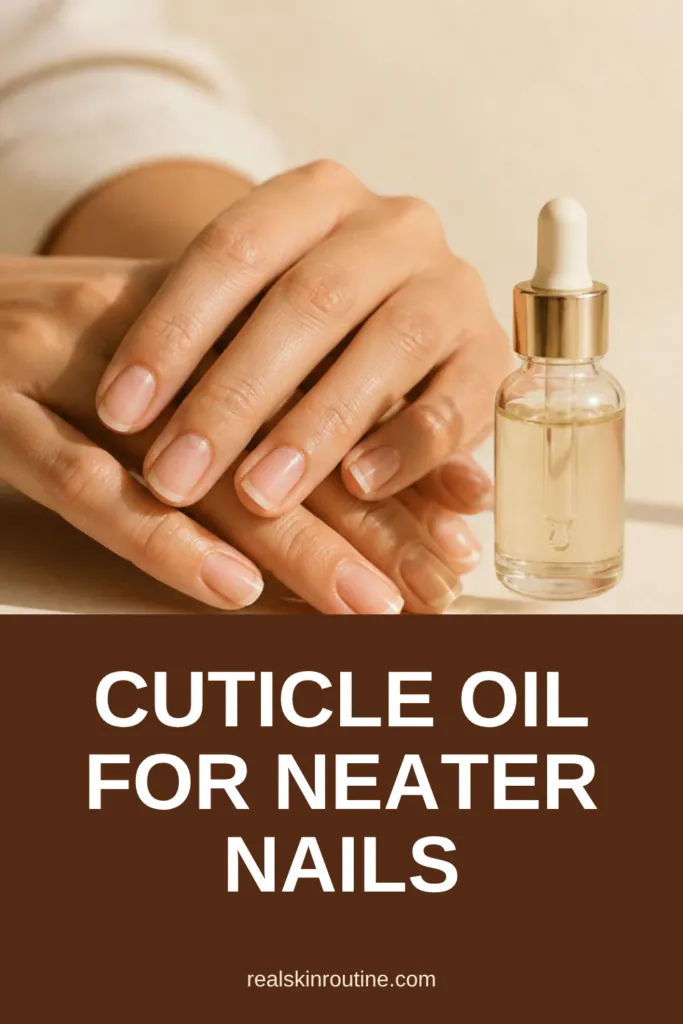
Quick answer: Cuticle oil softens and conditions the skin around your nails so your manicure looks neater and your cuticles look less ragged. Put one drop at the base of each nail, massage it in for a few seconds, and let it sink in. Use it daily, and it works best at night when your hands stay still.
Table of Contents
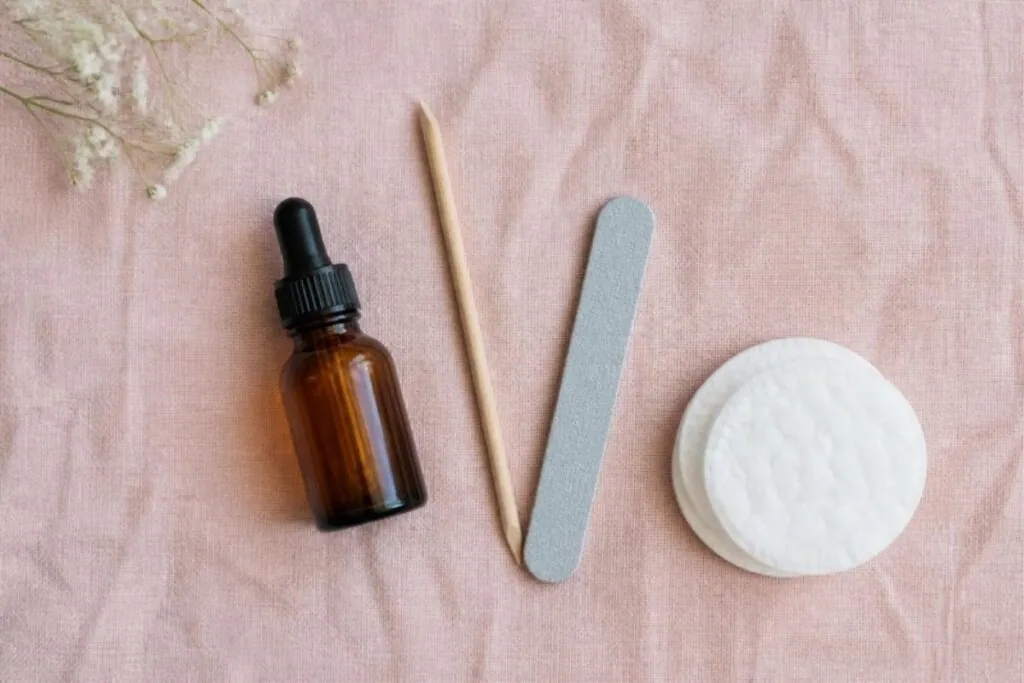
Your cuticle oil routine at a glance
- Wash and dry your hands.
- Put one drop (or one swipe of a pen) at the base of each nail.
- Massage it into the cuticle and sides of the nail with your thumb.
- Rub any leftover oil into your fingertips and nails.
- Follow with hand cream if you like.
Time: about 1 minute. How often: once a day, or whenever your cuticles look dry.
What does cuticle oil actually do?
It moisturizes the cuticle area, so it looks smoother and less flaky, and gives nails a bit of shine. It also helps your manicure look freshly done between appointments. It won’t change the shape of your nails, and it’s not a replacement for a manicure. Think of it as the finishing step.
How often should you oil your cuticles?
Daily is easy to keep up. Many people keep a pen in their bag or on the nightstand. If you do your nails at home, oil after polish is fully dry, and keep going every day to keep the edges looking neat.
What is the best oil for cuticles?
Most cuticle oils are blends of plant oils, such as jojoba, sweet almond or apricot kernel oil, sometimes with vitamin E and fragrance. There’s no single best oil. Pick by:
- Texture: thin, fast-absorbing oils suit daytime. Richer oils suit night.
- Scent: fragrance-free if you don’t like scented products on your hands.
- Format: see the table below.
Check the ingredient list if you avoid a specific oil, such as a nut oil.
Cuticle oil pen vs bottle
| Format | Pros | Cons |
|---|---|---|
| Pen (click or brush tip) | Mess-free, fits in a bag | Less product for the price |
| Dropper bottle | Easy to control, good for home | Can spill |
| Brush-in-cap bottle | Works like nail polish | Brush can get gunky |
| Roller | Quick and portable | Can apply unevenly |
Is Vaseline better than cuticle oil?
They do different things. Petroleum jelly sits on top of the skin and is heavy, so it’s handy at night but greasy during the day. Cuticle oil sinks in faster and doesn’t leave your hands slick. Many people use oil in the day and a thicker balm at night.
How to fit cuticle oil into an at-home manicure
- Remove old polish.
- Shape nails with a file, in one direction.
- Soften cuticles with warm water or a cuticle remover, then gently push them back with an orange stick.
- Wash hands, then paint base coat, color and top coat.
- When polish is fully dry, apply cuticle oil around each nail.
Don’t cut your cuticles. Pushing them back gently is enough for a neat look.
Want smoother skin all over? Our guide to the exfoliating scrubber covers the body side of your routine. For nail basics, the American Academy of Dermatology’s tips for healthy nails advise against removing the cuticle, which is why oiling it is the gentler habit.
Doing your own manicure? Our guide to gel nails at home walks you through each step.
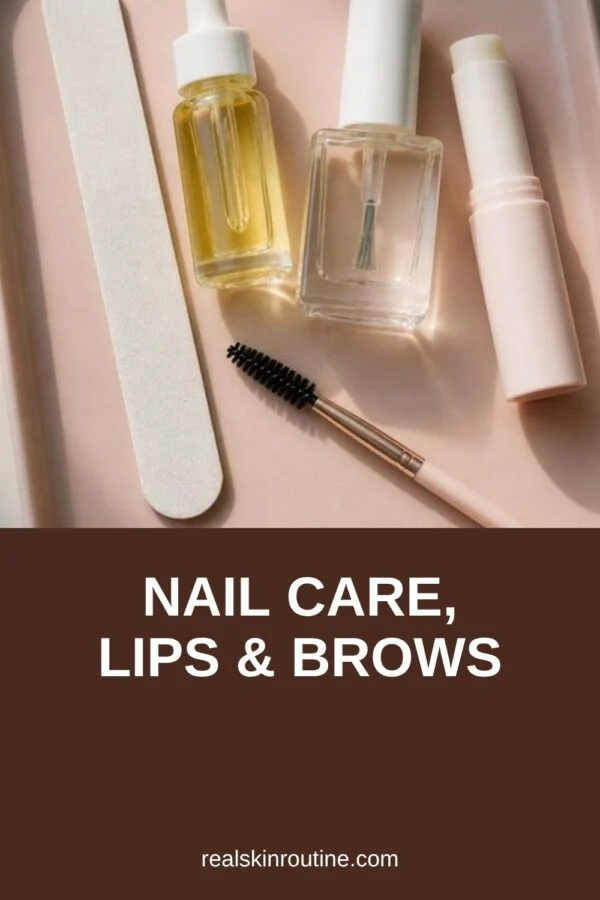
For more tips on nails, lips and brows, read our guide to nail care.
FAQ
What does cuticle oil actually do?
It conditions the skin around your nails so cuticles look smoother and your manicure looks neater.
How often should you oil your cuticles?
Once a day is plenty for most people. Night is a good time.
What is the best oil for cuticles?
Most are blends of plant oils like jojoba or sweet almond. Pick the texture, scent and format you’ll actually use.
Is Vaseline better than cuticle oil?
Not better, just different. Oil absorbs faster, and petroleum jelly is heavier and works well at night.
Written by Mahmoud Abdelmaksoud.



2 comments