Quick answer: Headband hairstyles use a band to hold hair back or add a stylish finish. Wear a padded band with loose waves, pair a thin band with a low bun, or use a fabric band with a ponytail. Place the band just behind your hairline, push it back slightly for volume and choose one that feels snug but not tight.
Table of Contents
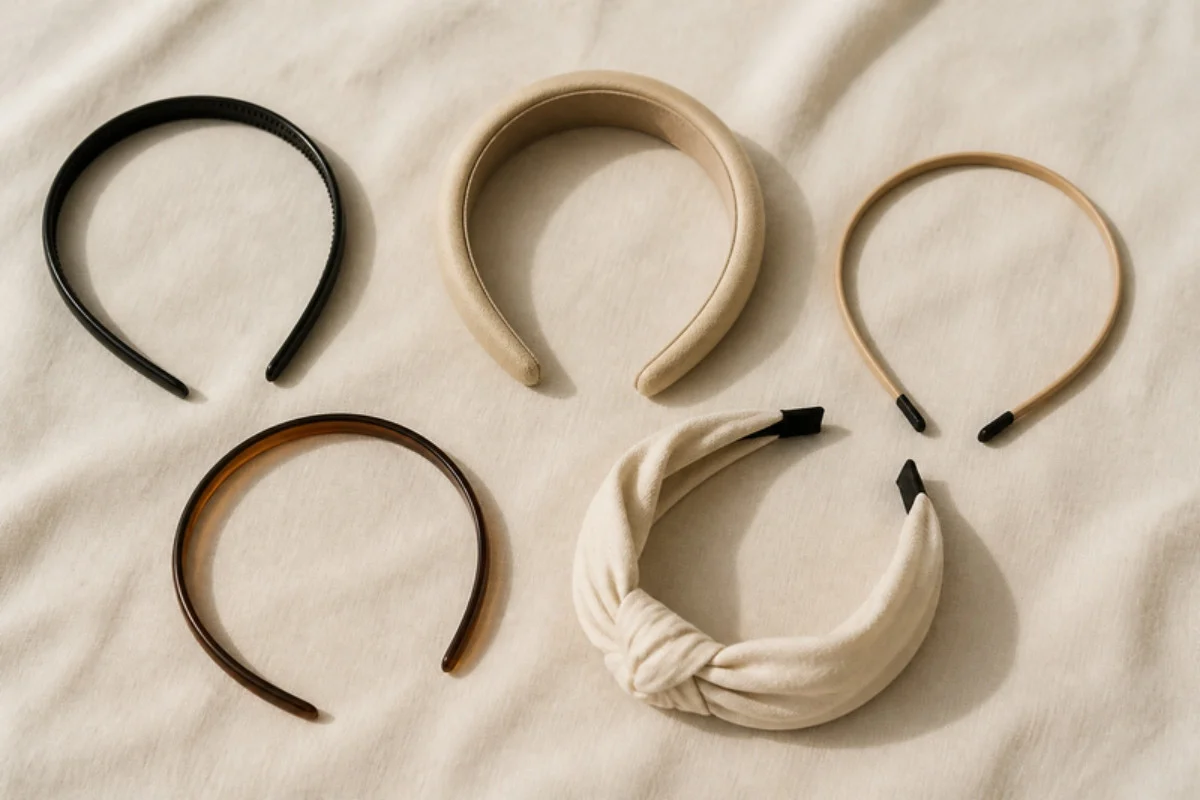
Types of headband
| Type | Look | Best for |
|---|---|---|
| Padded | Bold and polished | Loose hair |
| Thin metal or plastic | Minimal | Short hair |
| Knotted fabric | Relaxed | Everyday |
| Wide stretchy | Sporty | Workouts |
| Embellished | Dressy | Events |
A soft fabric band is the most comfortable for long wear.
Who these styles suit
Headband hairstyles suit all hair lengths. On short hair, a thin band keeps pieces off your face. On long hair, a padded band looks bold with waves or a sleek blowout. Curly hair looks great with a wide fabric band. If you have a fringe, wear the band behind it. For a sleek finish, see our blowout at home guide.
7 headband hairstyles to try
- Loose waves and a padded band. A classic, polished look.
- Low bun and a thin band. Neat for work.
- Ponytail and a fabric band. Easy and sporty.
- Half-up twist and a band. Romantic and soft.
- Braids and a wide band. Holds edges in place.
- Curly hair and a knotted band. Shows off texture.
- Sleek blowout and a bold band. Dressy for events.
Wear the band about an inch behind your hairline.
Tips for comfortable headbands
- Pick the right size. Snug, not tight.
- Choose soft fabric. It presses less behind the ears.
- Push it back slightly. It adds volume at the crown.
- Pin it if it slips. Two small pins behind the ears help.
- Take breaks. Remove it if it feels sore.
The AAD advises wearing your hair loose when you can and keeping ponytails, buns and braids loose rather than tight, because tight styles pull on the hair (AAD).
Common headband mistakes
- Wearing a band that is too tight. It can feel sore after a few hours.
- Placing it too far forward. It flattens the hair.
- Wearing it on wet hair. It can leave a dent.
- Matching too much. One statement accessory is enough.
- Ignoring slippage. Add texture or pins.
A little texture spray stops a band from sliding back.
Pairing bands with your outfit
Neutral bands in black, brown or cream go with everything. A bright or patterned band adds color to a simple outfit. For events, choose pearls or satin. Headband hairstyles also help on second-day hair, since the band hides roots; add a little dry shampoo first. For skincare, use a plush microfiber hair towel or soft band to keep hair back while you wash your face.
Hair care tips
The AAD also suggests being gentle with wet hair and using a wide-tooth comb to detangle (AAD). Take your band off at night and store it so it keeps its shape.
For daily care, see our hair care routine. Headband hairstyles turn a simple look into a finished one in seconds.
FAQ
How do I keep headband hairstyles from slipping?
Add texture or pin it behind the ears.
Do headbands work on short hair?
Yes, thin bands are great for short hair.
Why does my headband hurt?
It may be too tight; try a softer band.
Can I wear one with a fringe?
Yes, place it behind the fringe.
Which headband is best for curls?
A wide fabric band.
Can I wear a headband to work?
Yes, a thin neutral band looks neat.
Related guide: Hair Scarf Hairstyles: 7 Easy Ways to Tie a Scarf.
Written by Mahmoud Abdelmaksoud.