


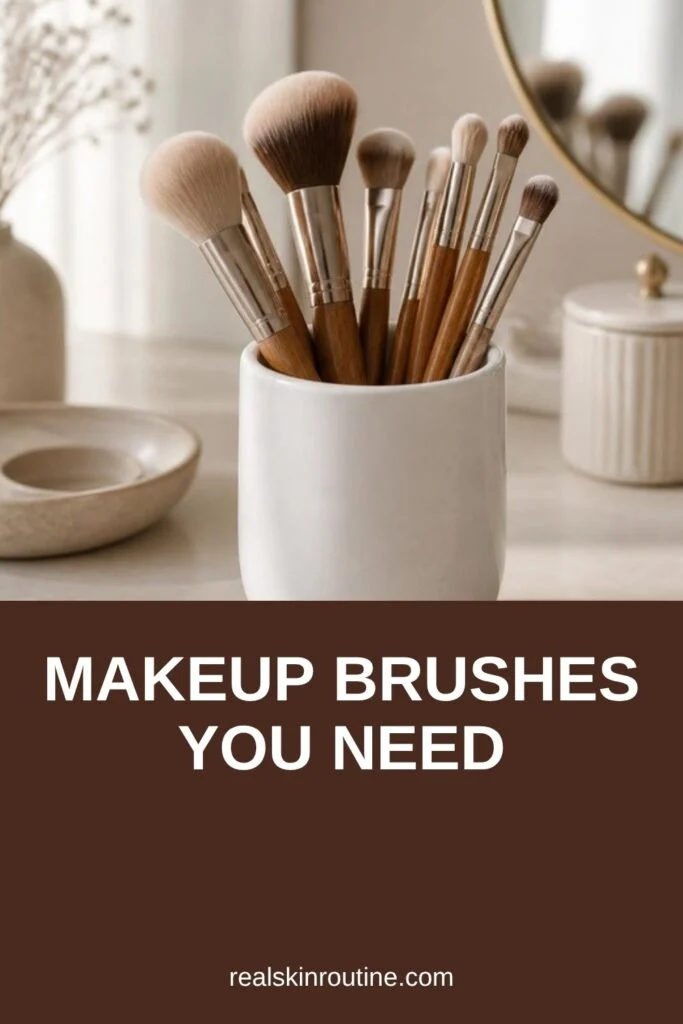
Quick answer: Most people only need about seven makeup brushes: foundation, concealer, powder, blush, eyeshadow, blending and an angled brow brush. Keep them clean, too. The AAD suggests washing makeup brushes every 7 to 10 days and never sharing them (AAD).
Table of Contents
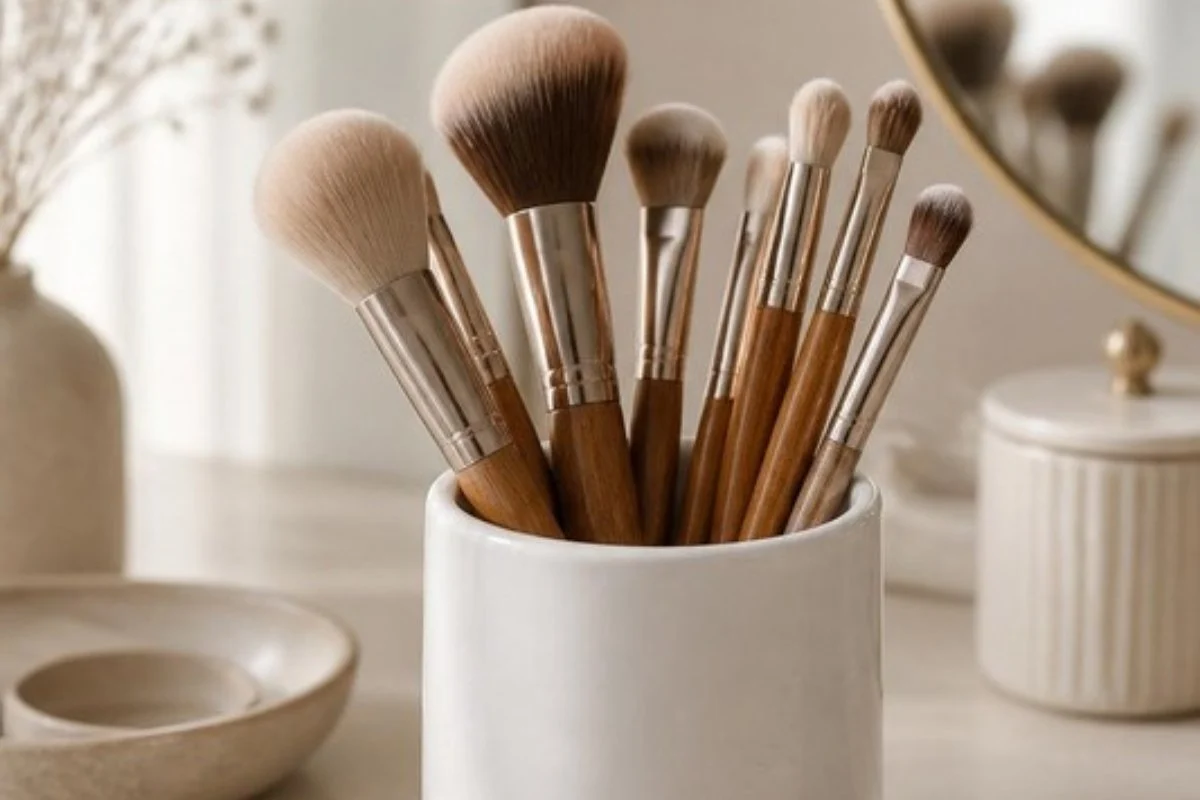
The 7 makeup brushes most people use
| Brush | What it does | Shape |
|---|---|---|
| Foundation brush | Blends liquid or cream base | Flat or dense round |
| Concealer brush | Places concealer precisely | Small, flat, tapered |
| Powder brush | Sets makeup lightly | Large and fluffy |
| Blush brush | Adds color to cheeks | Medium, rounded or angled |
| Eyeshadow brush | Packs color on the lid | Small and flat |
| Blending brush | Softens eyeshadow edges | Fluffy and tapered |
| Angled brow brush | Fills brows with powder | Thin and angled |
We haven’t lab-tested these options. The table compares them by what the label says and how they’re usually made.
How to choose makeup brushes
- Start with what you wear daily. If you only use base and blush, buy those brushes first.
- Choose synthetic bristles for creams. They’re easy to clean and don’t soak up much product.
- Feel the bristles. They should be soft, with no scratchiness.
- Check the ferrule. The metal part should feel tight, with no wobble.
- Pick a handle length you like. Shorter handles are easier for travel.
Synthetic vs natural bristles
Synthetic makeup brushes are made from nylon or similar fibers. They work well with liquids and creams, wash easily and suit anyone who avoids animal hair. Natural-hair brushes pick up powder well but need gentler washing.
For most people, a set of good synthetic brushes covers everything. Pair them with a sponge if you like a dewy base, and see how to apply foundation for technique.
How to clean makeup brushes
Clean makeup brushes every 7 to 10 days, following these steps from the AAD (AAD):
- Rinse only the tips under lukewarm running water.
- Mix a bowl of lukewarm water with a tablespoon of gentle or clarifying shampoo.
- Swirl each tip in the mix, or lather it in your palm.
- Rinse and repeat until the water runs clear.
- Squeeze out water with a clean paper towel.
- Lay brushes flat to dry with the tips hanging off the edge of a counter. Standing them upright can loosen the glue.
How to store your brushes
- Keep them upright only once dry. A cup or jar works well.
- Keep them away from the shower. Steam slows drying.
- Use a travel roll for trips. It protects the bristle shape.
- Group by use. Face brushes in one cup, eye brushes in another.
- Don’t share them. The AAD warns that sharing brushes can spread infections.
Our vanity organization guide has more storage ideas, and our skincare tools page covers other tools worth keeping clean.
Price doesn’t always match performance. Many affordable synthetic sets feel soft and last for years with gentle washing. Spend more on the brush you use most, often the foundation or blending brush, and save on the rest.
If you’re building a kit slowly, a sponge and two brushes, one for powder and one for eyeshadow, cover a simple everyday look. Add others only when you notice a gap in your routine. That way nothing sits unused in a drawer.
Wash sponges more often than brushes, ideally after every use, and let them dry fully in open air. A damp sponge in a closed drawer stays wet and picks up smells. Replace sponges once they tear or stop bouncing back.
Common makeup brush mistakes
- Buying a huge set first. Many brushes go unused.
- Washing the whole brush head under water. Water in the ferrule loosens glue.
- Drying brushes upright. Lay them flat instead.
- Using hot water. Lukewarm is gentler on bristles.
- Going weeks without washing. Aim for every 7 to 10 days.
Related guides: Blemish Concealer: How to Cover Spots Naturally.
FAQ
What makeup brushes do I really need?
Most people use about seven: foundation, concealer, powder, blush, eyeshadow, blending and an angled brow brush.
How often should I wash my brushes?
The AAD suggests every 7 to 10 days.
What should I wash brushes with?
Lukewarm water and a tablespoon of gentle or clarifying shampoo, according to the AAD.
Are synthetic or natural makeup brushes better?
Synthetic brushes suit liquids and creams and are easy to clean. Natural-hair brushes pick up powder well.
How long do brushes last?
Good brushes can last years with gentle care. Replace them when bristles shed, lose shape or feel scratchy.
Written by Mahmoud Abdelmaksoud.



3 comments