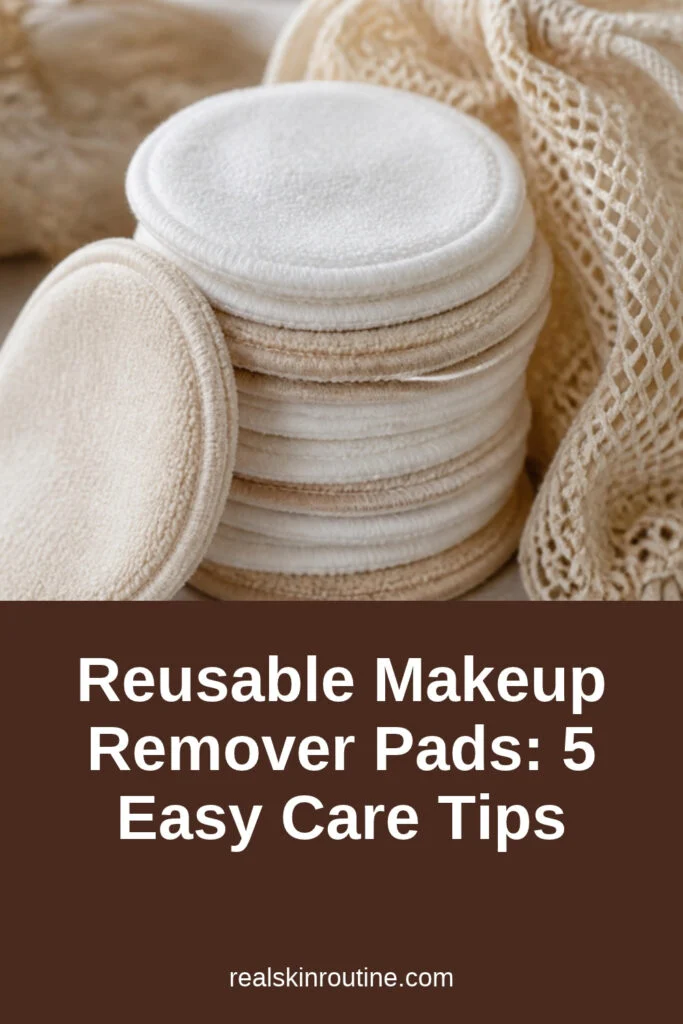
Quick answer: Reusable makeup remover pads are washable fabric rounds you use with a cleanser or makeup remover instead of disposable cotton pads. Soak a pad, hold it on closed eyes for a few seconds, then wipe gently. After use, rinse it, put it in a mesh bag and wash it with your laundry. Reusable makeup remover pads are soft, gentle and easy to care for.
Table of Contents
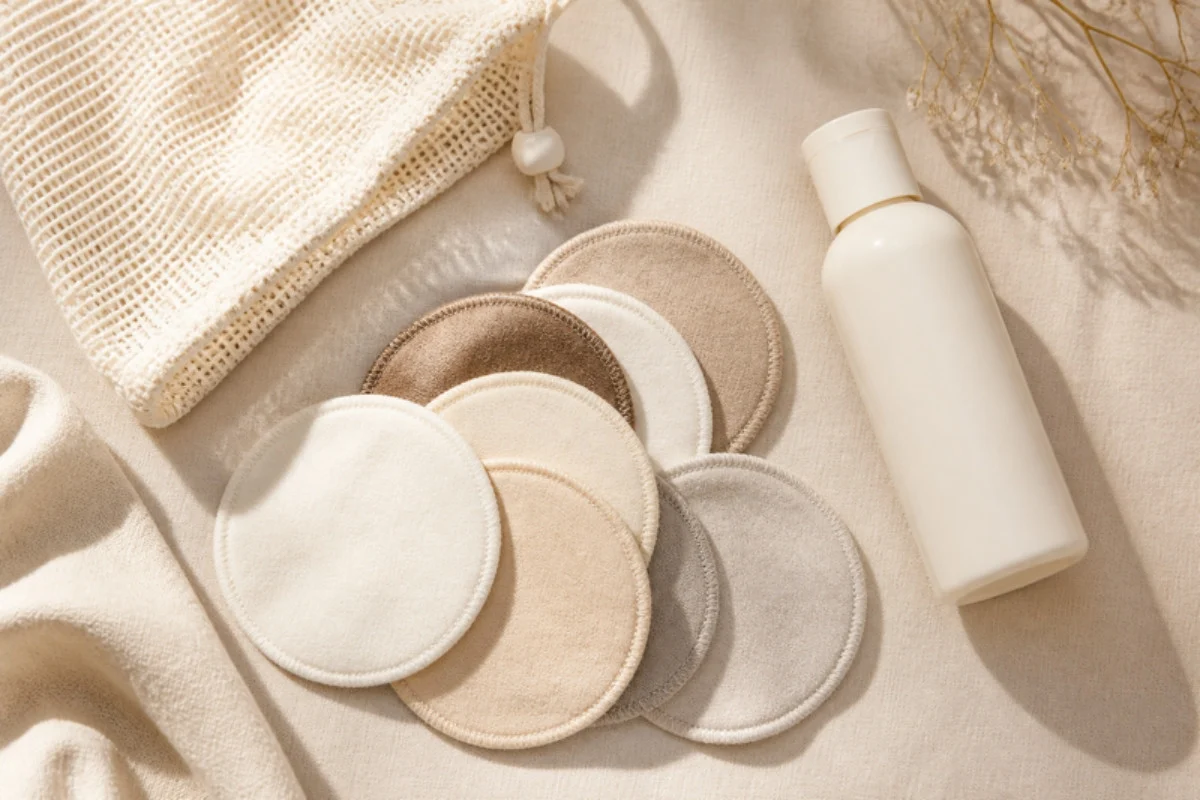
Types of reusable makeup remover pads
| Fabric | Feel | Best for |
|---|---|---|
| Cotton | Soft, absorbent | Everyday use |
| Bamboo blend | Very soft | Sensitive-feeling skin |
| Microfiber | Grips makeup well | Waterproof mascara with remover |
| Two-sided | Smooth and textured | Removing and gentle buffing |
Reusable makeup remover pads made of soft cotton or bamboo suit most people.
Why choose reusable makeup remover pads
Reusable makeup remover pads cut down on the number of single-use cotton rounds you throw away. They are soft on the skin, hold liquid well and can last a long time with good care. They pair well with micellar water, a gentle makeup remover or as a second step after a cleansing balm.
How to use reusable makeup remover pads in 5 steps
- Wet the pad. Soak it with remover or micellar water.
- Hold it on closed eyes. Wait a few seconds so the makeup loosens.
- Wipe gently downward. Do not scrub.
- Use a clean side for the face. Sweep outward over the skin.
- Rinse the pad. Then put it in a mesh bag for washing.
The AAD advises washing your face with lukewarm water and your fingertips, then gently patting it dry with a soft towel (AAD).
How to wash reusable makeup remover pads
- Rinse after each use. Use warm water and a little soap to lift makeup.
- Collect them in a mesh bag. This stops them getting lost in the wash.
- Wash with towels. Use a gentle detergent.
- Skip fabric softener. It can make pads less absorbent.
- Dry fully. Air dry or tumble dry on low.
A small stain does not mean the pad is dirty, but replace pads that feel rough or worn.
Common mistakes with reusable pads
- Leaving them wet in a pile. Rinse and let them dry before washing.
- Using one pad for many days. Use a fresh pad each night.
- Scrubbing hard. Gentle wipes are enough.
- Washing loose in the machine. They get lost; use a bag.
- Using harsh detergent. It can make them rough.
Keep a small stack so you always have a clean pad ready.
Making the switch easy
Start with a small set and use them alongside your usual routine for a week. Keep the clean ones next to your cleanser so they are easy to grab, and hang a small laundry bag nearby for used ones. Once the habit sticks, you can stop buying single-use rounds. Many people find the soft fabric feels nicer on the skin, which makes the change easy to keep up over time.
How many reusable makeup remover pads you need
Most people do well with about two weeks of reusable makeup remover pads, so there is always a clean set while others are in the wash. If you also use pads for toner, add a few more. Keep clean pads in a lidded jar near the sink and a small mesh bag for used ones. This simple setup makes the switch easy to keep up.
For a full evening routine, see our night skincare routine and double cleansing guides. Reusable makeup remover pads are a small, easy swap for daily makeup removal.
FAQ
Do reusable makeup remover pads remove waterproof mascara?
Yes, with a remover made for waterproof makeup.
How often should I wash them?
After each use, by adding them to your laundry.
Can I use them with toner?
Yes, they work with toner too.
Do they stain?
Some makeup can tint them, but clean pads still work well.
How long do they last?
With care, many months.
Can I use fabric softener?
It is best to skip it so they stay absorbent.
Related guide: Spa Headband: How to Keep Hair Back During Skincare.
Written by Mahmoud Abdelmaksoud.