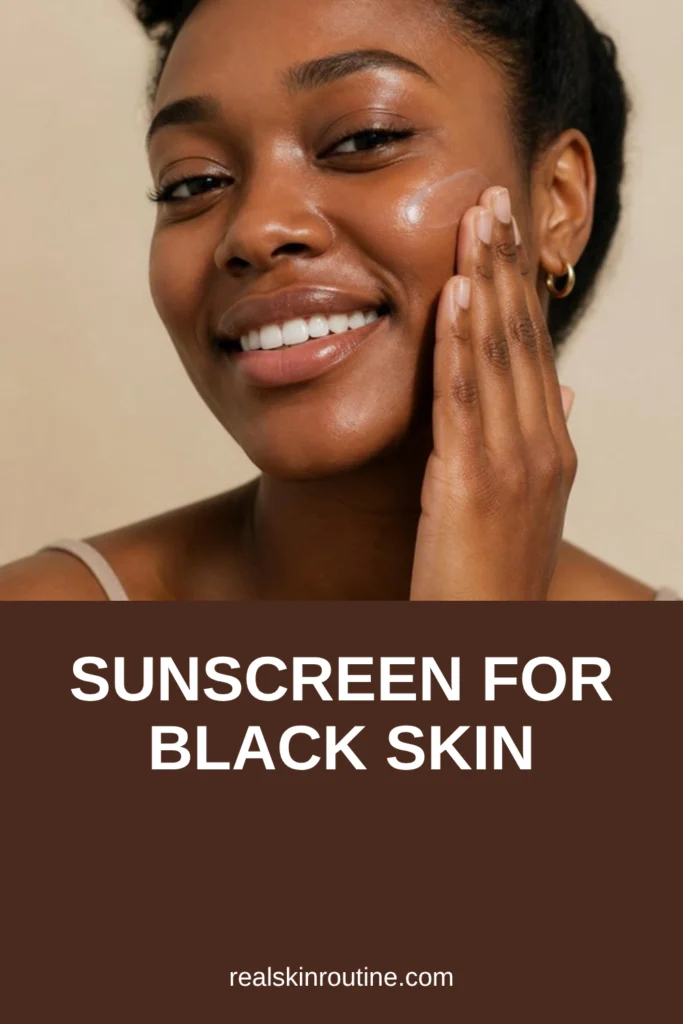
Quick answer: The best sunscreen for black skin is one that blends in with no white or ashy cast. Look for SPF 30 or higher with “broad spectrum” on the label (AAD), then pick a clear gel, a sheer chemical or hybrid formula, or a tinted mineral sunscreen in a deep shade. Test it on your jawline in daylight before you buy a full size.
Table of Contents
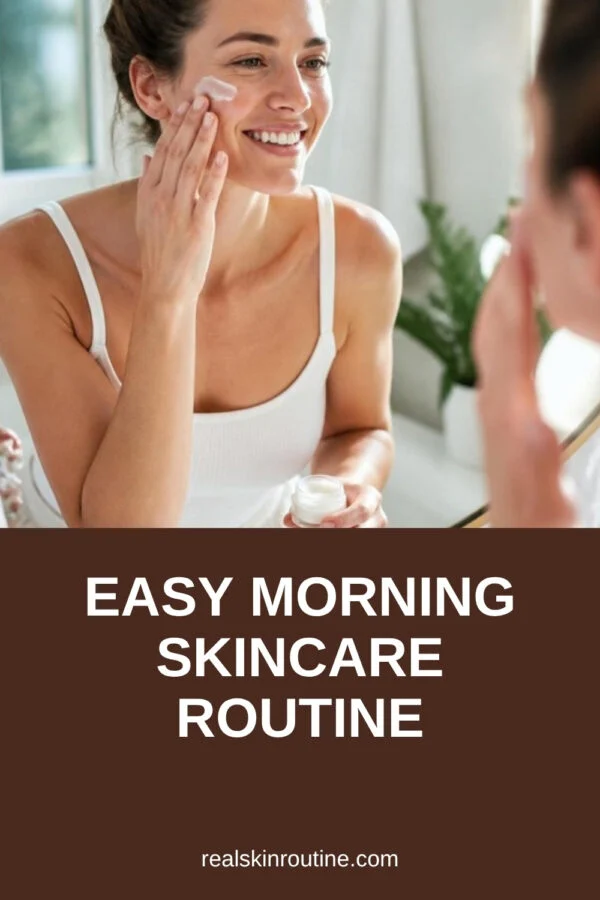
How to apply sunscreen for black skin: quick routine
- Moisturize first if your skin feels tight, and let it absorb.
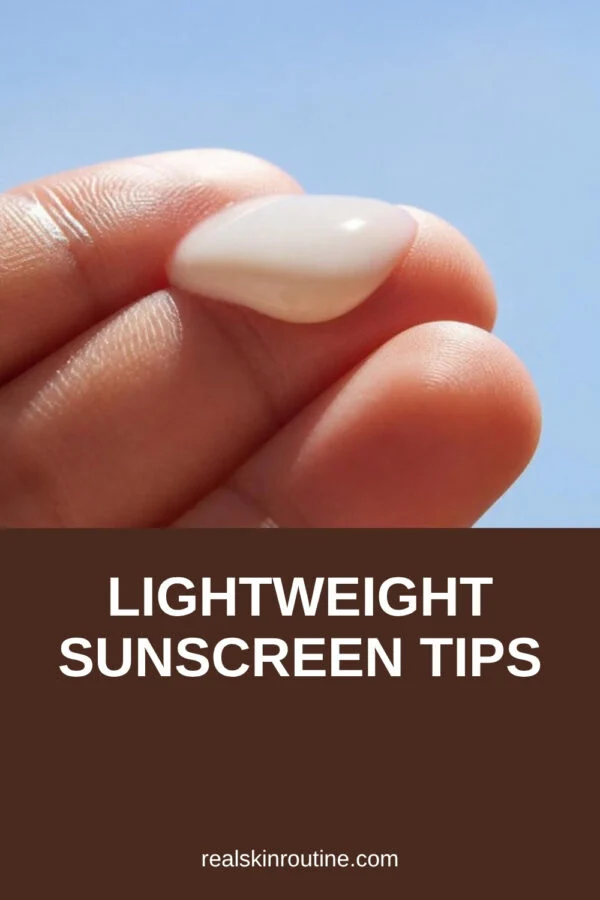
- Apply at least 1 teaspoon of sunscreen to your face, about the length of two fingers (AAD).
- Work it in section by section: forehead, cheeks, nose, chin, ears and neck.
- Check the mirror in daylight. If you see a grey or lilac tint, blend a little longer or switch formulas.
- Outdoors, reapply every two hours and after swimming or sweating (AAD).
Time: about 2 minutes. How often: every morning.
Why some sunscreens leave a white cast
White cast is the pale film some sunscreens leave behind, and it can be more noticeable on deeper skin tones. The AAD notes that tinted sunscreen can help you avoid a white residue or “cast” left by some sunscreens (AAD). The AAD recommends sunscreen for everyone, whatever their skin tone (AAD), so finding one you like wearing is worth the effort.
How to choose sunscreen for black skin
- SPF 30+ and broad spectrum on the label. Broad spectrum means UVA and UVB coverage.
- Clear or sheer finish. Gels, fluids and many chemical or hybrid formulas go on clear.
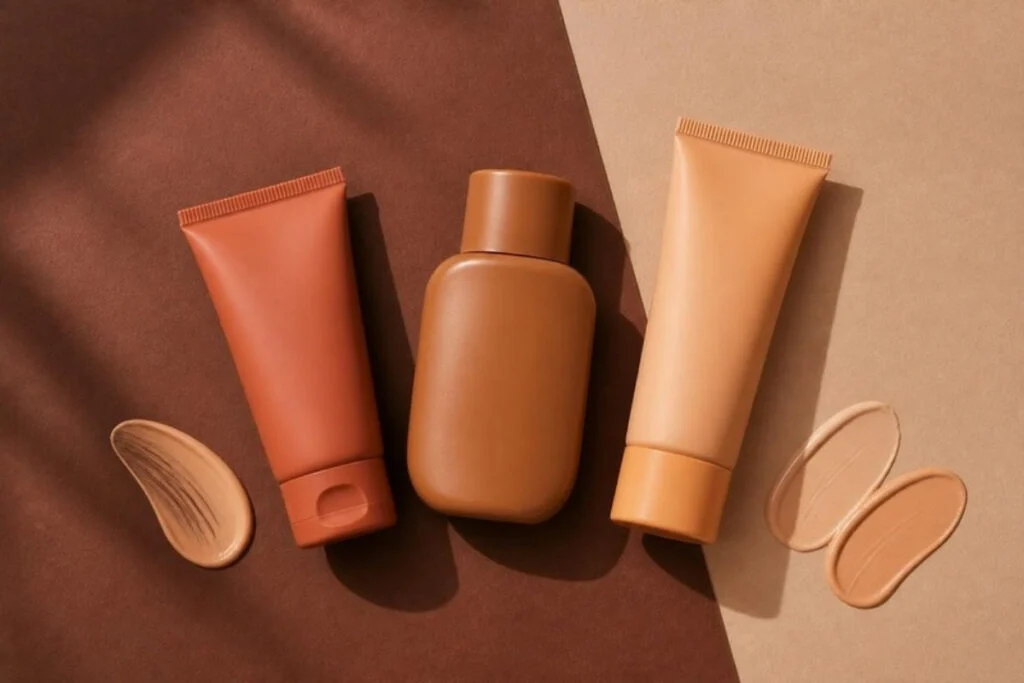
- Tinted mineral in a deep shade. If you prefer mineral filters (zinc oxide, titanium dioxide), a tint helps it blend. Check the shade list, since many ranges are short.
- Finish. Dewy suits dry skin; matte suits shine.
- Swatches on real skin. Retailer photos and reviews with photos show the finish better than the tube.
Sunscreen for black skin: types compared
| Type | Cast risk | Good to know |
|---|---|---|
| Clear gel | Low | Light and fast to dry |
| Chemical or hybrid lotion | Low | Check Active Ingredients if you prefer one filter type |
| Tinted mineral | Low if the shade matches | Shade ranges can be limited |
| Untinted mineral | Higher | Blend well, or add a tinted layer on top |
This compares product types by design, not our own testing.
Fitting sunscreen for black skin into your makeup routine
Once you’ve found a sunscreen for black skin that disappears, the rest of your routine gets easier. Let it settle for a few minutes, then add your base. If your sunscreen has a slight sheen, set only your T-zone with a translucent powder in a shade made for deep skin, since some white setting powders can look ashy too.
Tinted formulas can stand in for a light foundation. If the tint is a little light, mix a drop of your foundation into it or wear a bronzer to warm it up. If it’s a little dark, blend it down onto your neck so the edge disappears.
- Dry skin: a creamy lotion or dewy fluid.
- Oily skin: a clear gel with a satin or matte finish.
- Makeup-free days: a tinted sunscreen gives an even look on its own.
How to test a new sunscreen for black skin
- Swatch a stripe along your jawline and check it by a window.
- Wait 10 minutes. Some formulas look chalky at first, then settle.
- Take a photo with flash if you often get photographed, since some finishes reflect light.
- Wear it under your usual base. Our tinted moisturizer guide covers shade matching if you want light coverage too.
For the full picture, see our simple skin care routine guide, which puts every step in order.
FAQ
What sunscreen doesn’t leave a white cast on dark skin?
Clear gels, sheer chemical or hybrid formulas, and tinted mineral sunscreens in a matching shade are the easiest to blend.
Do Black people need to wear sunscreen?
The AAD recommends sunscreen for everyone, regardless of skin tone.
Is mineral sunscreen OK for deep skin tones?
Yes, if you like the finish. A tinted mineral formula usually blends better than an untinted one.
What SPF should I use?
The AAD recommends SPF 30 or higher with broad spectrum on the label.
Written by Mahmoud Abdelmaksoud.