Quick answer: A body gua sha is a larger, smooth-edged tool, often stone or stainless steel, that you glide over oiled skin in slow strokes. As a beauty ritual, it’s a relaxing way to apply body oil and spend a few calm minutes on your skin. Keep the pressure light, use plenty of oil, and never scrape over broken or irritated skin.
Table of Contents
How to choose a body tool
| Material | Feel | Notes |
|---|---|---|
| Stone (jade, quartz) | Smooth, cool | Can chip if dropped |
| Stainless steel | Cool, very smooth | Easy to clean |
| Ceramic | Smooth, slightly warm | Fragile |
| Resin or wood | Light | Budget-friendly |
We haven’t lab-tested these options. The table compares them by what the label says and how they’re usually made.
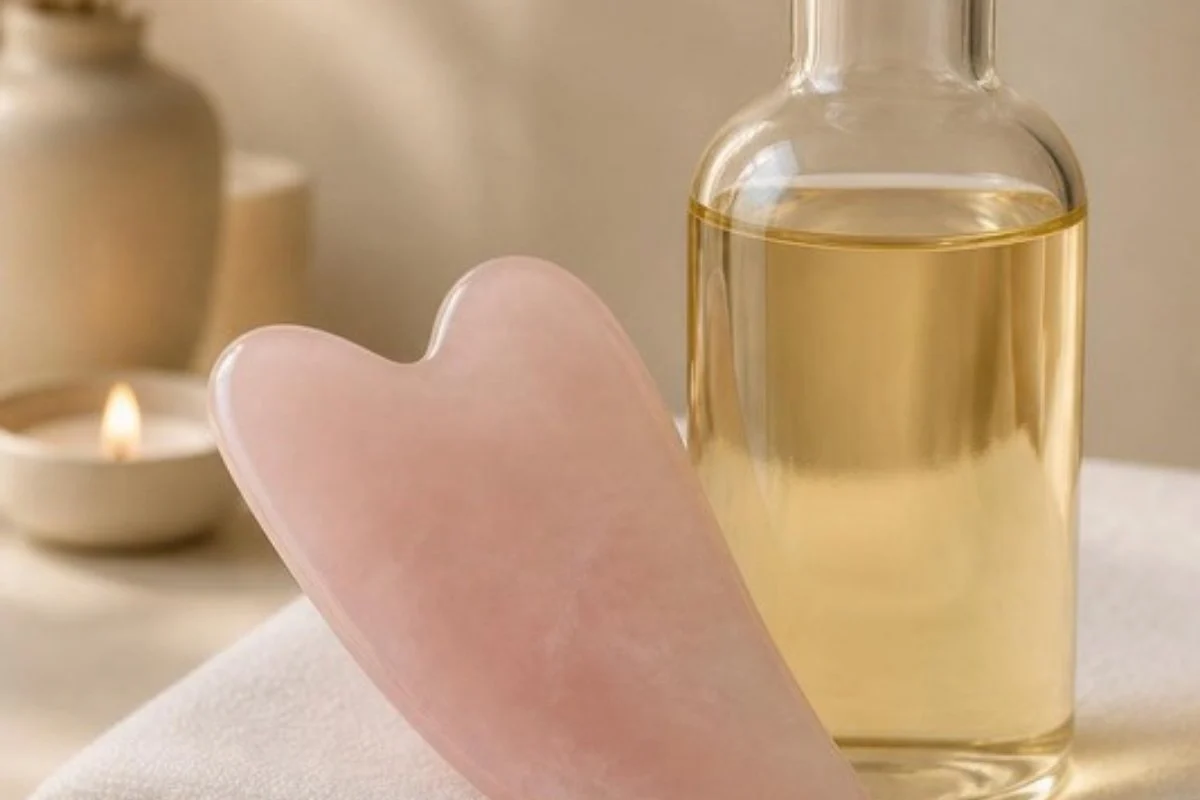
Look for a body gua sha with smooth, rounded edges and a size that fits your hand. A curved side suits legs and arms; a notched side fits around joints.
How to use a body gua sha
- Start on clean, dry skin after a shower.
- Warm a generous amount of oil in your palms. Our body oil for dry skin guide can help you pick one.
- Hold the tool nearly flat, at a low angle to your skin.
- Glide slowly upward in long strokes, three to five times per area.
- Keep the pressure light to moderate. It should feel pleasant, never painful.
Mild pinkness can happen with pressure. If skin bruises or stays red, you’re pressing too hard.
Areas to focus on
- Calves and shins, stroking up toward the knee.
- Thighs, from knee to hip.
- Upper arms, from elbow to shoulder.
- Shoulders and upper back, if you can reach comfortably.
- Skip bony areas, the front of the neck, and anywhere tender.
Patch test anything new. The AAD suggests applying a new product to a quarter-sized spot on the underside of your arm or the bend of your elbow twice a day for 7 to 10 days, and stopping if your skin reacts (AAD).
When to skip it
Avoid areas with cuts, sunburn, rashes, varicose veins or fresh tattoos. Skip it if you bruise easily or are pregnant, unless your doctor says it’s fine. Body gua sha is a self-care ritual, not a fix for any condition.
If anything feels wrong, stop. A few relaxing minutes is the goal.
How to clean and store your tool
Wash the tool with warm, soapy water after each use to remove oil, then dry it well. Store it in a pouch or box so stone edges don’t chip.
Keep it away from hot surfaces, and don’t drop it on tile. A chipped edge can scratch skin, so replace any tool that cracks.
If you’re new to the ritual, start with just your calves and upper arms for a week. Notice how your skin feels with different oils, and keep sessions short. Many people find it most relaxing right before bed, with a warm room and plenty of oil. Keep a towel nearby for your hands and the tool.
Always wipe any leftover oil off the floor afterward, since it can make tile slippery.
Where it fits your routine
Body gua sha works best as the last step of an evening body care routine, after your shower and before bed. Our skincare tools guide covers other tools, including the ice roller for face.
Two or three short sessions a week are plenty. Put on relaxing music and enjoy it.
Think of body gua sha as a slow, mindful moment rather than a workout. Gentle strokes, warm oil and a quiet room make the most of the ritual, and a few minutes of body gua sha is plenty.
Try it for two weeks and notice whether the ritual helps you slow down at the end of the day.
Related guides: Face Oil for Jade Roller: How to Choose and Use It, Perfume Layering: How to Combine Scents.
FAQ
What does body gua sha do?
As a beauty ritual, it’s a relaxing way to massage in body oil and spend calm time on your skin.
How often should I use the tool?
Two or three times a week, a few minutes per area, is plenty.
Do I need oil?
Yes. Oil helps the tool glide instead of dragging on skin.
Should it hurt?
No. Keep pressure light to moderate and stop if anything hurts.
Can I use a face gua sha on my body?
You can, but a larger body tool covers more area and is easier to hold.
Written by Mahmoud Abdelmaksoud.