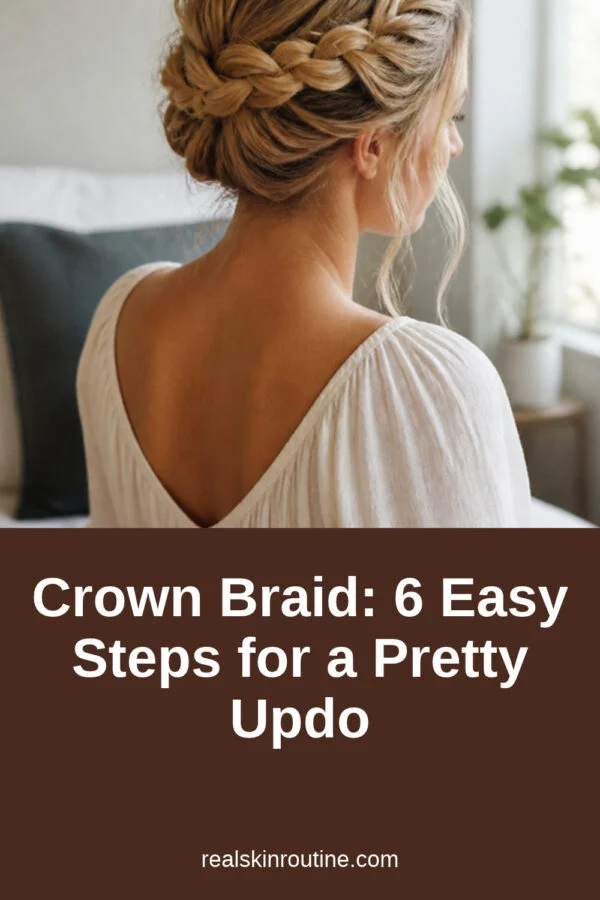
Quick answer: A braided bun is a bun made from one or more braids. The easiest way is to make a ponytail, braid it, then wrap the braid around the base and pin it in place. For a fancier look, braid sections of hair first and then twist them together into a bun at the nape.
Table of Contents

5 braided bun styles
| Style | How | Best for |
|---|---|---|
| Ponytail braid bun | Braid a ponytail and wrap it | Everyday |
| Crown braid bun | Braid around the head into a bun | Events |
| Double braid bun | Two braids twisted together | Thick hair |
| Fishtail wrap | Fishtail braid wrapped low | Soft, romantic looks |
| Braid-wrapped bun | Bun with a braid around it | Work |
The ponytail version is the simplest place to start.
Who a braided bun suits
A braided bun suits medium to long hair. Thick hair makes a big, full style, while fine hair can look fuller if you gently pull the braid loops wider before wrapping. Curly and textured hair holds braids well. The style is practical for work, sports and busy days, and dressy enough for weddings. If you are new to braiding, our how to braid hair guide covers the basic three-strand braid.
How to make a braided bun in 5 steps
- Make a ponytail. Place it high, middle or low.
- Braid the ponytail. Use a simple three-strand braid.
- Loosen the braid. Gently pull the loops wider for volume.
- Wrap it around the base. Coil the braid around the hair tie.
- Pin it. Tuck the end under and add pins around the bun.
Pins pushed in toward the base hold best.
Tips for a neat braided bun
- Start with detangled hair. Use a detangling brush first.
- Add texture. Grip makes braiding easier.
- Keep the braid loose. It looks softer and pulls less.
- Use small clear ties. They hide well.
- Finish with a light mist. It holds flyaways.
The AAD advises wearing your hair loose when you can and keeping ponytails, buns and braids loose rather than tight, because tight styles pull on the hair (AAD).
Common braided bun mistakes
- Braiding too tight. It pulls on the hair.
- Too few pins. The bun can drop.
- Skipping detangling. Knots make braiding harder.
- Heavy product. It weighs the braid down.
- Uneven braid tension. The bun looks lopsided.
If your hair is layered, a little texture spray keeps short pieces in.
Dressing it up
For events, pull a few soft pieces out around the face and curl them with a curling wand. Add small pearl pins or a ribbon around the bun. For a sleek work look, smooth the top with a little edge control or a light gel, then make the braided bun low at the nape. For gym days, keep it high and snug, but not tight.
Hair care tips
The AAD also suggests being gentle with wet hair and using a wide-tooth comb to detangle (AAD). Take the braid out gently at night, finger-combing from the ends.
For daily care, see our hair care routine. A braided bun is pretty, practical and easy to make once you know the steps.
FAQ
Is a braided bun hard?
The ponytail version is easy for beginners.
Does it work on medium hair?
Yes, if the hair is long enough to braid.
How do I make it bigger?
Gently pull the braid loops wider.
Which pins are best?
Bobby pins that match your hair color.
Is it good for sports?
Yes, it keeps hair out of your face.
How long does it take?
About 10 minutes with practice.
Related guide: Messy Bun: How to Make One That Looks Effortless.
Written by Mahmoud Abdelmaksoud.