Quick answer: A curling wand is a clampless heated barrel you wrap hair around for curls or waves. Pick a barrel size for the curl you want, use a heat protectant, and curl small sections on the lowest heat that works. The AAD suggests limiting heat styling to help hair stay healthy-looking (AAD).
Table of Contents
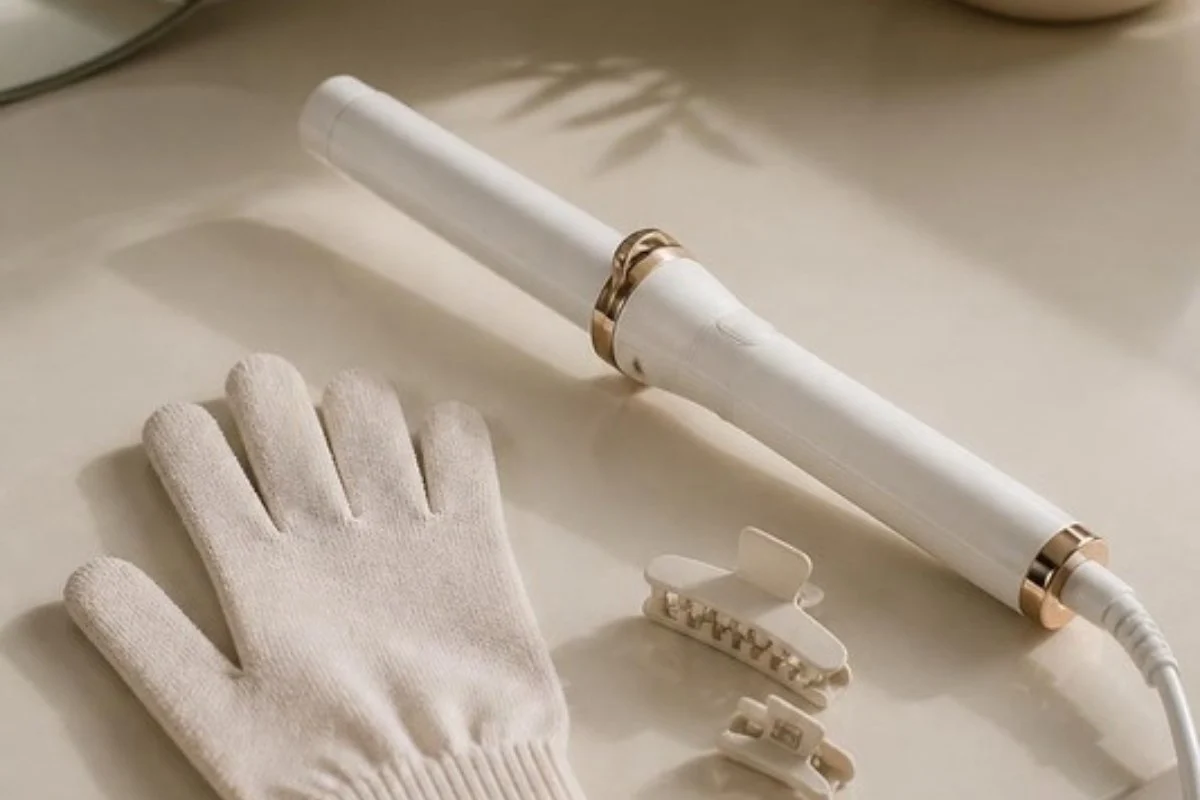
How to choose a curling wand
| Barrel | Curl you get | Good for |
|---|---|---|
| Small barrel | Tight, defined curls | Short hair and lots of bounce |
| Medium barrel | Classic loose curls | Most hair lengths |
| Large barrel | Soft waves and volume | Long hair and a relaxed look |
| Tapered (cone) barrel | Natural, varied curls | Beachy, lived-in styles |
We haven’t lab-tested these options. The table compares them by what the label says and how they’re usually made.
Look for adjustable heat so you can use lower settings on fine or damaged hair, an auto shut-off, a long cord that swivels and a heat glove in the box.
How to use a curling wand
- Start with dry, brushed hair and apply heat protectant.
- Section your hair and clip the top layers out of the way.
- Take a small section and hold the wand pointing down.
- Wrap hair around the barrel away from your face, leaving the ends out for a softer look.
- Hold for a few seconds, then slide the wand out.
- Catch the curl in your hand or pin it while it cools.
- Finish with your fingers once all the curls have cooled.
Tips to protect your hair
- Always use heat protectant. Apply it evenly before you start.
- Use the lowest heat that still holds a curl.
- Never curl wet hair. Dry it completely first.
- Wear the glove. The barrel gets very hot.
- Give hair days off. Try heatless curls between heat styling days.
Keep the wand on a heat-safe mat and unplug it as soon as you’re done.
How to make curls last
Let every curl cool completely before touching it. Heat shapes the curl, and cooling sets it. A light hairspray or texture spray adds hold, and sleeping on a silk pillowcase helps curls survive the night.
Freshly washed, silky hair can be slippery. Styling it a day after washing often gives a curling wand more grip.
Curling wand vs curling iron
A curling iron has a clamp that holds the ends, which gives a polished, uniform curl. A curling wand has no clamp, so you wrap the hair yourself. That creates more natural, varied curls and makes it easy to leave the ends straight.
Wands take a little practice, but many people find them faster once they get the hang of wrapping.
Fine hair usually curls quickly on a lower setting, while thick or coarse hair may need a little more heat and smaller sections. Test on a hidden section underneath first and adjust. If you smell burning or see steam from dry hair, the heat is too high. A good curling routine is one that gives you the shape you want with the least heat possible.
Practice when you’re not in a rush. The first few tries always feel awkward, but after a week of short sessions most people get the hang of wrapping and releasing each section smoothly.
Where it fits in your routine
Use a curling wand as the last styling step, after drying and protecting your hair. Our hair care routine shows how to balance heat days with conditioning, and our wavy hair routine has tips for enhancing natural waves.
Clean the barrel when it’s cool and unplugged, wiping off any product with a soft cloth.
Related guides: Clarifying Shampoo: When and How to Use It.
FAQ
What size curling wand should I get?
A medium barrel is the easiest place to start. Go smaller for tighter curls and larger for soft waves.
Can I use a curling wand on short hair?
Yes. A small barrel works best for short hair.
Why do my curls fall out?
They may not have cooled before you touched them, or your hair may be too silky. Let curls cool and try a texture spray.
Which way should I curl?
Curling away from your face is the most flattering for most people. Alternate directions for a more natural look.
Is a curling wand bad for hair?
Any heat can dry hair over time. Use protectant, low heat and give hair days off.
Written by Mahmoud Abdelmaksoud.