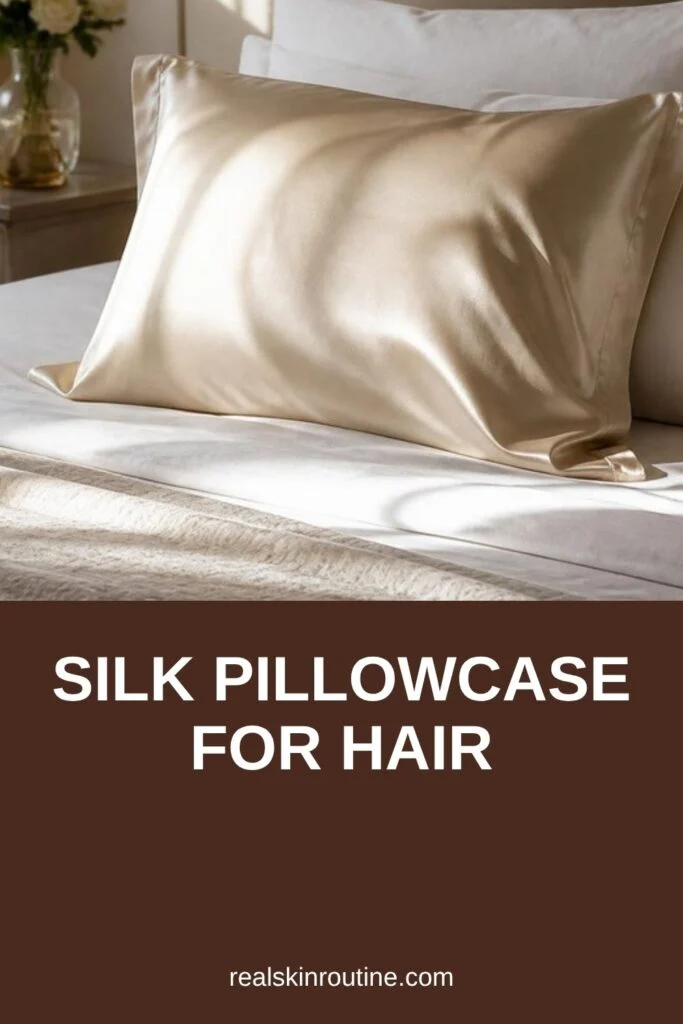
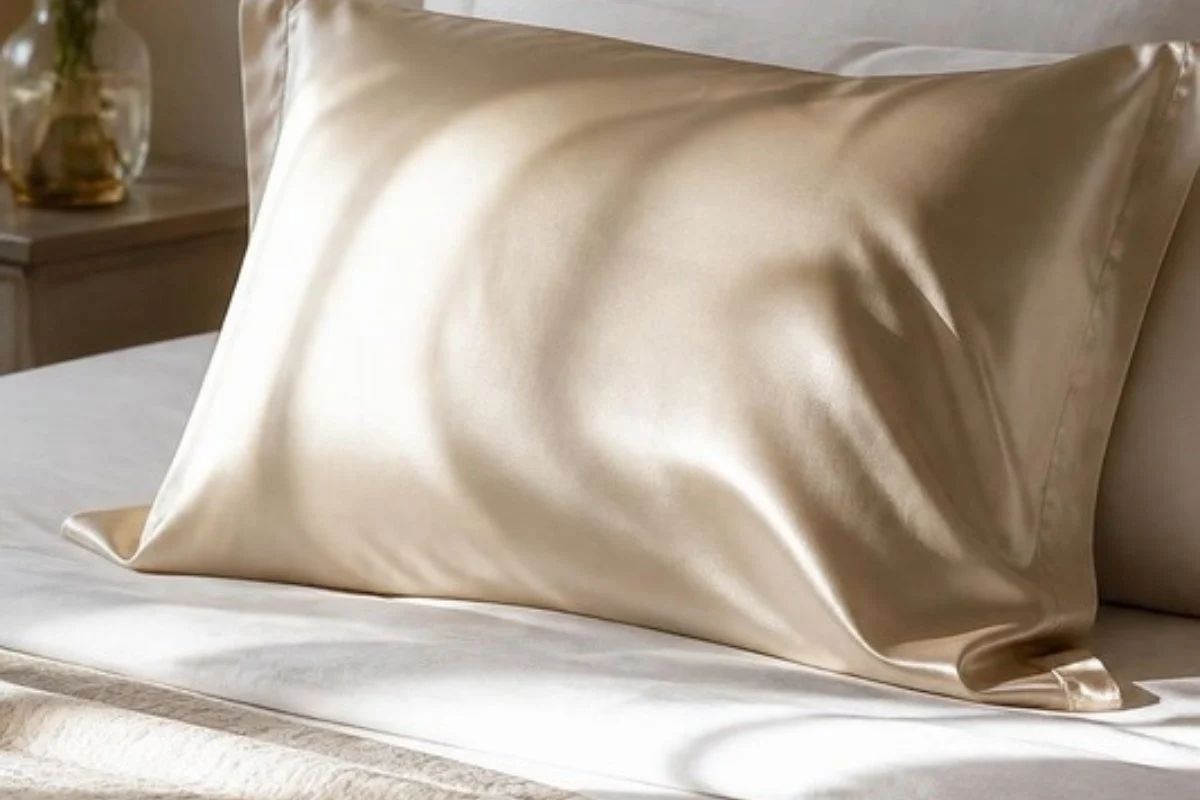
Quick answer: A silk pillowcase for hair is a smooth pillow cover many people use to cut friction on their hair while they sleep. When you shop, check the fiber label: under FTC rules, textile labels must list each fiber by its generic name and percentage by weight (FTC), so a real silk case says silk, often 100% silk. Satin is a weave, not a fiber, and is often polyester.
Table of Contents
How to choose a silk pillowcase for hair: 6 tips
- Read the fiber label. Look for silk and its percentage.
- Check the weight. Sellers often list momme; a higher number means a heavier fabric.
- Pick a closure. Envelope closures have no zipper to snag hair.
- Match your pillow size. Standard, queen or king.
- Check the care label. Some need hand washing.
- Choose a color you like. Light colors show makeup and oil marks more.
Silk vs satin pillowcase
| Silk | Satin | |
|---|---|---|
| What it is | A natural protein fiber | A weave, usually polyester |
| Label reads | Silk (with a percentage) | Polyester or another fiber |
| Feel | Smooth, soft, breathable | Smooth, slightly slicker |
| Care | Gentle wash, low heat | Often machine washable |
| Price | Higher | Lower |
We haven’t lab-tested these options. The table compares them by what the label says and how they’re usually made.
The FTC fiber rules are why you can check this yourself: the label must show the generic fiber names in order of weight (FTC).
What momme means
Momme is a weight unit that silk sellers use. A higher momme usually means a thicker, heavier silk. Many silk pillowcases are sold between about 19 and 25 momme. Momme isn’t on the required FTC label, so read it as seller information.
How to use a silk pillowcase in your hair routine
- Go to bed with dry hair. Damp hair on any fabric can tangle.
- Loosely tie long hair in a soft braid or low bun.
- Use soft ties, not tight elastics.
- Try heat-free styles overnight such as heatless curls.
The AAD’s hair tips focus on gentle handling: wrap wet hair in a towel or T-shirt rather than rubbing, and use low or medium heat with a protectant (AAD). A smooth pillowcase fits that same gentle approach, though the AAD page doesn’t mention pillowcases.
How to wash a silk pillowcase
- Turn it inside out.
- Hand wash in cool water with a mild detergent, or use a mesh bag on a delicate cycle if the label allows it.
- Don’t wring; roll it in a towel to remove water.
- Air dry out of direct sun.
- Iron on the silk setting, inside out, if needed.
Always follow the care label first. Wash it about as often as any pillowcase, weekly for most people.
Silk pillowcase for hair: is it worth it?
A silk pillowcase for hair is a small upgrade that many people enjoy for its smooth, cool feel. It won’t replace a good wash day, gentle drying and low heat, but it fits nicely into a gentle overnight routine. If you’re on a budget, a polyester satin case gives a similar smooth surface for less, and it’s easier to wash.
- Pick silk if you like natural fibers and don’t mind gentle washing.
- Pick satin if you want something low-cost and machine washable.
- Buy two so you can swap one while the other is in the wash.
Silk pillowcase and your other beauty tools
A pillowcase is one of the simplest beauty tools to add. For more tools, from rollers to brushes, and how to clean and store them, see our guide to skincare tools. For your wash-day steps, our hair care routine guide has the full order.
FAQ
Is a silk or satin pillowcase better for hair?
Both are smooth. Silk is a natural fiber and costs more; satin is a weave, usually polyester, and is easier to wash.
How do I know a pillowcase is real silk?
Check the fiber label. FTC rules require fibers to be listed by generic name and percentage, so real silk says silk.
What momme should I buy?
Many silk pillowcases are sold between about 19 and 25 momme. Higher numbers mean heavier fabric.
How often should I wash a silk pillowcase?
About weekly, following the care label.
Can I machine wash silk?
Only if the care label allows it. Use a mesh bag, cool water and a delicate cycle.
Written by Mahmoud Abdelmaksoud.