Quick answer: A silk scrunchie is a fabric-covered hair tie with a smooth surface. Wear it loosely in ponytails, buns or braids, switch where you place it, and use it for sleep styles. Hand-wash it gently and let it air-dry.
Table of Contents
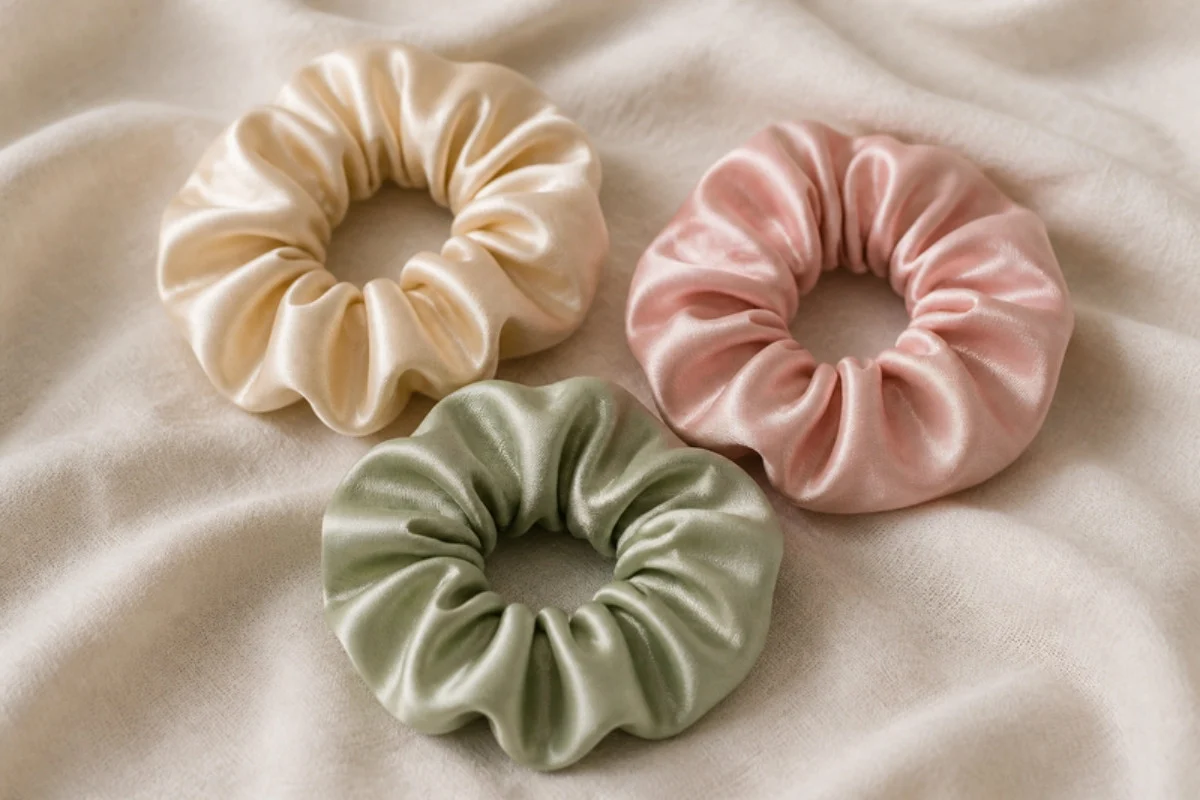
Silk scrunchie vs elastic hair tie
| Silk scrunchie | Plain elastic | |
|---|---|---|
| Surface | Smooth fabric | Rubber or tight fabric |
| Grip | Softer | Tighter |
| Best for | Loose styles, sleep | Firm hold for sports |
A smooth tie pairs well with a silk pillowcase or satin bonnet at night.
Who a silk scrunchie suits
A smooth hair tie is a nice swap if you wear your hair up often, if you sleep with it tied back or if regular elastics leave dents in your hair. It suits long and medium hair best, and it works with straight, wavy and curly textures. If you play sports or need a very firm hold, you may still want a regular elastic for those times and switch back to silk afterward. They also make a simple gift, since one size fits most people. Keep one on your wrist or in your bag so you are not tempted to reach for a tight elastic.
6 tips for using a silk scrunchie
- Tie it loosely. A looser ponytail feels more comfortable.
- Change the spot. Move your ponytail higher or lower each day.
- Use it for sleep. A loose bun or braid keeps hair tidy.
- Use it on dry hair. Wet hair stretches more easily.
- Pick the right size. Thick hair may need a larger scrunchie.
- Keep spares. Rotate them so they can be washed.
Need style ideas? See claw clip hairstyles and how to braid hair.
How to pick the right one
- Size: larger ones suit thick hair; skinny ones suit fine hair.
- Elastic: a firm elastic holds better than a loose one.
- Fabric: look for silk on the label if you want real silk.
- Color: neutral shades match most outfits.
- Quantity: a few let you rotate while some are being washed.
If your hair is very thick, wrap it one less time so the hold stays loose and comfortable.
Common mistakes to avoid
- Wrapping it too many times. This makes the style tight again.
- Using it on soaking wet hair. The fabric and elastic can stretch out.
- Putting it in the washing machine without a bag. It may lose its shape.
- Wearing the same spot every day. Change your ponytail height now and then.
- Leaving it in a damp bun overnight. Let hair dry first.
Store your scrunchies flat or on a ring so they keep their shape.
Gentle hair habits
Loose styles simply feel more comfortable, and pairing a silk scrunchie with heat-free looks like heatless curls fits the AAD’s tips for healthy hair, which note that excessive heat can damage hair (AAD). Hand-wash your silk scrunchie in cool water with a gentle wash and let it air-dry.
For more gentle hair habits, see our hair care routine and sleek bun guide. A silk scrunchie is a small, easy swap.
FAQ
Are they better for hair?
Many people find them gentler than tight elastics.
Can I sleep in one?
Yes, in a loose bun or braid.
How do I wash it?
By hand in cool water with a gentle wash.
Silk or satin?
Silk is a natural fiber; satin is a weave. Both feel smooth.
Will it hold thick hair?
Choose a larger size with a stronger elastic.
How tight should I tie it?
Loose enough that it does not pull.
Written by Mahmoud Abdelmaksoud.