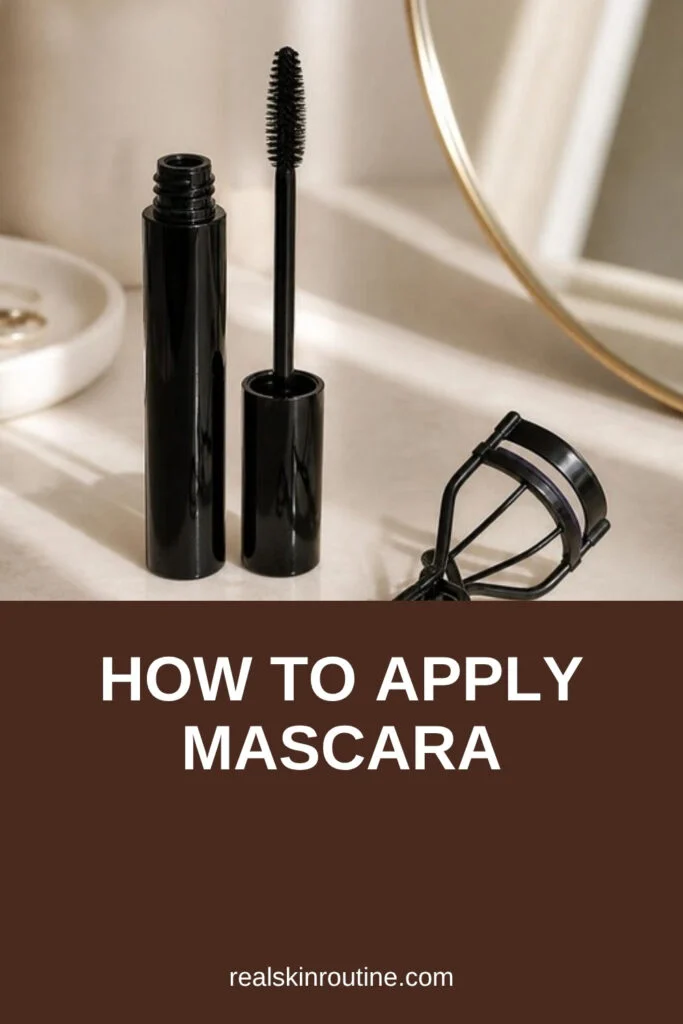
Quick answer: Here is how to apply mascara in short: curl your lashes if you like, wipe excess formula off the wand, place it at the base of your upper lashes, wiggle it gently and sweep up to the tips. Add a second coat while the first is still a little wet, then comb out any clumps. Finish with a light touch on the lower lashes.
Table of Contents
Before you start
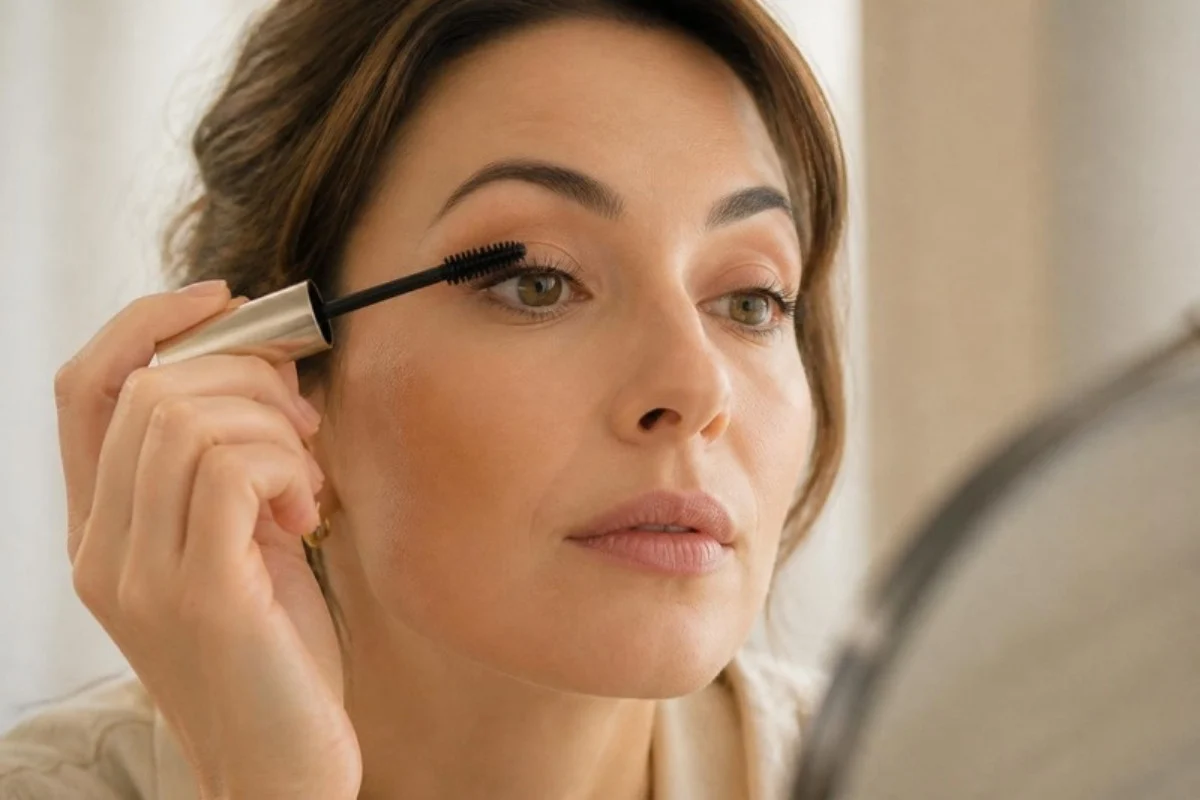
Mascara works best on clean, dry lashes. Remove old makeup, and let any eye cream sink in so the formula does not slide. If you curl your lashes, do it before mascara, never after, so the curler does not pull on coated lashes.
Choose a formula for the look you want. Our drugstore mascara guide covers volume and length formulas, and tubing mascara explains formulas that come off with warm water.
7 easy steps for how to apply mascara
- Wipe the wand. Pull it out without pumping and wipe the tip on the rim.
- Look down into a mirror. This keeps the lid out of the way.
- Start at the roots. Press the brush into the base of the upper lashes.
- Wiggle and sweep. Wiggle side to side, then sweep up and out to the tips.
- Work in sections. Do the outer, middle and inner lashes one by one.
- Add a second coat. Layer while the first coat is still slightly tacky.
- Comb and finish. Separate clumps with a clean spoolie, then touch the lower lashes lightly.
Pumping the wand pushes air into the tube, which can dry the formula faster. A gentle twist as you pull it out is enough.
How to get more length or volume
For length, focus the brush on the tips and pull it slowly outward. Thin, even coats work better than one heavy coat.
For volume, spend more time wiggling at the roots, where the brush deposits the most formula. A second coat right away builds thickness.
For a natural look, one coat with the tip of the wand is often enough. This works well with a natural makeup look.
Lower lashes and fixing mistakes
Hold the wand vertically and use only the tip for lower lashes. Light strokes keep the look soft and stop dots on the skin.
If you smudge mascara on your lid, let it dry, then lift it with a cotton bud. Wiping wet mascara usually spreads it further.
Keep your mascara clean and fresh
Mascara touches your lashes every day, so hygiene matters. The FDA advises against sharing eye cosmetics, and says not to use eye makeup if you have an eye infection or the skin around the eye is inflamed (FDA).
The AAD suggests replacing makeup when it smells different, changes color or feels different, and lists mascara among the products to replace often (AAD).
Take mascara off every night. Hold a pad soaked in makeup remover on your closed eye for a moment, then wipe down gently. Learning how to apply mascara well includes learning to remove it without tugging.
A quick routine for busy mornings
Short on time? Curl your lashes, apply one coat from root to tip on the upper lashes, and skip the lower lashes. This takes less than a minute and still opens up the eyes. In the evening, add a second coat for more drama. Keep a clean spoolie in your bag to fix any clumps later in the day.
Common mistakes
- Applying too many coats. After two or three, lashes can stick together.
- Waiting too long between coats. Dry layers clump more easily.
- Curling after mascara. This can bend or pull coated lashes.
- Using an old tube. Thick, dry formula gives spiky lashes.
- Skipping removal. Sleeping in mascara leaves lashes stiff in the morning.
See the how to do makeup pillar for the full order of steps, and how to apply eyeshadow if you add color before mascara.
Related guides: Pencil Eyeliner for Beginners: A Simple Guide.
FAQ
Should I apply mascara before or after eyeshadow?
Apply eyeshadow and liner first, then mascara last.
How many coats of mascara should I use?
One or two is enough for most people. More coats can cause clumps.
How do I stop mascara from smudging under my eyes?
Use a light hand on the lower lashes and keep heavy eye cream away from the area.
Do I need a lash curler?
No. It is optional, but it can make lashes look longer.
Why does my mascara clump?
Usually the wand has too much formula, or the first coat dried before the second.
Written by Mahmoud Abdelmaksoud.