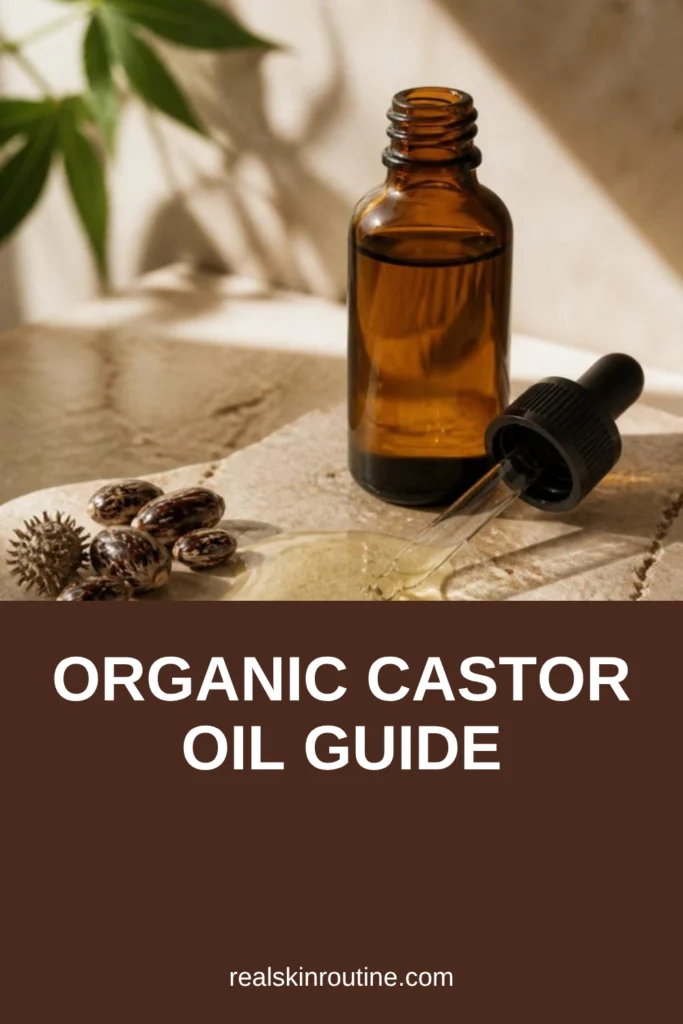
Quick answer: Organic castor oil is castor oil made from organically grown castor beans. To choose a good one, look for a certified organic seal, “cold-pressed” and “100% castor oil” on the label, and a dark glass bottle. The organic claim is about how the beans were farmed, not about safety: the FDA says an ingredient’s source doesn’t determine its safety (FDA).
Table of Contents
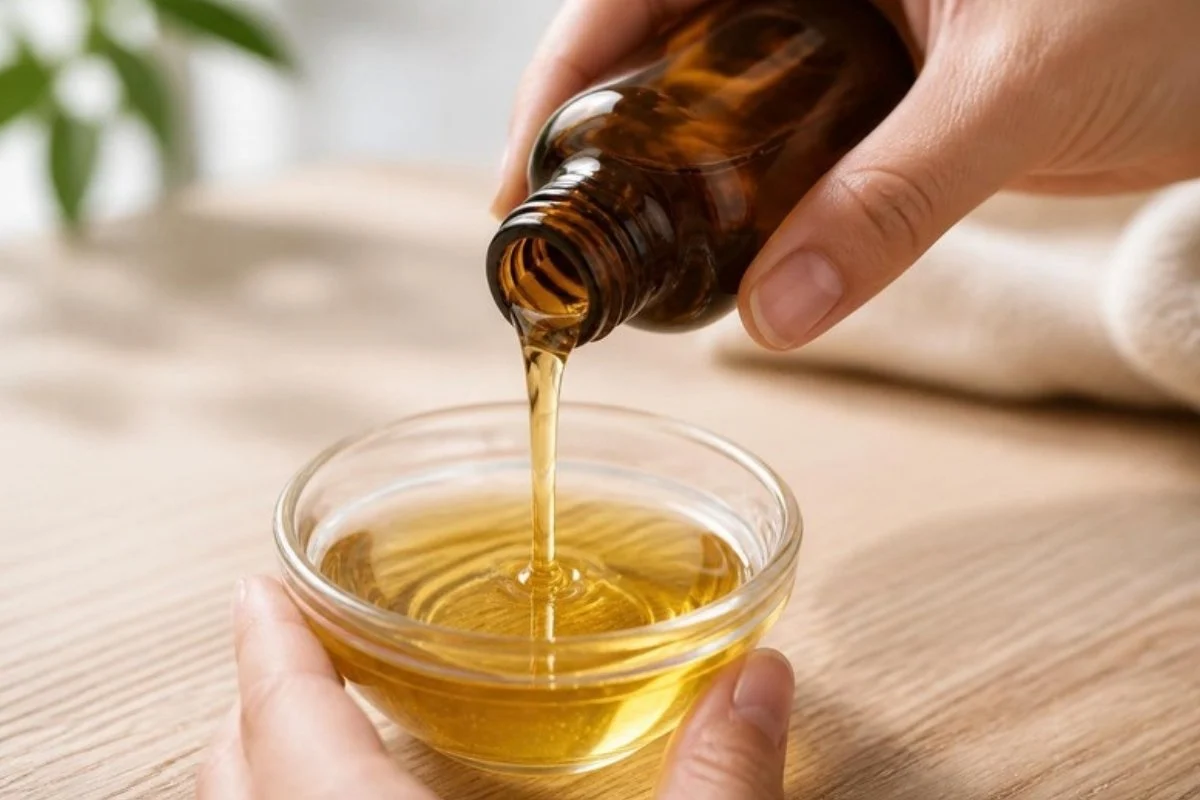
How to choose organic castor oil: 6 steps
- Check the organic seal. In the US, the USDA’s National Organic Program oversees the word “organic” and certifies agricultural ingredients.
- Read the ingredient list. It should say castor oil (or Ricinus communis seed oil) and nothing else, unless you want a blend.
- Look for “cold-pressed.” This tells you how the oil was pressed. Many people prefer it for a less processed oil.
- Pick a dark glass bottle. Amber or cobalt glass keeps light off the oil.
- Choose the right cap. A dropper or pump makes a very thick oil easier to use.
- Start with a small bottle. A little goes a long way, so you won’t need a big size at first.
Time: about 5 minutes at the shelf or online.
What does organic castor oil mean on the label?
The FDA explains that the USDA’s Agricultural Marketing Service runs the National Organic Program, which defines “organic” and certifies how agricultural ingredients are produced (FDA). So a certified organic castor oil tells you about farming, not about how the oil will feel or work on your hair.
The FDA also notes that plants, organic or not, can contain substances some people react to, and all cosmetic ingredients have to meet the same safety requirements. That’s why a patch test still matters, even with a certified organic castor oil.
Cold-pressed vs refined castor oil
| Type | What it looks like | Good to know |
|---|---|---|
| Cold-pressed | Pale yellow, very thick | Pressed without added heat; many people prefer it |
| Refined | Clear to pale, thick | Filtered for a cleaner look and smell |
| Jamaican black | Dark brown, thick | Darker color and a smoky smell |
| Blends | Thinner | Mixed with lighter oils so it spreads more easily |
We haven’t lab-tested these types. The table compares them by how they’re made and sold.
How to use organic castor oil in a beauty routine
- Pre-wash hair oil: warm a few drops between your palms and smooth it over the ends before shampoo. See our full guide to hair oiling.
- Mix it thinner: castor oil is sticky on its own, so many people mix one part with two parts of a lighter oil.
- Dry elbows and heels: a thin layer at night, with cotton socks on your feet.
- Cuticles: one small drop massaged in, like a cuticle oil.
- Patch test first. The AAD suggests a quarter-sized spot on the underside of your arm or the bend of your elbow, twice a day for 7 to 10 days. If your skin reacts, wash it off and don’t use it again. (AAD)
How to store organic castor oil
Keep the bottle closed, out of sunlight and away from heat, like a hot bathroom windowsill or a car. Wipe the neck of the bottle after each use so it doesn’t get sticky. If the smell or color changes a lot, it’s time for a new bottle.
Who might like organic castor oil (and who might not)
Organic castor oil suits people who like a rich, thick oil and don’t mind a slow rinse. It’s popular as a pre-wash treatment for thick, coarse or curly hair ends, and as a night step for dry-feeling hands and feet.
It may not suit you if you have fine hair that goes flat easily, or if you dislike sticky textures. In that case, try a lighter oil like jojoba or argan, or use castor oil only in a blend.
- Thick or curly hair: pure castor oil on the ends, washed out the same day.
- Fine hair: a blend with a lighter oil, a few drops only.
- Body: heels, elbows and cuticles at night.
Common mistakes
- Using too much. A few drops is plenty for your ends; more just takes longer to wash out.
- Skipping the second shampoo. Thick oils often need two rounds of shampoo.
- Buying on the organic label alone. Check the ingredient list and the bottle too.
To see where this fits, read our easy hair care routine guide from wash day to styling.
FAQ
Is organic castor oil better than regular castor oil?
The organic label tells you how the beans were grown. It doesn’t make the oil safer; the FDA says an ingredient’s source doesn’t determine its safety.
What is the difference between cold-pressed and refined?
Cold-pressed oil is pressed without added heat. Refined oil is filtered further, so it looks clearer and smells milder.
How do I wash castor oil out of my hair?
Apply shampoo to your scalp before wetting your hair fully, lather, rinse, then shampoo again.
Can I mix organic castor oil with other oils?
Yes. Many people mix it with jojoba or argan oil so it spreads more easily.
How should I store it?
Closed, in a dark bottle, away from sunlight and heat.
Written by Mahmoud Abdelmaksoud.