


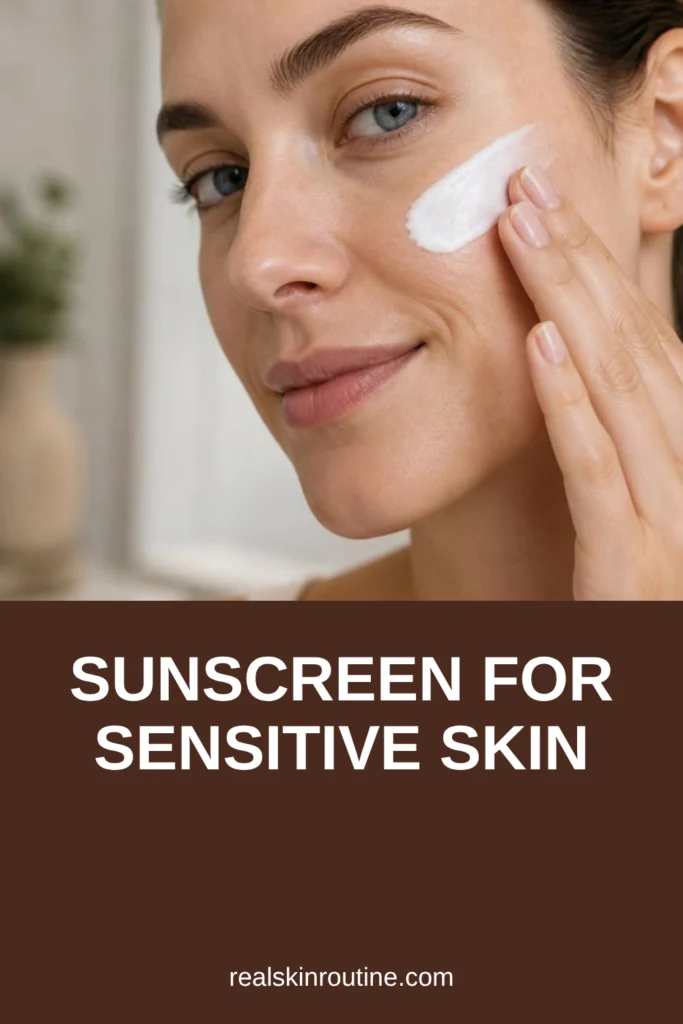
Quick answer: For a sunscreen for sensitive skin, many people start with a mineral formula. The AAD notes that if you have sensitive skin, a sunscreen with zinc oxide or titanium dioxide may be a good choice (AAD). Pick SPF 30 or higher and broad spectrum, keep the ingredient list short and fragrance-free, and patch test before you use it on your face.
Table of Contents
How to choose sunscreen for sensitive skin: 6 steps
- Check the active ingredients. Zinc oxide and titanium dioxide are the mineral filters.
- Look for SPF 30+ and broad spectrum. Broad spectrum covers UVA and UVB rays.
- Pick fragrance-free. Fewer extras means fewer things to wonder about.
- Choose a texture you like. Lotion, cream or fluid; you’ll only wear it daily if it feels good.
- Think about finish. A tinted mineral formula can cut down a white cast.
- Patch test it. The AAD suggests a quarter-sized spot on the underside of your arm or the bend of your elbow, twice a day for 7 to 10 days. If your skin reacts, wash it off and don’t use it again. (AAD)
Time: about 10 minutes to shop, plus a week or so to patch test.
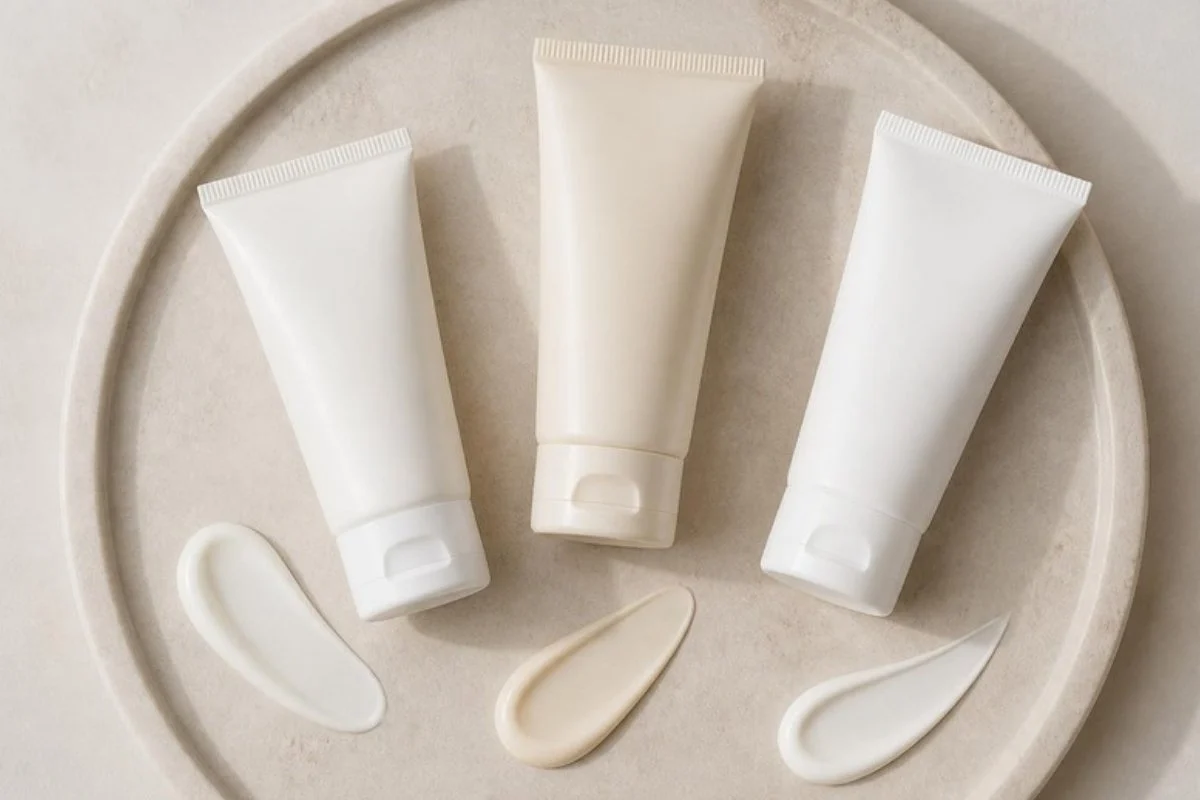
Mineral vs chemical sunscreen for sensitive skin
| Type | Active ingredients | What people like about it |
|---|---|---|
| Mineral | Zinc oxide, titanium dioxide | Short ingredient lists; often picked for sensitive skin |
| Chemical | Filters like avobenzone or octisalate | Sheer, lightweight feel |
| Tinted mineral | Zinc oxide or titanium dioxide plus iron oxides | Less white cast, evens out tone |
| Hybrid | A mix of both | Middle ground on feel and finish |
We haven’t lab-tested these sunscreens. The table compares them by what’s on the label.
Reading the label on a sunscreen for sensitive skin
“Sensitive” and “gentle” on a sunscreen are marketing words, so look past them to the Drug Facts box. Active ingredients are listed first. Below that you’ll see inactive ingredients, where fragrance and essential oils show up if they’re in there.
- Broad spectrum: covers UVA and UVB.
- SPF 30 or higher: the level the AAD recommends.
- Water resistant (40 or 80 minutes): worth it if you sweat or swim.
- Fragrance-free: no added scent.
How to apply sunscreen for sensitive skin
- Cleanse with lukewarm water and pat your face dry.
- Apply a simple moisturizer if your skin feels dry, and let it sink in.
- Dot sunscreen over your face and neck, then smooth it in gently. No need to rub hard.
- Let it settle for a few minutes before makeup.
- Outdoors, reapply every two hours and after swimming or sweating.
Building a simple routine around it
When your skin feels easily bothered, a short routine is easier to live with. In the morning, cleanse, moisturize if needed, and finish with your sunscreen for sensitive skin. Add new products one at a time, a week or two apart, so you can tell what you like.
If you’d like a sunscreen that doubles as a light base, see our guide to tinted SPF. For oily or combination skin, our guide to non comedogenic sunscreen covers lighter textures.
- Dry-feeling skin: a mineral cream with a dewy finish.
- Oily-feeling skin: a mineral fluid with a satin finish.
- Deeper skin tones: a tinted mineral formula to avoid a white cast.
Common mistakes
- Trusting the front of the bottle. Words like “gentle” aren’t a standard; read the ingredients.
- Trying several new products at once. Introduce one at a time.
- Using too little. A thin layer won’t give you the SPF on the label.
For the full picture, see our simple skin care routine guide, which puts every step in order.
FAQ
Is mineral sunscreen better for sensitive skin?
The AAD says a sunscreen with zinc oxide or titanium dioxide may be a good choice if you have sensitive skin.
What SPF should I use?
SPF 30 or higher, broad spectrum, is what the AAD recommends.
Why does my mineral sunscreen leave a white cast?
Some mineral formulas can look white on the skin. The AAD notes a tinted sunscreen can help avoid a white cast.
How do I patch test a sunscreen?
Apply it to a quarter-sized spot on your inner arm twice a day for 7 to 10 days, and stop if your skin reacts.
Can I wear sunscreen for sensitive skin under makeup?
Yes. Let it settle for a few minutes first so your base goes on smoothly.
Written by Mahmoud Abdelmaksoud.


1 comment