


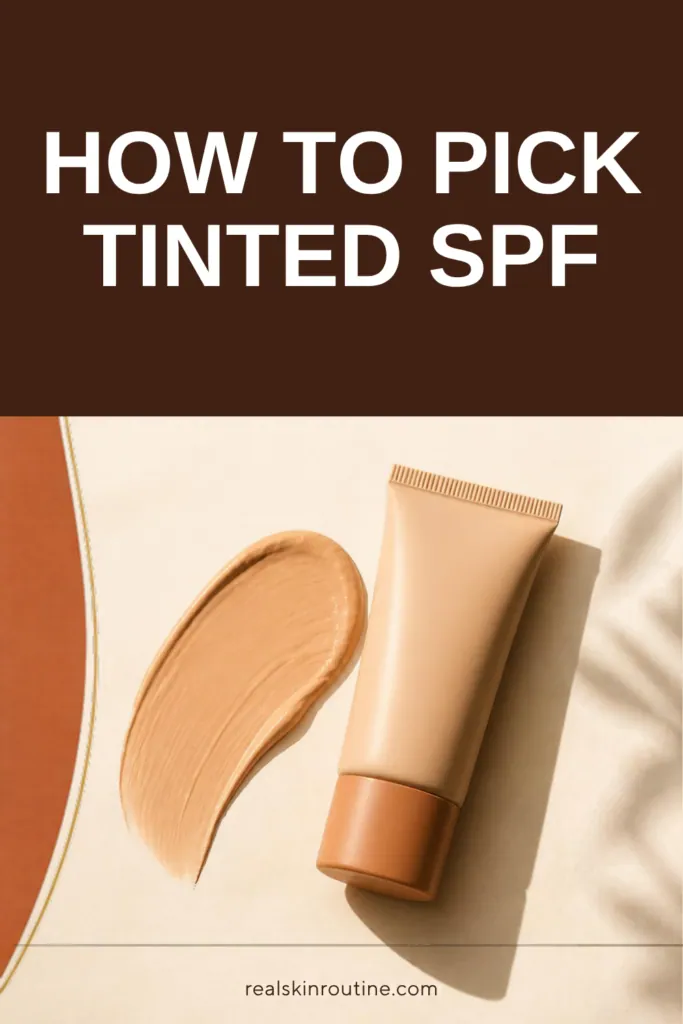
Quick answer: Tinted SPF is sunscreen with color added, so it evens out your skin tone and blends in better than a plain white sunscreen. Pick one whose label shows an SPF number and “broad spectrum,” choose mineral or hybrid filters, then match the shade and finish to your skin. Apply a generous, even layer as the last skincare step, and reapply at least every two hours when you’re outdoors (FDA).
Table of Contents
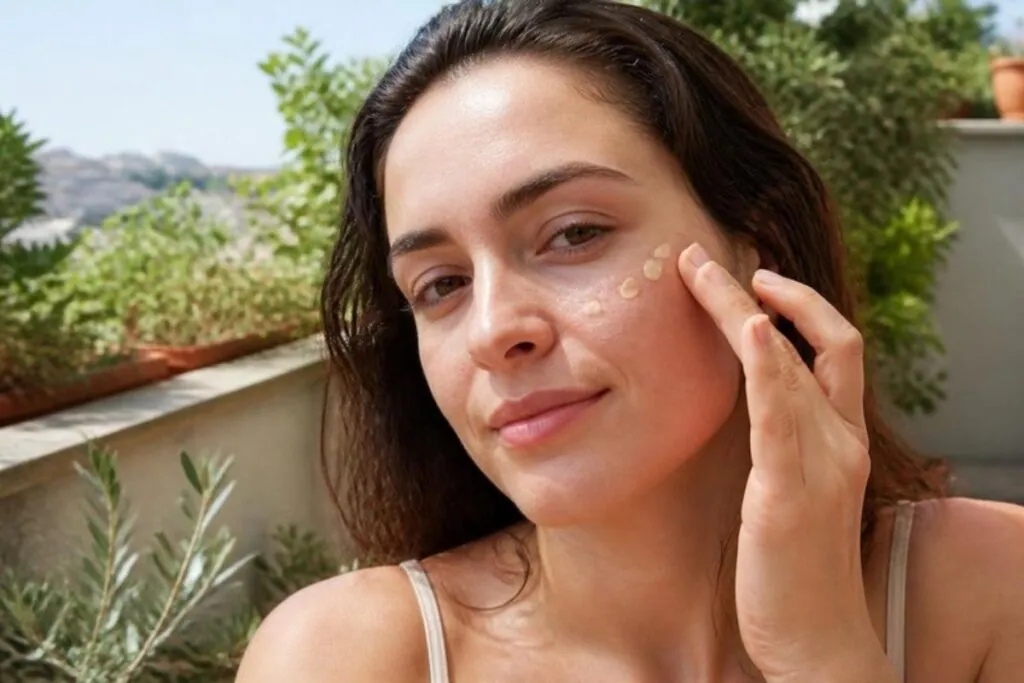
Your tinted SPF routine
- Moisturize first if your skin feels tight. Skip it if the sunscreen alone feels comfortable.
- Apply tinted SPF as your last skincare step, in a generous, even layer, not a thin sheer swipe.
- Wait a few minutes before any makeup so it can settle.
- Heading outside? Apply about 15 minutes before sun exposure and reapply at least every two hours, more often if you swim or sweat (FDA).
Time: about 2 minutes. How often: every morning, plus reapplication outdoors.
Is tinted SPF better than regular sunscreen?
For your makeup routine, it can be. The tint evens out your skin tone, so it can stand in for a light foundation, and it helps avoid the white cast some mineral sunscreens leave. If you love your regular sunscreen and wear it every day, that’s great too. The best sunscreen is the one you don’t skip.
What makes a sunscreen tinted?
The color comes from pigments, usually iron oxides, which you’ll find in the ingredient list. Brands mix different amounts to make different shades. The sun-protecting filters are listed separately, under Active Ingredients. Zinc oxide and titanium dioxide are both on the FDA’s list of sunscreen active ingredients (FDA).
Do skin tints with SPF work?
Check two things:
- The label. In the US, sunscreens are regulated by the FDA and must be tested to measure their SPF (FDA). Look for an SPF number and “broad spectrum.” If a product doesn’t list an SPF, treat it as makeup.
- How much you apply. A skin tint is often worn in a thin layer. If you only want a sheer wash of color, put on your regular sunscreen first and use the tint on top.
How to choose a tinted sunscreen
- SPF and broad spectrum on the label. On a US label, “broad spectrum” means UVA and UVB protection.
- Water resistant if you sweat. The label must say 40 or 80 minutes. There’s no such thing as “waterproof” sunscreen (FDA).
- Mineral vs hybrid. Mineral formulas use zinc oxide, titanium dioxide or both. Hybrid formulas mix mineral and chemical filters. Check the Active Ingredients section on the label.
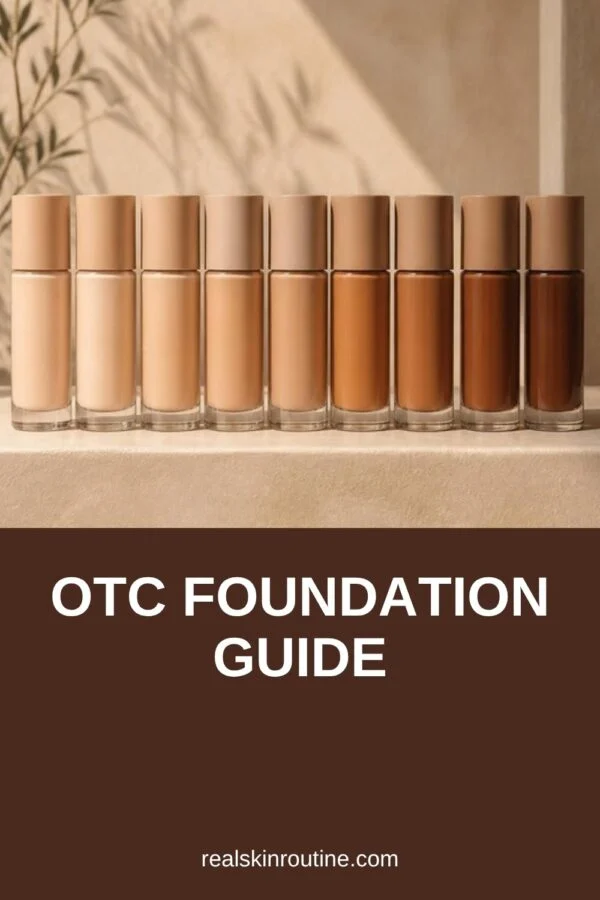
- Shade range. Many tinted SPFs come in only a few shades. If you have deep or very fair skin, check the actual shade list and look for swatches on real skin in the retailer’s photos.
- Finish. Dewy suits dry skin. Matte or “oil-control” suits oily skin. Sticks are handy for touch-ups over makeup.
- Coverage. Sheer tints even things out. Buildable ones can replace a light foundation.
Tinted SPF options compared
We haven’t tested these types ourselves. This table compares product types by what they’re designed to do.
| Type | Filters | Best for | Watch out for |
|---|---|---|---|
| Tinted mineral sunscreen | Zinc oxide / titanium dioxide + iron oxides | Anyone who hates a white cast | Limited shades, can feel thicker |
| Hybrid tinted SPF | Mineral + chemical filters | Everyday wear | Check the active ingredients if you prefer one type |
| Tinted sunscreen stick | Varies | Touch-ups on the go, over makeup | Hard to apply an even layer from a stick |
| Skin tint with SPF | Varies | Light coverage plus a finishing glow | Thin layer; wear sunscreen underneath if you apply it sheer |
How to wear tinted SPF with makeup
- Let it set for a few minutes before concealer or powder.
- Use concealer only where you need more coverage.
- Set your T-zone with a light powder if you get shiny.
- For touch-ups, a tinted stick or a powder with an SPF number on the label is easier than layering more liquid over makeup.
What are the downsides of tinted sunscreen?
- Shade match. Fewer shades than foundation, so deeper and very fair skin tones often have fewer options.
- Transfer. Tint can rub off on collars and phones.
- Under-applying. Because it looks like makeup, it’s easy to use too little.
- Reapplying. Adding more tint every two hours can build up color. A stick or SPF powder can help.
Want more coverage or more hydration? Compare our tinted moisturizer guide, or read about Korean sunscreens if you love light textures. The American Academy of Dermatology explains how to select a sunscreen and recommends broad-spectrum SPF 30 or higher.
New to makeup? Our step-by-step guide on how to do makeup covers the whole look.
FAQ
Is tinted SPF better?
For a one-step makeup look, it can be: it evens out your tone and avoids a white cast. For daily wear, any sunscreen you’ll use every day works.
What is the best tinted SPF?
One with an SPF number and “broad spectrum” on the label, in your shade and a finish you like enough to wear every day.
Do skin tints with SPF work?
Only if the label lists an SPF and you apply a generous layer. If you wear it sheer, put a regular sunscreen underneath.
What are the downsides of using tinted sunscreen?
Limited shade ranges, transfer onto clothes, and a tendency to under-apply. Reapplying can also build up color.
Written by Mahmoud Abdelmaksoud.

3 comments