



Quick answer: The best bronzer for older skin is soft, blendable and close to your natural tone. Choose a cream or finely milled powder one or two shades deeper than your skin, in a matte or satin finish. Sweep it lightly where the sun would naturally hit, such as the tops of the cheeks, forehead and jaw, and blend well. Avoid heavy shimmer and very orange shades.
Table of Contents

Bronzer vs contour
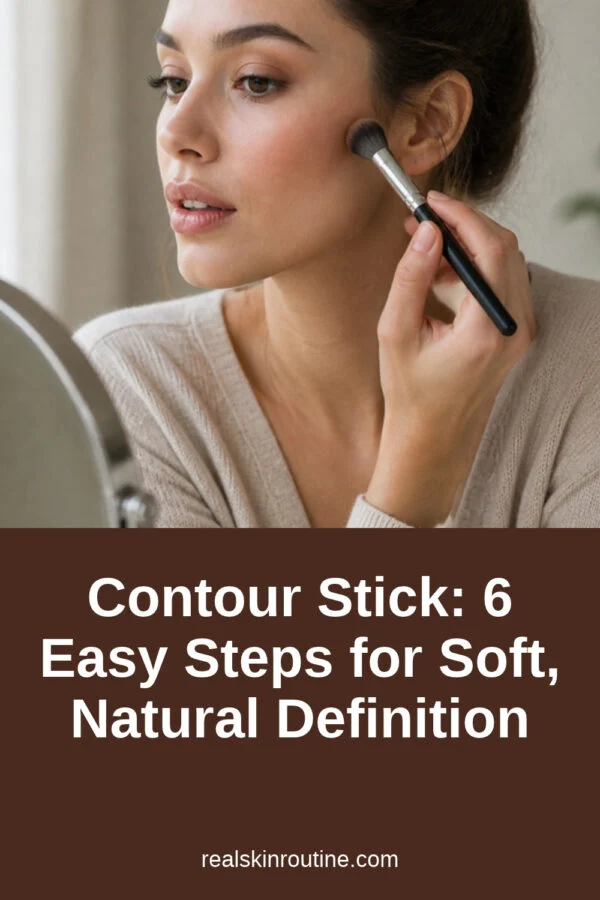
Bronzer adds warmth, as if you had spent a little time outdoors. Contour adds shadow to shape the face. Bronzer is usually warmer and applied more widely. Contour is cooler and placed in a thin line under the cheekbones.
For mature skin, a soft bronzer is often more flattering than sharp contour, because it adds life to the complexion. Our how to do makeup pillar shows how both fit in a routine.
What to look for in bronzer for older skin
| Feature | Good choice | Why it helps |
|---|---|---|
| Formula | Cream or finely milled powder | Blends smoothly over texture |
| Finish | Matte or soft satin | Looks like natural warmth |
| Shade | One or two shades deeper than your skin | Warm without looking muddy |
| Undertone | Neutral or slightly warm | Avoids an orange or gray cast |
We have not lab-tested bronzers. The table sorts features by what is printed on the pack.
Swatch bronzer on your jaw in daylight. If it looks like a natural shadow of warmth and blends out easily, it is a good bronzer for older skin.
Where to apply bronzer
Think of the places the sun hits first: the top of the forehead near the hairline, the tops of the cheekbones, the bridge of the nose and the jaw. A shape like the number three on each side of the face, from temple to cheek to jaw, is a classic guide.
Keep bronzer away from the center of the face and under the eyes, where it can look heavy. Blend the edges into the hairline and down the neck so the color looks seamless.
How to apply bronzer step by step
- Prep with moisturizer. Smooth, hydrated skin helps bronzer blend.
- Apply a light base. Foundation or tinted moisturizer goes on first.
- Choose your tool. Use a large fluffy brush for powder or fingers and a sponge for cream.
- Tap off extra. Remove excess powder from the brush before touching your face.
- Sweep in a three shape. Temple to cheekbone to jaw, then blend.
- Add blush on top. A soft blush over bronzer brings the look together.
Our blush for mature skin guide covers the blush step. For bronzer brushes, see our makeup brushes guide.
Keep tools and products fresh
Wash bronzer brushes regularly, as the AAD recommends for makeup brushes (AAD). Replace bronzer that changes in smell, color or texture (AAD).
Matte bronzer for older skin often looks the most natural during the day. Save satin or light shimmer bronzers for evenings, and use them only on the tops of the cheekbones.
Mistakes to avoid
- Too dark a shade. Stay within one or two shades of your skin.
- Very orange tones. Neutral or soft warm shades look more natural.
- Heavy shimmer. Large glitter can highlight texture.
- Forgetting the neck. Blend down so the face and neck match.
- Applying on dry skin. Moisturize first so bronzer does not catch on dry patches.
Want a softer base? Our face powder for older skin guide explains how to set makeup lightly before bronzer.
Related guides:Best Face Powder for Older Skin: A Simple Guide, Best Blush for Mature Skin: How to Choose and Apply It.
FAQ
Is cream or powder bronzer better for older skin?
Cream bronzer often blends more smoothly on dry or mature skin. Finely milled powder also works well.
Should older women use matte bronzer?
Matte or soft satin finishes usually look the most natural.
Where should I apply bronzer on an older face?
Where the sun hits: temples, tops of the cheekbones and along the jaw.
How do I pick a bronzer shade?
Choose one or two shades deeper than your skin and test it on your jaw in daylight.
Do I need bronzer and contour?
No. Many people use a soft bronzer only.
Written by Mahmoud Abdelmaksoud.


2 comments