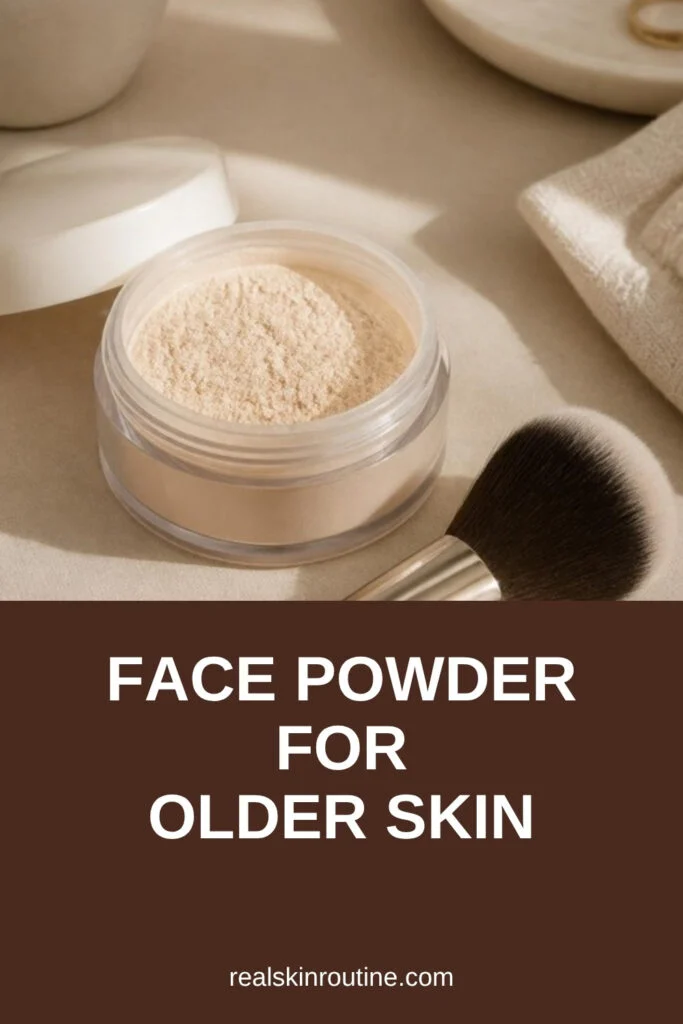
Quick answer: The best face powder for older skin is finely milled, lightweight and used sparingly. Choose a translucent or skin-toned loose powder, or a soft pressed powder for touch-ups. Press a small amount only where you get shiny, usually the nose, forehead and chin, and leave drier areas like the cheeks mostly bare. A light hand keeps makeup soft instead of cakey.
Table of Contents
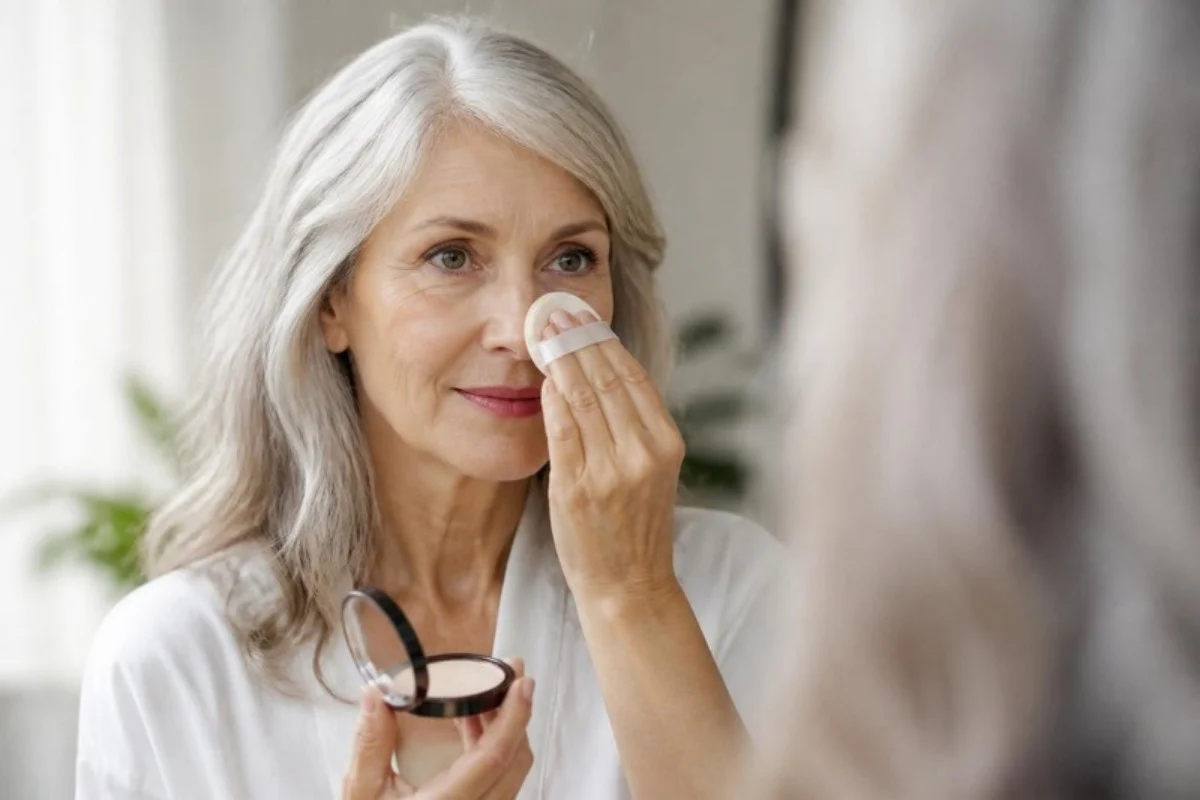
Why powder can look cakey on older skin
As skin matures, it is often drier and texture can be more visible. Heavy powder sits on top of dry patches and fine lines and can make makeup look dull. Choosing the right face powder for older skin, and using less of it, solves most of these problems.
Powder still has a place. It sets concealer, reduces shine in the T-zone and helps makeup last. The goal is a soft, skin-like finish, not a flat matte one. Our setting powder guide covers powder basics for every skin type.
What to look for in face powder for older skin
| Feature | Good choice | Why it helps |
|---|---|---|
| Texture | Finely milled | Sits smoothly over texture |
| Type | Loose for setting, pressed for touch-ups | Loose is lighter; pressed is portable |
| Finish | Satin or soft-focus | Looks more natural than flat matte |
| Shade | Translucent or close to your skin tone | Avoids a white or gray cast |
We have not lab-tested powders. The table sorts features by what is printed on the pack.
Swatch the powder on the back of your hand and rub it in. If it disappears into skin and feels silky, it is likely a good face powder for older skin.
How to apply face powder step by step
- Moisturize well. Give moisturizer and sunscreen a few minutes to settle.
- Apply your base. Use a thin layer of foundation or tinted moisturizer.
- Load a little powder. Dip a fluffy brush or puff, then tap off the extra.
- Press, do not sweep. Press powder onto the nose, forehead and chin.
- Set under the eyes lightly. Use a tiny amount over concealer with a small brush.
- Leave dry areas bare. Skip the cheeks if they tend to be dry.
For under-eye areas, our concealer for mature skin guide explains how to keep concealer smooth before setting.
Loose powder vs pressed powder
Loose powder is usually lighter and works well for setting makeup in the morning. Pressed powder comes in a compact, which makes it easy to carry for midday touch-ups. Many people use both: loose at home, pressed in the bag.
If you love a dewy look, you may only need a little face powder for older skin on the center of the face. Some people skip powder completely and use blotting papers instead.
Keep powder clean and fresh
Wash puffs and brushes often. The AAD recommends cleaning makeup brushes regularly (AAD). Replace powder that changes in smell or color, which the AAD lists as a cue to throw makeup away (AAD).
If you switch to a new face powder for older skin, try it on a small area first, as the AAD suggests for any new product (AAD).
Mistakes to avoid
- Too much powder. Start with less than you think you need.
- Powdering the whole face. Focus only on shiny areas.
- Sweeping hard with a brush. Pressing keeps the base in place.
- Baking under the eyes. Heavy baking can settle into lines; use a light layer instead.
- Skipping moisturizer. Dry skin makes any powder look patchy.
For more mature skin tips, see our primer for aging skin and best foundation for older skin guides.
Related guides: Best Bronzer for Older Skin: Shades, Formulas and Tips.
FAQ
Is loose or pressed powder better for older skin?
Loose powder is usually lighter for setting. Pressed powder is handy for touch-ups.
Should older women use face powder?
Many do, in small amounts on shiny areas. It is optional.
How do I stop powder settling into lines?
Moisturize first, use a finely milled powder and press only a tiny amount.
Is translucent powder good for mature skin?
A finely milled translucent powder works for many skin tones. Check that it does not leave a white cast.
Can I use powder without foundation?
Yes. A light dusting on the T-zone can reduce shine on bare skin.
Written by Mahmoud Abdelmaksoud.