


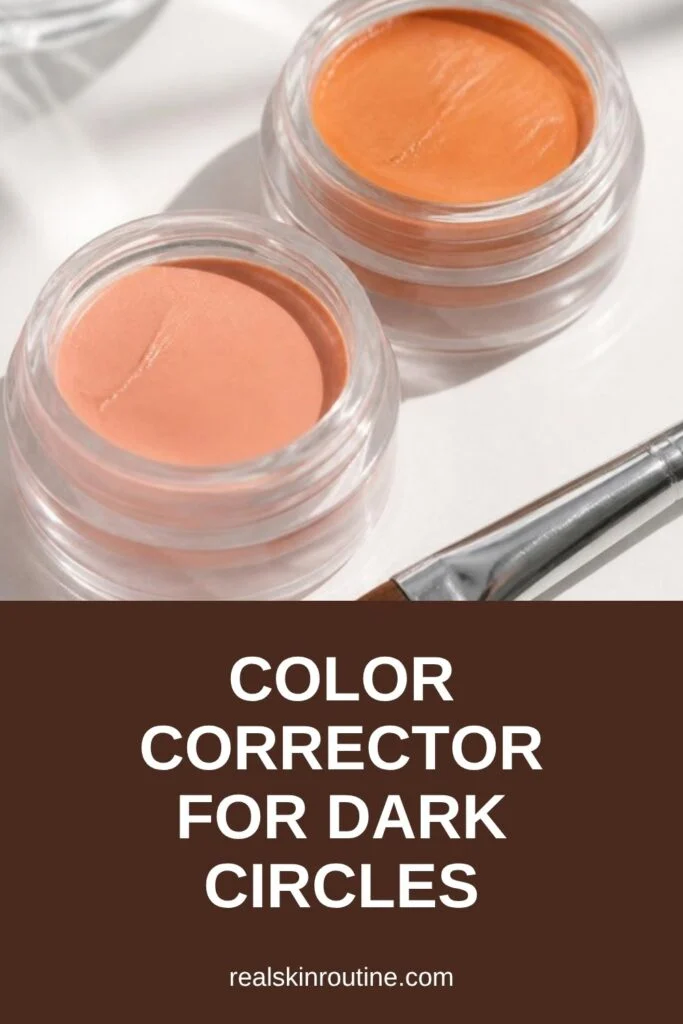
Quick answer: A color corrector for dark circles uses the color wheel: opposite colors cancel each other out. Peach suits fair to light skin, orange suits medium to tan skin, and red or deep orange suits deep skin, to balance blue or purple tones under the eyes. Apply a very thin layer, then concealer on top. Use eye-area products only; the FDA says some color additives aren’t approved for use near the eyes (FDA).
Table of Contents
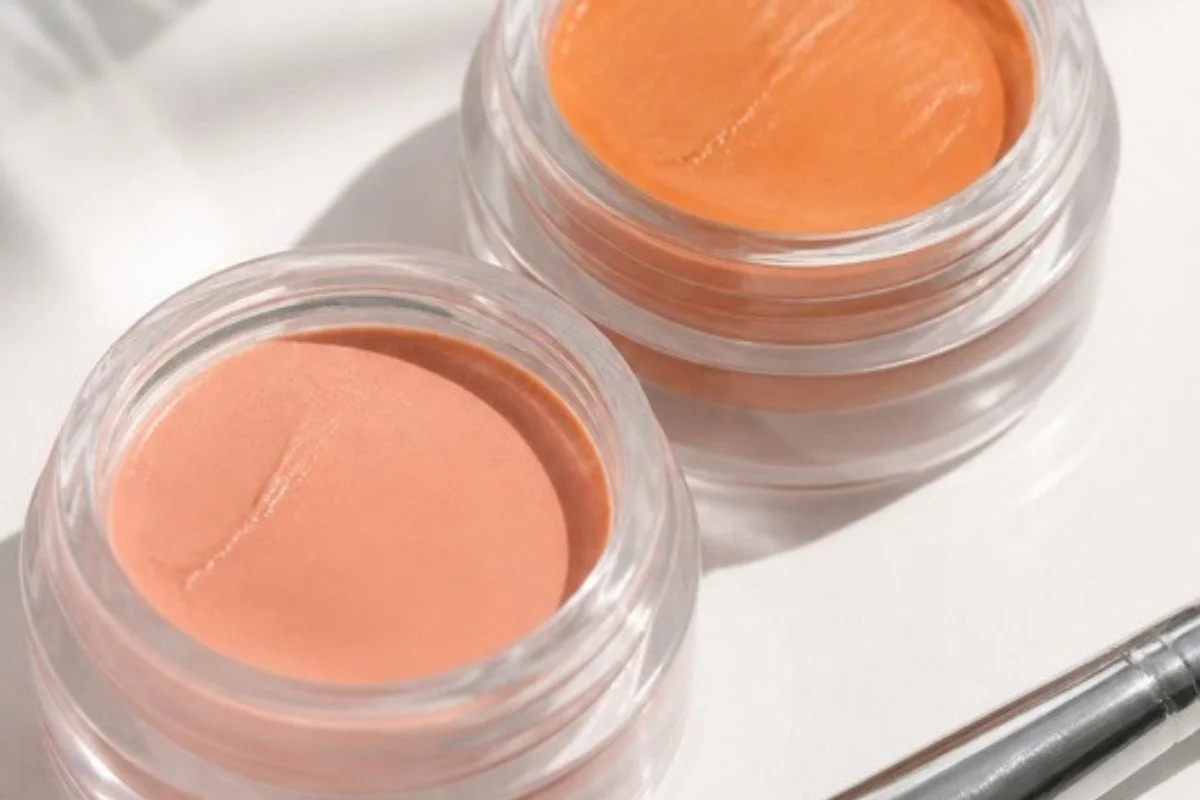
Color corrector shades by skin tone
| Skin tone | Under-eye tone | Corrector |
|---|---|---|
| Fair to light | Blue or purple | Pink or light peach |
| Light to medium | Blue or grey | Peach |
| Medium to tan | Purple or brown | Orange or deep peach |
| Deep | Deep brown or grey | Red or deep orange |
These are color-theory guidelines, not rules. Try two shades side by side in daylight and keep the one that disappears best under concealer.
How to use color corrector for dark circles: 6 steps
- Prep. Light eye cream, wait a minute.
- Pick up a tiny amount. Use a fingertip or small flat brush.
- Place it only where the color is darkest. Usually the inner corner.
- Tap to blend. Keep edges soft.
- Add concealer on top. Use a shade close to your skin, tapped over the corrector.
- Set lightly. A dusting of powder keeps it in place.
Other corrector colors and what they balance
| Color | Balances |
|---|---|
| Green | Redness |
| Peach / orange / red | Blue, purple or grey tones |
| Yellow | Light purple or dullness |
| Lavender | Sallow or yellow tones |
For under the eyes, peach, orange and red do most of the work. Green is for red areas elsewhere on the face.
Eye area safety tips
- Use products made for the eye area. The FDA says not to use cosmetics near the eyes unless they’re intended for that use.
- Don’t share eye products.
- Use clean hands and tools.
- Store below 85°F and keep caps closed.
These tips come from the FDA’s eye cosmetic safety page (FDA). Patch test anything new. The AAD suggests applying a new product to a quarter-sized spot on the underside of your arm or the bend of your elbow twice a day for 7 to 10 days, and stopping if your skin reacts (AAD).
Color corrector mistakes to avoid
- Using too much. Thick corrector shows through concealer.
- Covering the whole under-eye. Target only the darkest spots.
- Choosing a too-light shade on deeper skin. It can look ashy.
- Skipping concealer. Corrector alone can look orange.
- Rubbing. Tap gently instead.
Corrector is a step inside concealer. See our guide to how to do makeup for the full order, and how to apply foundation for the base. A mist of setting spray at the end helps everything last.
Do you need a color corrector?
Not everyone does. If a medium-coverage concealer hides the tone on its own, you can skip corrector. It’s most helpful when blue or purple still shows through, or when you want lighter coverage overall. For a soft day look with very little product, try our natural makeup look. If you want a lighter base, a tinted moisturizer plus a dab of corrector can be enough. Remove everything gently at night.
In short, a color corrector for dark circles is a tiny, targeted step. Pick the shade for your skin tone, use a thin layer only where the tone is darkest, and always finish with concealer. If one color corrector for dark circles doesn’t blend away, try the next shade deeper or lighter in daylight. A little goes a long way, so one small pot often lasts many months.
Related guides: Under Eye Concealer: How to Choose and Apply It, Concealer for Mature Skin: What to Look For.
FAQ
What color corrector cancels dark circles?
Peach for fair to light skin, orange for medium to tan skin, and red or deep orange for deep skin, based on color theory.
Does color corrector go before or after concealer?
Before. Apply a thin layer of corrector, then concealer on top.
Can I use green corrector under my eyes?
Green balances redness, so it’s usually used elsewhere on the face, not for blue or purple under-eye tones.
Is color corrector safe near the eyes?
Use products made for the eye area. The FDA says some color additives aren’t approved for use near the eyes.
Do I need color corrector every day?
No. Many people use it only on days they want fuller coverage.
Written by Mahmoud Abdelmaksoud.




1 comment