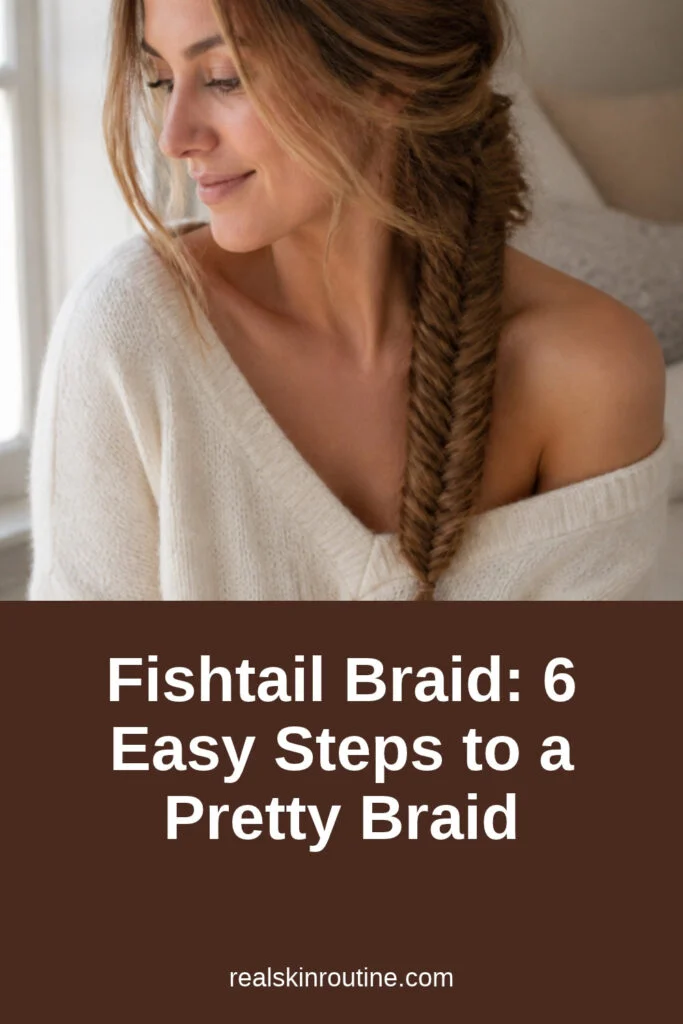
Quick answer: A fishtail braid uses two sections instead of three. Split the hair into two halves, take a thin piece from the outer edge of one half, cross it over to the other half, and repeat on the other side. Keep the pieces thin and even, then tie the end and gently loosen the braid.
Table of Contents
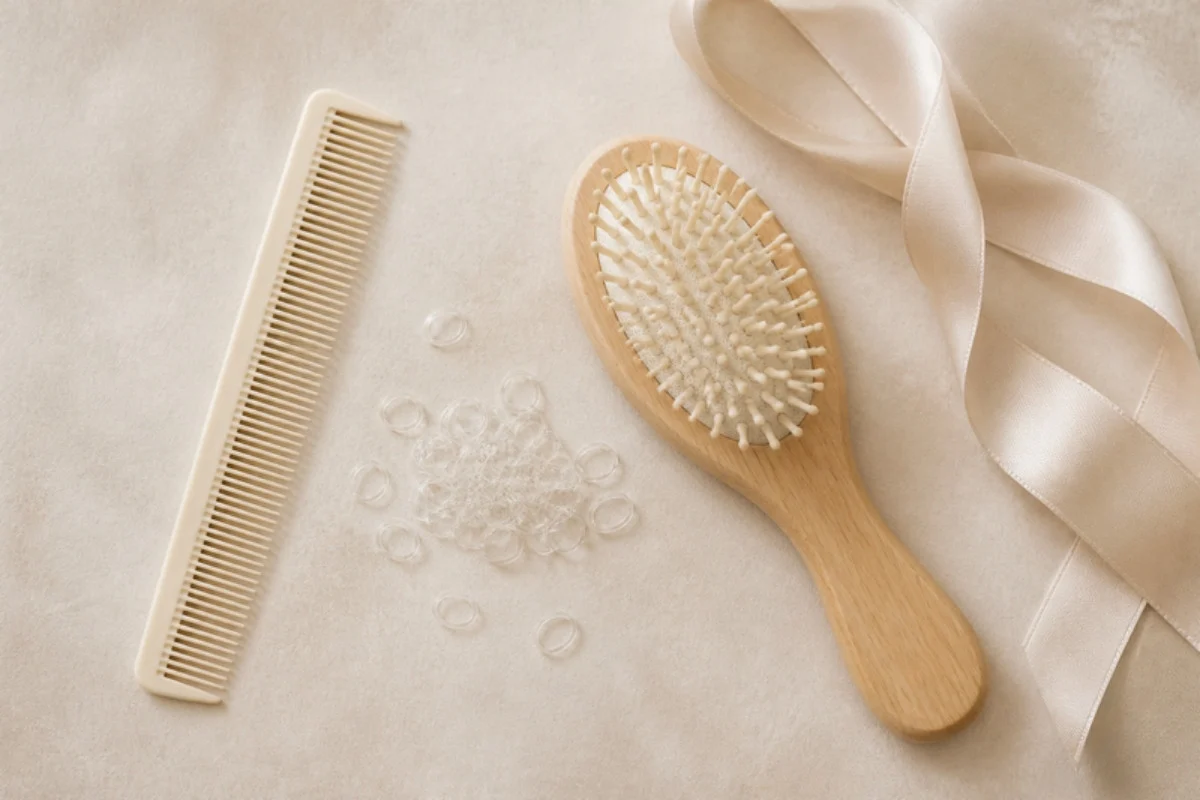
What you need
| Item | Why |
|---|---|
| Brush | Smooths the hair |
| Small clear ties | Hold the ends |
| Texture spray | Adds grip |
| Mirror | Check the back |
| Light hairspray | Tames flyaways |
Thin, even pieces are the key to a neat fishtail.
Who a fishtail braid suits
A fishtail braid looks best on hair from shoulder length down. Long, thick hair makes a full braid, and fine hair looks fuller once the braid is gently loosened. Layered hair can work too, though short layers may poke out, which adds a soft look. It suits beach days, weddings and everyday wear. Our how to braid hair guide covers other basic braids too.
How to do a fishtail braid in 6 steps
- Brush and prep. Add a little texture spray.
- Make a ponytail (optional). A loose tie makes it easier to start.
- Split into two. Hold one half in each hand.
- Cross a thin piece. Take a thin strand from the outside of the left half and cross it to the right half.
- Repeat on the other side. Take a thin strand from the right and cross it to the left.
- Finish and loosen. Tie the end, remove the starting tie and gently pull the edges.
The thinner the pieces, the more detailed the pattern.
Tips for a pretty fishtail braid
- Keep the pieces equal. Even strands give an even braid.
- Hold the halves firmly. It keeps the pattern neat.
- Braid over the shoulder. It is easier to see your work.
- Loosen at the end. Gentle tugs add width.
- Mist lightly. Hairspray holds flyaways.
The AAD advises wearing your hair loose when you can and keeping ponytails, buns and braids loose rather than tight, because tight styles pull on the hair (AAD).
Common fishtail braid mistakes
- Taking thick pieces. The pattern is lost.
- Letting go of the halves. The braid falls apart.
- Pulling too tight. It looks stiff and pulls.
- Very silky hair. Add texture first.
- Skipping a mirror. You may miss gaps.
If you lose your place, hold both halves and start again from where it is neat.
Fishtail styles to try
Wear a side fishtail over one shoulder for a soft, romantic look. Two small fishtails at the front can be pinned back for a half-up style. For a beach look, braid hair with beach waves and loosen it a lot. For events, wrap a fishtail into a low bun at the nape and add a few curls made with a curling wand.
Hair care tips
The AAD also suggests being gentle with wet hair and using a wide-tooth comb to detangle (AAD). Undo the braid from the ends up and brush gently.
For daily care, see our hair care routine. The two-strand method makes this braid easier than it looks.
FAQ
Is it hard to learn?
It takes patience but only two sections.
How long does it take?
About 10 minutes once you know it.
Can I do it on wet hair?
Slightly damp hair works, but dry is easier.
How do I make it fuller?
Loosen the edges after tying.
Does it work on layers?
Yes, it just looks softer.
Can I sleep in it?
A loose braid is fine; avoid tight ones.
Related guides: Dutch Braid: How to Do It Step by Step, Bubble Braid: The Easiest No-Braid Braid.
Written by Mahmoud Abdelmaksoud.