



Quick answer: Beach waves are loose, slightly undone waves that look like you spent a day at the sea. You can make them with a curling wand or flat iron on low to medium heat, or heat-free with braids or twists on damp hair. Prep with a light leave-in, keep the ends straighter for a relaxed look, and break the waves up with your fingers once they cool or dry.
Table of Contents
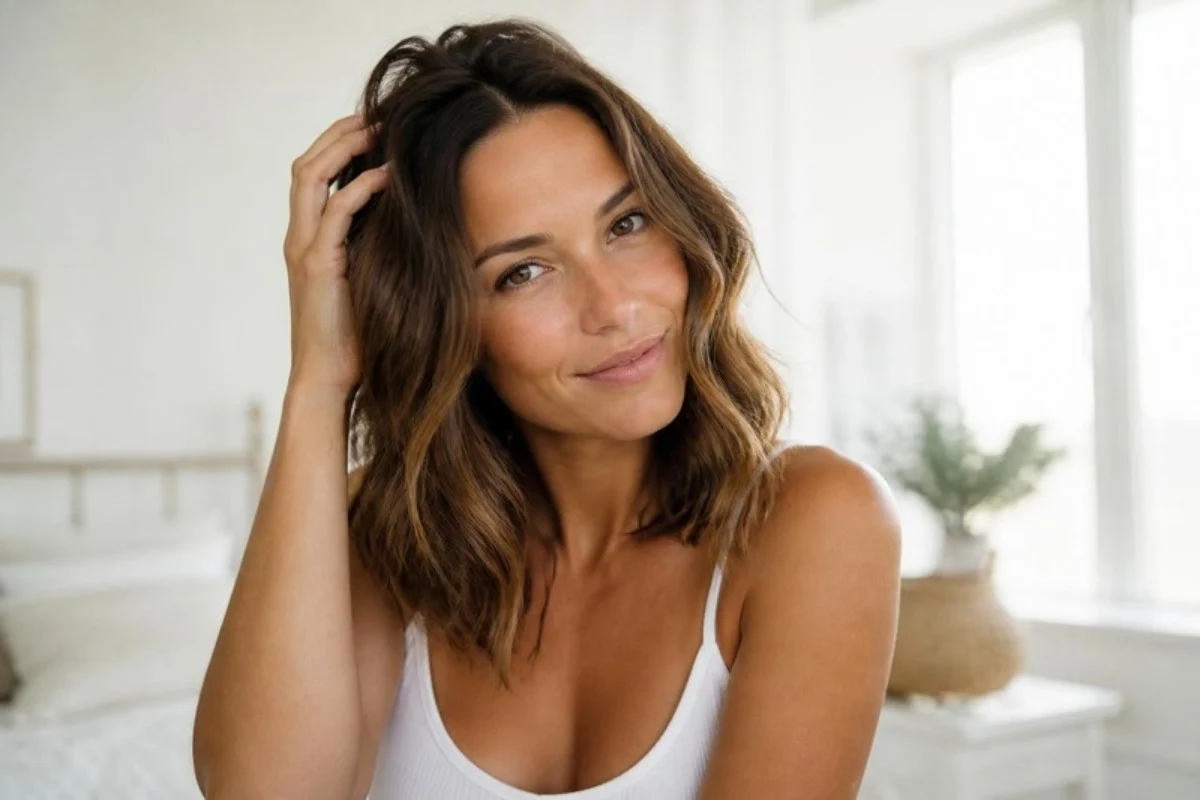
What makes beach waves different
Unlike tight curls, beach waves are loose, uneven and soft. The ends are often left a little straighter, and the waves are brushed or shaken out so they look natural.
This style suits many hair types. Fine hair holds waves best with a light texture spray, while thick hair may need smaller sections. If your hair already has a natural bend, see our wavy hair routine.
Prep your hair
Start with clean, dry hair for heat styling, or damp hair for heat-free methods. A light leave-in conditioner helps waves look smooth rather than frizzy.
If you use heat, apply a heat protectant spray first and keep tools on a low or medium setting. The AAD advises lower heat and limiting heat styling (AAD).
4 easy ways to get beach waves
- Flat iron twist. Take a section, twist the flat iron half a turn and glide it down slowly.
- Curling wand. Wrap sections around a curling wand, alternating direction, and leave the ends out.
- Overnight braids. Braid damp hair into two or more braids and undo them in the morning.
- Damp twist. Twist damp sections into small buns and let them dry fully.
Heat-free methods take longer but give the hair a break. Our heatless curls guide has more ideas.
How to finish the look
Let heated waves cool before touching them, so they set. Then rake through with your fingers or shake hair at the roots. A wide-tooth comb gives a softer, more blended wave.
Finish with a light texture spray or a small amount of oil on the ends. Too much product weighs the beach waves down and makes them drop.
Make your waves last
Sleep on a silk pillowcase or loosely tie hair on top of your head. On day two, refresh with a mist of water and scrunch, or touch up a few pieces with the wand.
Condition well on wash days. The AAD recommends using conditioner after every shampoo (AAD), which helps hair feel soft and easy to style.
Choosing a method for your hair type
- Fine hair. Use a curling wand with smaller sections and a light texture spray so waves hold.
- Thick hair. Use larger sections and a flat iron twist, which works quickly on lots of hair.
- Short hair. Use a flat iron or small wand, leaving the ends straight.
- Layered hair. Overnight braids give soft waves that suit layers.
- Naturally wavy hair. Scrunch in a light cream and diffuse or air-dry.
Whatever your hair type, practice on a day when you do not need to rush. It takes a few tries to learn how big your sections should be and how long to hold each one.
Remember that beach waves are meant to look relaxed. If a section comes out too curly, run your fingers through it, or gently pull the curl straight at the ends. Small imperfections make the style look more natural, not less.
Common mistakes
- Curling in one direction only. Alternate for a more natural look.
- Curling the ends. Leave them out for a relaxed finish.
- Brushing while hot. Waves fall if you touch them before they cool.
- Too much product. Light layers hold better.
- High heat. Keep heat low to medium and use protection.
For the full wash and style routine, see the hair care routine pillar, and try a hair diffuser if you want to boost natural waves.
Related guides: Heat Protectant Spray: How to Use It Before Styling, How to Braid Hair: Easy Braids for Beginners.
FAQ
Can I get beach waves without heat?
Yes. Braids or twists on damp hair give soft waves once dry.
What size curling wand is best for beach waves?
A medium barrel suits most lengths. Larger barrels give looser waves.
How do I stop my waves from falling flat?
Let them cool fully, use a light texture spray and avoid heavy oils.
Do beach waves work on short hair?
Yes. Use smaller sections and a flat iron or small wand.
Should I use texture spray?
It is optional, but it adds grip and a lived-in look.
Written by Mahmoud Abdelmaksoud.


1 comment