



Quick answer: Heat protectant spray is a styling product you mist onto hair before using a blow-dryer, flat iron or curling wand. It coats each strand with a light film, so hair feels smoother and less dry after styling. Spray it section by section, comb it through, let it dry, then style on a low or medium heat setting. It works best as part of a gentle routine, not as a reason to use more heat.
Table of Contents
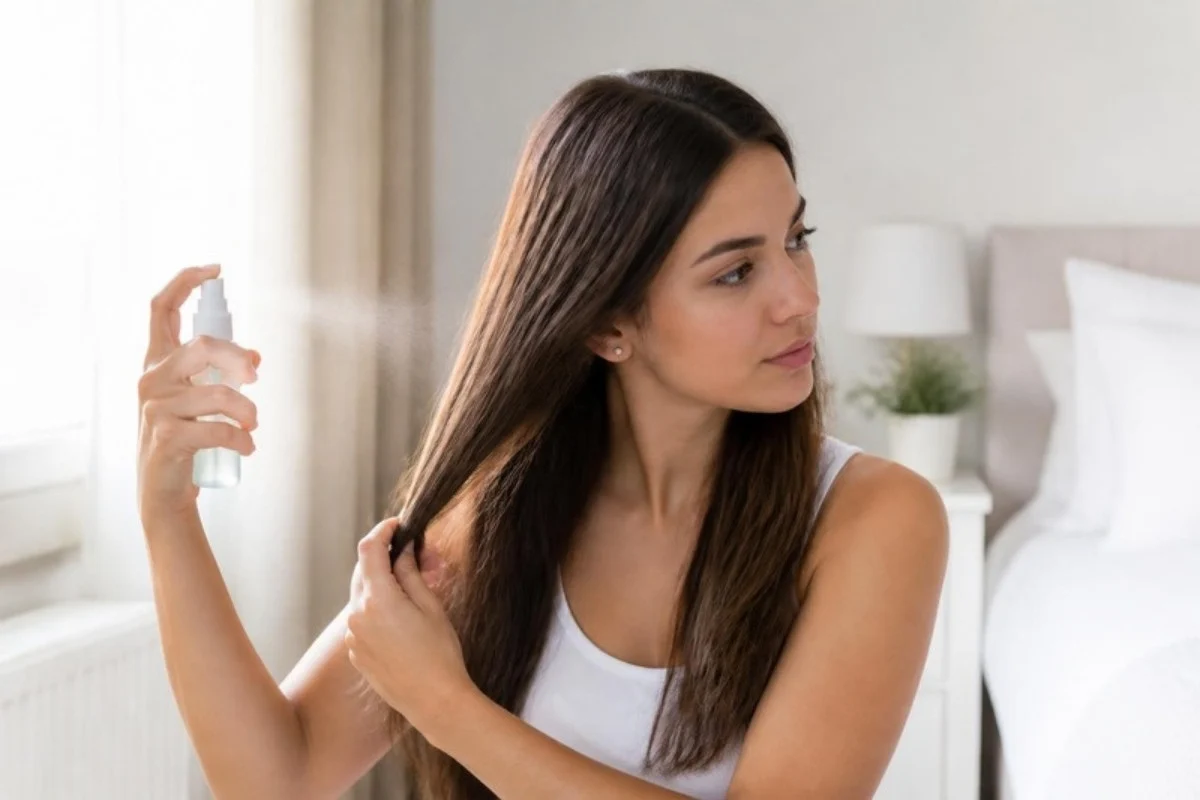
What heat protectant spray does
Most heat protectants contain ingredients such as silicones or polymers that form a thin layer on the hair. That layer helps your styling tool glide and leaves hair feeling smoother. Many people find their ends feel less rough when they use one every time.
A heat protectant spray does not make hot tools harmless. The AAD advises using low or medium heat settings and limiting heat styling for healthier-looking hair (AAD). Think of the spray as one part of a careful routine.
How to choose a formula
| Type | Best for | How it feels |
|---|---|---|
| Light mist | Fine or straight hair | Weightless |
| Cream | Thick, curly or coarse hair | Richer and smoothing |
| Oil-based serum | Dry ends | Shiny, can be heavy |
| Leave-in with protection | Air-dry and heat days | Two products in one |
We have not lab-tested these products. The table sorts them by type, using what the label says.
Look at the label for the tools and heat ranges the product is meant for. A spray made for blow-drying may not say anything about flat irons. If your hair gets greasy fast, choose a light mist and keep it off the roots.
6 steps to use heat protectant spray
- Start with clean hair. Product buildup can make strands feel sticky under heat.
- Towel-blot gently. A microfiber hair towel soaks up water without rubbing.
- Section your hair. Clip it into four or more parts.
- Mist each section. Hold the bottle a little away and spray mid-lengths to ends.
- Comb it through. A wide-tooth comb spreads the product evenly.
- Let it dry, then style. Use the lowest heat setting that works for you.
Never use a flat iron on wet hair unless the tool says it is made for that. Dry hair first with a blow-dryer or a hair dryer brush.
Using it with different tools
With a flat iron, use thin sections and one slow pass rather than many fast ones. With a curling wand, wrap small sections and hold for a short time. With hot rollers, mist each section before rolling.
Whatever the tool, a heat protectant spray works best on dry, detangled hair. Keep the tool moving and do not clamp the same spot repeatedly.
Other ways to reduce heat
Give your hair heat-free days. Our heatless curls guide shows how to get waves overnight. Air-drying, braids and buns are easy alternatives.
Condition every wash. The AAD recommends using conditioner after every shampoo (AAD). A leave-in conditioner can add extra softness between washes.
A simple styling-day routine
Here is an easy order for a styling day. Wash and condition, towel-blot, then apply a light leave-in if your hair likes it. Mist heat protectant section by section and comb through. Rough-dry hair to about most of the way, then use a brush or tool on a low or medium setting. Finish with a drop of oil on the ends if they feel dry. On the next few days, try heat-free styles to give hair a break.
Common mistakes
- Spraying only the top layer. Section hair so every strand gets coated.
- Styling while the spray is wet. Let it dry before using a hot tool.
- Turning the heat up because you used protection. Keep heat low to medium.
- Using too much. Heavy product can leave hair limp.
- Spraying the roots on oily hair. Focus on mid-lengths and ends.
For a full wash-day plan, see the hair care routine pillar.
Related guides: Beach Waves: How to Get Them With or Without Heat.
FAQ
Do I really need a heat protectant spray?
It is a good habit if you use hot tools often. It helps hair feel smoother after styling.
Can I use heat protectant on dry hair?
Yes. Many sprays work on dry hair before a touch-up with a flat iron or wand.
Is a leave-in conditioner the same as heat protectant?
Not always. Check the label for heat protection claims.
How much heat protectant should I use?
A light mist per section is enough. Too much can weigh hair down.
Does heat protectant work on curly hair?
Yes. Cream formulas are often a better fit for thick or curly hair.
Written by Mahmoud Abdelmaksoud.


1 comment