



Quick answer: A makeup sponge blends foundation, concealer and cream products into skin for a smooth, natural finish. Wet it, squeeze out the extra water so it is just damp, then bounce or press it over the skin instead of wiping. Wash it often with gentle soap, let it dry fully, and replace it when it tears or stays stained.
Table of Contents
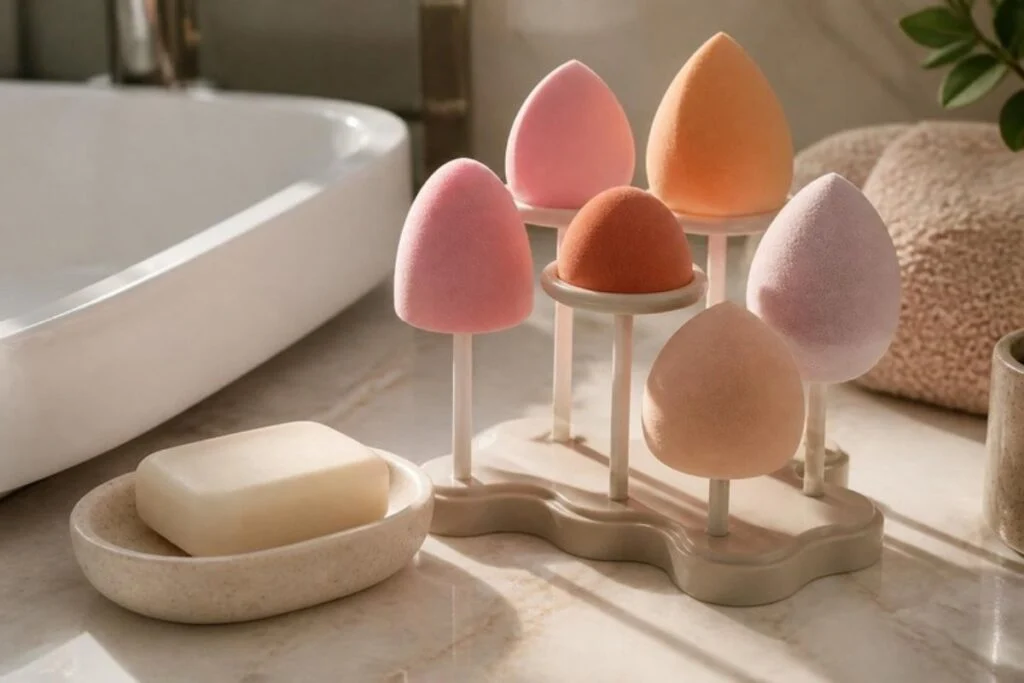
Why use a makeup sponge
A sponge presses product into the skin, which gives a soft, skin-like finish with few streaks. A damp sponge also sheers foundation out slightly, so it is forgiving for beginners. Our how to apply foundation guide compares sponges, brushes and fingers.
How to choose a makeup sponge
| Shape | Best use |
|---|---|
| Teardrop | All-over base, with the tip for under the eyes |
| Flat edge | Contour and around the nose |
| Round | Large areas like cheeks and forehead |
| Mini | Concealer and small spots |
We have not lab-tested these sponges. The table is general guidance by shape.
Choose a sponge that feels soft and springy and grows a little when wet. A firm, dense sponge can drag. If you use powder, a separate dry sponge or puff keeps powder from caking. Our makeup brushes guide covers tools that pair well with a sponge.
6 steps to use a makeup sponge
- Wet the sponge under running water.
- Squeeze it out in a clean towel so it is damp, not dripping.
- Dot foundation on your face or the back of your hand.
- Bounce, do not drag. Press the sponge over the skin in small taps.
- Use the tip for under the eyes and around the nose.
- Finish with the clean side to blend edges at the jaw and hairline.
Set with a light layer of setting powder if you tend to shine.
How to clean a makeup sponge
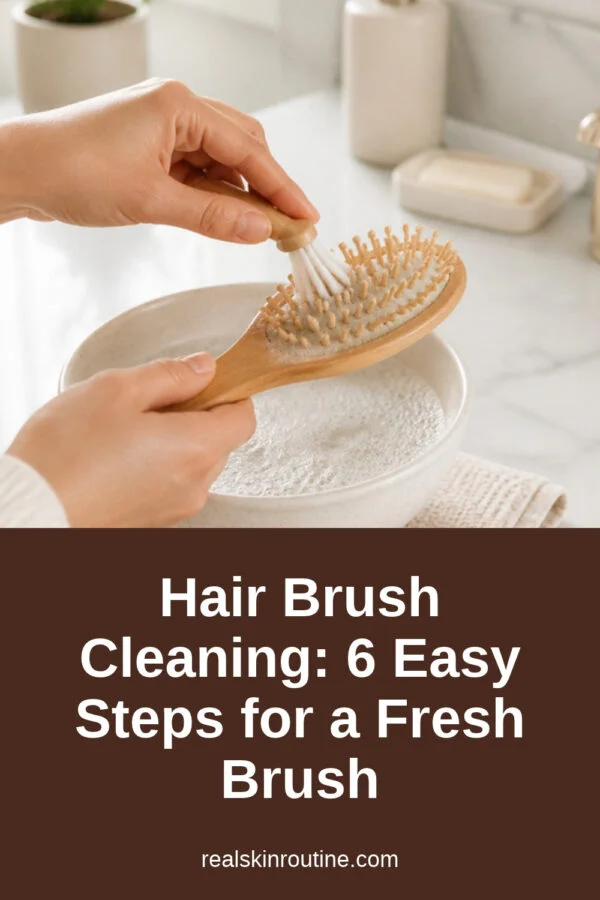
Sponges stay damp and collect makeup, so clean them often. Wet the sponge, work in a gentle soap or shampoo, squeeze it out, and repeat until the water runs clear. Rinse well and let it air-dry fully in an open spot, not in a closed case.
For brushes, the AAD recommends gentle shampoo and lukewarm water, rinsing until the water runs clear, and letting them dry before use (AAD). The same gentle idea works well for sponges.
Do not share sponges. Sharing makeup tools can spread germs between people.
When to replace it
Replace a sponge when it tears, crumbles, smells odd or keeps a stain no matter how often you wash it. The AAD suggests tossing makeup that smells bad, looks different or feels different on your skin, and the same common sense applies to the sponge you use to apply it (AAD).
Where it fits in your routine
Use a sponge for liquid and cream products: primer, foundation, concealer and cream blush. Use brushes for powders. The how to do makeup pillar walks through the full order, and the beauty tools pillar lists other tools that are worth having.
Using a sponge for concealer and cream blush
For concealer, dot a small amount under the eyes or on a blemish, then press the pointed tip of the sponge over it in light taps. Pressing keeps coverage where you need it, while swiping moves it away. A clean part of the sponge blends the edges into your foundation.
For cream blush, tap a little color on the cheeks with your fingers, then bounce the sponge over it to soften the edges. This gives a natural flush that looks like it is coming from the skin. You can add more color in thin layers until it looks right in daylight.
Common mistakes
- Using a dry sponge for foundation. It soaks up product and looks patchy.
- Swiping instead of bouncing. It leaves streaks.
- Storing it wet in a closed bag. It needs air to dry.
- Using the same sponge for weeks without washing. Clean it often.
- Pressing too hard. Light taps blend best.
Related guides: Hot Rollers: How to Choose and Use Them for Soft Curls.
FAQ
Should a makeup sponge be wet or dry?
Damp is best for liquid and cream products. Squeeze out the extra water first.
How often should I wash my makeup sponge?
Often. Many people wash it after every use or every few uses.
Can I use a makeup sponge for powder?
Yes, but use a separate dry sponge or puff so powder does not cake.
Why does my makeup sponge leave streaks?
It may be too wet or too dry, or you may be dragging it. Bounce it lightly instead.
How do I dry a makeup sponge?
Let it air-dry fully in an open, airy spot before storing it.
Written by Mahmoud Abdelmaksoud.



3 comments