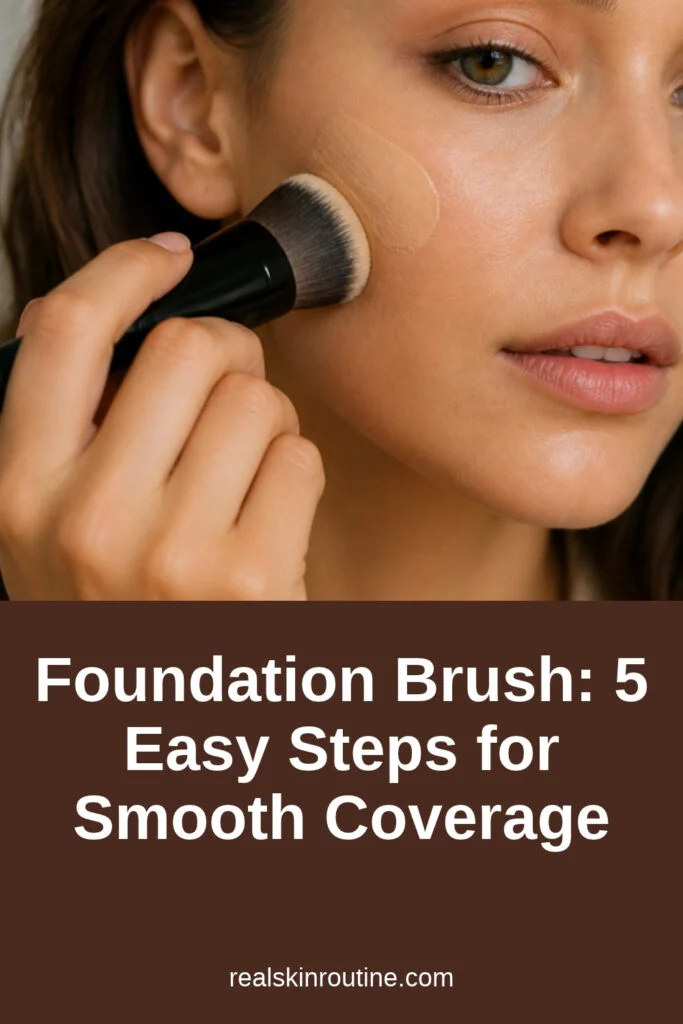
Quick answer: A foundation brush helps you spread foundation evenly and build coverage where you need it. Dot foundation on the face, then buff it in with small circles using a dense, flat-top foundation brush, working from the center of the face outward. Finish by blending the edges at the jaw and hairline.
Table of Contents

Types of foundation brush
| Type | Finish | Best for |
|---|---|---|
| Flat-top kabuki | Smooth, full | Liquid and cream |
| Flat paddle | Even, thin | Light to medium coverage |
| Stippling (duo-fiber) | Airbrushed, light | Sheer looks |
| Angled | Precise | Around the nose and jaw |
A dense flat-top foundation brush is the most versatile choice for beginners.
Brush vs sponge vs fingers
A foundation brush gives the most coverage with the least product. A damp makeup sponge gives a softer, more natural finish but absorbs some product. Fingers are quick and warm the formula, which suits sheer bases like tinted moisturizer. Many people use a foundation brush to apply and a sponge to blend the edges.
How to use a foundation brush in 5 steps
- Prep the skin. Moisturize and let it sink in.
- Dot the foundation. Place small dots on the forehead, cheeks, nose and chin.
- Buff in circles. Work from the center of the face outward.
- Build where needed. Add a little more only on areas that need it.
- Blend the edges. Soften the jaw, hairline and around the nose.
Our how to apply foundation guide covers shade matching and prep.
Tips for smooth coverage
- Use a little at a time. Thin layers look more like skin.
- Press, then buff. Pressing first avoids streaks.
- Use the brush edge near the eyes. It reaches small areas.
- Check in daylight. Make sure the edges blend.
- Set lightly. A little setting powder helps it last.
If you see streaks, buff in smaller circles.
Common foundation brush mistakes
- Using too much product. It looks heavy and cakey.
- Painting in long strokes. This leaves lines.
- Using a dirty brush. It can look patchy.
- Skipping moisturizer. Foundation clings to dry spots.
- Pressing too hard. Light pressure blends better.
The AAD recommends cleaning makeup brushes regularly, because product, oil and dirt build up in the bristles (AAD). A foundation brush holds a lot of product, so wash it often.
Matching the tool to your formula
Thin, runny formulas spread best with a flat paddle or stippling tool, which keeps the layer light. Thicker creams and sticks blend well with a dense kabuki, which warms the product as you buff. If you use a skin tint or a very sheer base, a stippling head gives a soft, airbrushed look. Try each style with your current base to see which finish you like most.
How to clean a foundation brush
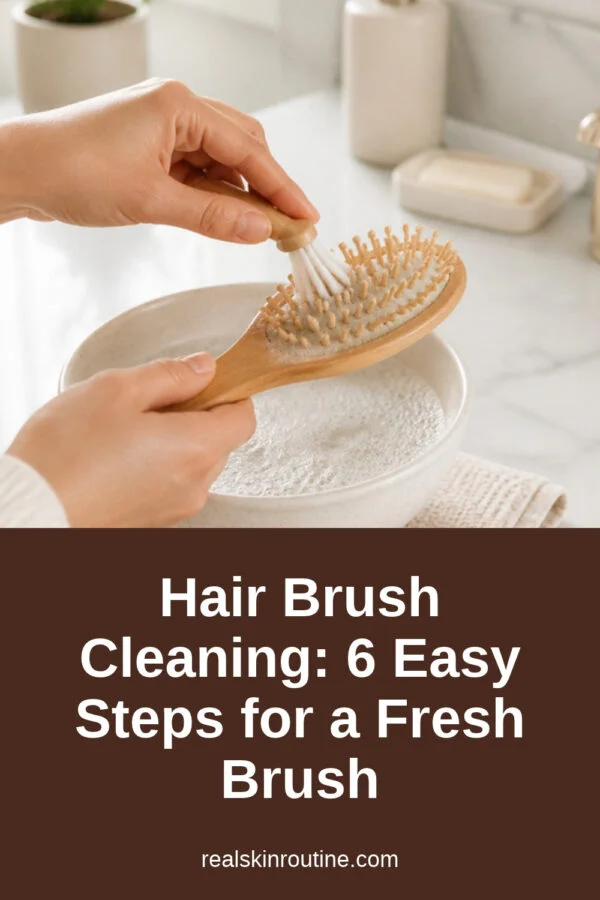
Wet the bristles with lukewarm water, keeping the water away from the handle joint. Swirl the foundation brush in a little mild soap or brush cleanser in your palm, rinse until the water runs clear, then squeeze out the water and reshape the head. Lay it flat or with the bristles pointing down to dry, so water does not loosen the glue. See our brush cleaning guide for more detail.
For more tools, see makeup brushes and the basics in how to do makeup. The right foundation brush makes a smooth, even base easy.
FAQ
Which type is best for beginners?
A dense, flat-top kabuki brush.
Brush or sponge?
A brush gives more coverage; a sponge gives a softer finish.
How often should I wash it?
Often, because it holds a lot of product.
Why does my foundation look streaky?
Use small circles instead of long strokes.
Can I use it for cream blush?
Yes, a clean flat-top brush blends cream blush well.
Does it waste less product?
Yes, brushes absorb less than sponges.
Related guide: Powder Blush: How to Apply It for a Natural Flush.
Written by Mahmoud Abdelmaksoud.