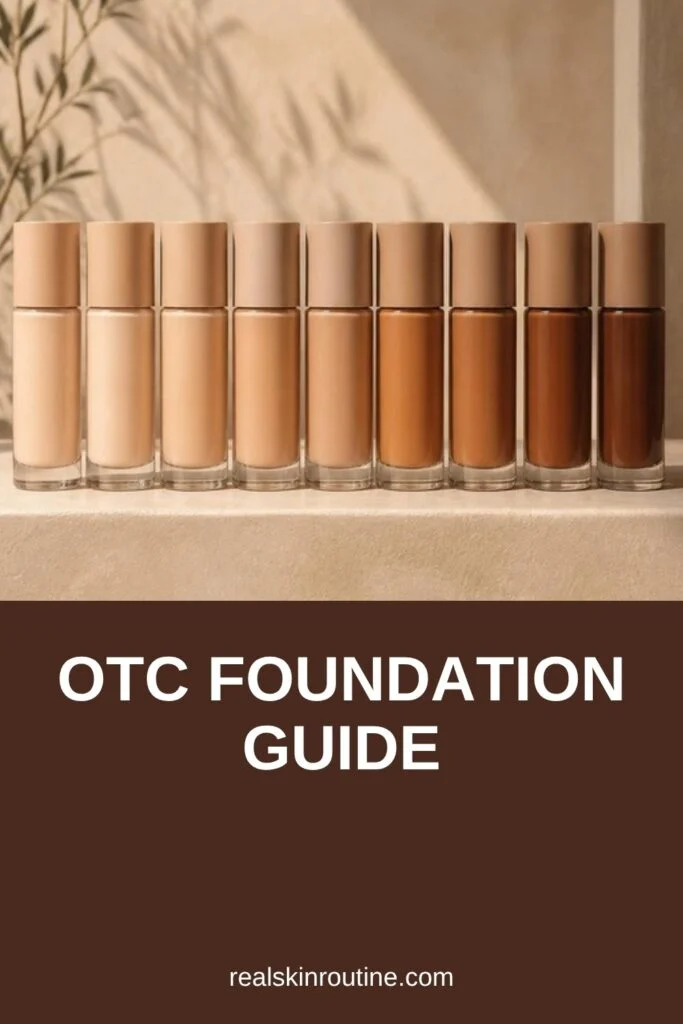
Quick answer: An OTC foundation is any foundation you can buy off the shelf, usually at a drugstore. Choose it in this order: coverage (sheer, medium or full), finish (dewy, satin or matte), then shade and undertone. If you want sun protection from it, the AAD recommends broad-spectrum SPF 30 or higher (AAD), but most people don’t apply enough foundation to get the full SPF, so wear sunscreen underneath.
Table of Contents
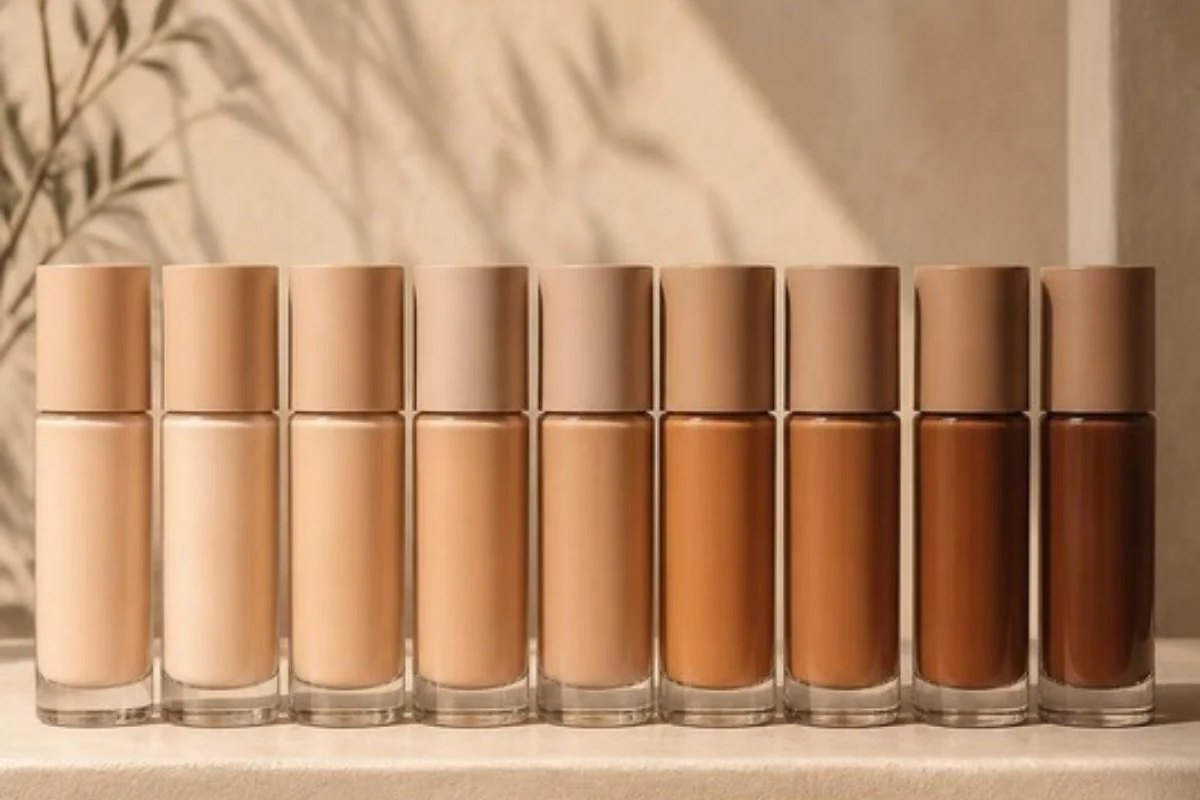
How to choose an OTC foundation: 6 tips
- Pick coverage. Sheer evens tone, medium hides redness, full covers most spots.
- Pick a finish. Dewy for dry skin, satin for most, matte for oily areas.
- Find your undertone. Cool (pink), warm (yellow or golden) or neutral.
- Swatch on your jaw. The right shade disappears into your jaw and neck.
- Check the light. Look at the swatch in daylight if you can.
- Keep the receipt. Many drugstores accept makeup returns; check the store policy.
OTC foundation types compared
| Type | Coverage | Best for |
|---|---|---|
| Liquid | Sheer to full | Most skin types |
| Cream or stick | Medium to full | Dry skin, quick touch-ups |
| Powder | Sheer to medium | Oily skin, fast routines |
| Skin tint | Sheer | Light, everyday wear |
| Foundation with SPF | Varies | Extra protection over sunscreen |
We haven’t lab-tested these options. The table compares them by what the label says and how they’re usually made.
If you want the lightest option, our guide to tinted moisturizer compares sheer tints, and tinted SPF covers tinted sunscreens.
How to find your shade at the drugstore
Drugstores often don’t have testers, so use what you can see. Compare the bottle to the inside of your wrist in daylight, and read the shade name: many brands use letters or words such as C, W and N, or cool, warm and neutral.
- Veins look blue or purple: you may be cool.
- Veins look green: you may be warm.
- Hard to tell: start with neutral.
- Between shades: buy the lighter and the darker and mix them.
These vein tips are a quick rule of thumb, not a test. Your jaw and neck are the final check.
Reading SPF on an OTC foundation label
In the US, a foundation with SPF has a Drug Facts box, just like sunscreen. The AAD advises broad-spectrum, water-resistant sunscreen with SPF 30 or higher (AAD). Because foundation goes on in a thin layer, count its SPF as a bonus and wear a sunscreen underneath. Our guide to lightweight sunscreen lists textures that sit well under makeup.
How to apply and keep your OTC foundation fresh
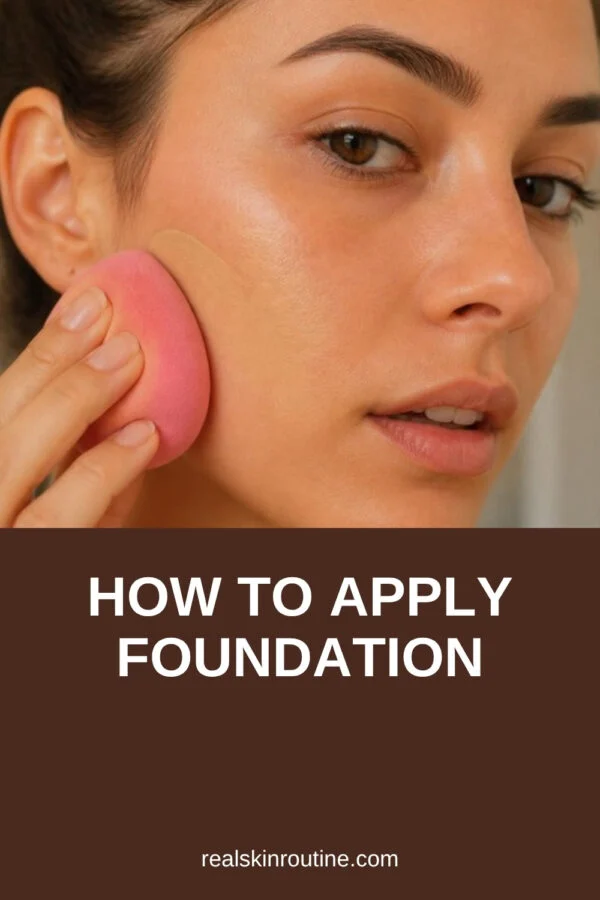
Start with moisturizer and sunscreen, then dot foundation on the center of your face and blend outward with fingers, a brush or a damp sponge. Our step-by-step guide on how to apply foundation covers each tool in detail.
- Close the cap tightly after each use.
- Keep it out of hot cars and steamy bathrooms.
- Wash sponges and brushes once a week.
- Toss it if it smells or separates and won’t mix back.
The FDA says there’s no US law that requires expiration dates on cosmetics, and a product can go bad before any date if stored poorly (FDA). Patch test anything new. The AAD suggests applying a new product to a quarter-sized spot on the underside of your arm or the bend of your elbow twice a day for 7 to 10 days, and stopping if your skin reacts (AAD).
OTC foundation for different needs
Dry skin usually likes a dewy liquid or cream; oily skin often does better with a matte liquid or powder; and many people with mature skin prefer a thin, satin finish. For more on that last group, see our guide to the best foundation for older skin. The full makeup order is in our guide on how to do makeup.
FAQ
What does OTC foundation mean?
OTC means over the counter: foundation you can buy off the shelf without a consultation, usually at a drugstore or supermarket.
Is the SPF in foundation enough?
Usually not on its own, because most people apply a thin layer. Wear a broad-spectrum SPF 30 or higher sunscreen underneath, as the AAD recommends.
How do I find my undertone?
Look at your wrist veins in daylight: blue or purple suggests cool, green suggests warm, and a mix suggests neutral. Then check the shade on your jaw.
How long does foundation last once opened?
There’s no required expiry date in the US. Store it closed and cool, and toss it if the smell, color or texture changes.
Can I mix two foundation shades?
Yes. Mixing a lighter and a darker shade is a simple way to match your skin through the seasons.
Written by Mahmoud Abdelmaksoud.