


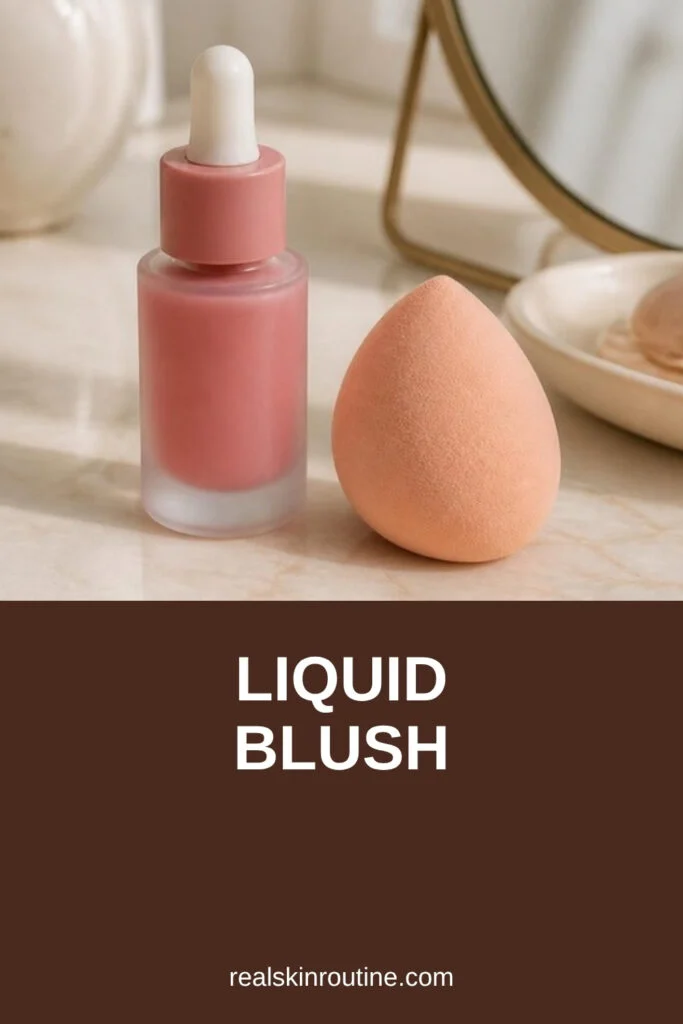
Quick answer: Liquid blush is a thin, fluid blush that blends into skin for a natural, glowy flush. Use a tiny amount: dot it on the apples of your cheeks, then blend quickly with your fingertips, a damp sponge or a brush before it sets. Apply it over foundation and before powder. Build in thin layers, because liquid blush is often very pigmented.
Table of Contents

What liquid blush is
Liquid blush comes in a bottle, a tube or a dropper. Because it is fluid, it melts into skin and looks like a natural flush. Many formulas dry down quickly, so they tend to last well once set.
It suits most skin types, and it works well on dry skin that looks patchy with powder. The how to do makeup pillar shows where blush fits in a full routine.
Liquid blush vs cream vs powder
| Type | Finish | Good for |
|---|---|---|
| Liquid blush | Sheer to bright, natural | Glowy looks, dry or normal skin |
| Cream blush | Soft, dewy | Easy blending with fingers |
| Powder blush | Soft matte or shimmer | Oily skin, setting over cream |
| Blush stick | Creamy, portable | Quick touch-ups |
We have not lab-tested these products. The table compares them by finish and label claims.
If your skin is oily, you can set liquid blush with a light layer of setting powder, or tap a matching powder blush on top.
How to choose a liquid blush shade
If you are unsure, start with a soft, sheer shade. It is easier to build a sheer color up than to tone a bright one down. Many liquid formulas look darker in the bottle than on the skin, so always swatch before you decide. Pick a shade that looks like your cheeks after a short walk. Soft pinks and peaches suit fair skin, rose and coral suit medium skin, and berry and brick shades show up well on deep skin. Swatch on your jaw or the back of your hand, and check the color in daylight.
6 steps to apply liquid blush
- Prep your skin with moisturizer and foundation, if you wear it. See how to apply foundation.
- Shake or mix the bottle if the label says so.
- Dot a tiny amount on the apples of your cheeks, one dot at a time.
- Blend right away upward and outward with fingertips, a damp makeup sponge or a brush.
- Build in thin layers until you like the color.
- Set lightly with powder or setting spray if you want it to last longer.
Keep your blush and tools clean
Wash the sponge or brush you use for liquid blush often. The AAD recommends cleaning makeup brushes regularly (AAD). Our makeup brushes guide covers the basics.
Replace liquid blush that smells bad, has changed color or feels different, as the AAD advises for makeup (AAD). The FDA notes that air, sunlight and temperature changes can alter a product’s color and texture, so close the cap tightly (FDA).
Trying a new formula? The AAD suggests patch testing a new product on a small area for several days first (AAD).
Where to place liquid blush
Placement changes the look. For a fresh, youthful look, keep color on the apples of the cheeks and blend up toward the temples. For a lifted look, place it a little higher on the cheekbones and blend back toward the hairline. For a soft, sun-kissed look, tap a little across the nose and the tops of the cheeks. Whatever you choose, use a light hand and step back from the mirror to check that both sides match.
Common mistakes
- Using too much at once. Start with one small dot.
- Blending too slowly. Many formulas set fast.
- Applying over powder. Liquid blush blends best before powder.
- Placing it too low. Keep it on the apples and blend up.
- Using dirty tools. They can make color look patchy.
Related guides: How to Apply Eyeshadow: A Simple Beginner Guide, Clay Mask: How Often to Use One and How.
FAQ
Does liquid blush go before or after foundation?
After foundation and before powder, so it blends smoothly.
Can I use liquid blush on bare skin?
Yes. Apply over moisturizer for a fresh, no-makeup look.
Is liquid blush good for oily skin?
It can be. Set it with a light dusting of powder to help it last.
Can liquid blush be used on lips?
Only if the label says it is safe for lips.
How do I fix too much blush?
Blend the edges with a clean sponge, or tap a little foundation on top.
Written by Mahmoud Abdelmaksoud.


1 comment